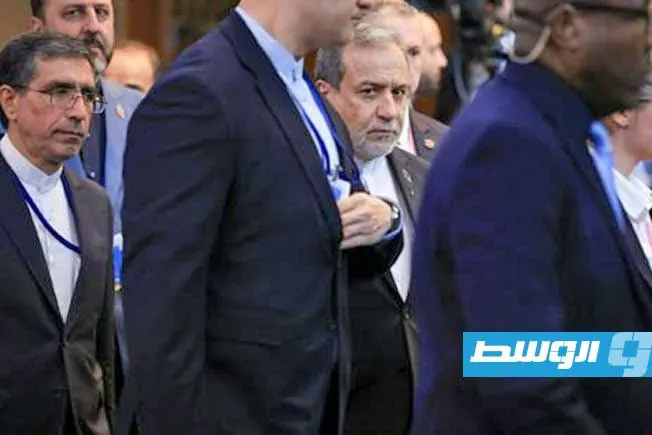
Iranian Foreign Minister Abbas Araghchi has presented a 7-day plan to the US to halt hostilities and reopen the Strait of Hormuz, a vital waterway for global oil supplies. The proposal was made during Araghchi's meeting with US envoy Steve Biekoft at the United Nations in New York. According to Araghchi, Iran is willing to reopen the strait within 7 days if the necessary conditions are met.
The plan, which was conveyed to the US through Qatar, involves a 7-day ceasefire in the Middle East, including Lebanon. Iran's conditions for the plan include the release of frozen Iranian assets worth around $12 billion, the lifting of sanctions on Iranian oil, and an end to the US blockade on Iranian ports. In return, Iran would reopen the Strait of Hormuz on the seventh day of the truce.
Iranian President Masoud Pezeshkian, who recently attended the UN General Assembly in New York, stated that Iran has not withdrawn from the negotiating table but has lost trust in the US due to past experiences. Pezeshkian met with UN Secretary-General Antonio Guterres and emphasized that Iran is committed to finding a peaceful solution to the conflict.
However, US President Donald Trump has reportedly rejected Iran's proposal, according to The Wall Street Journal. Trump is skeptical about Iran's ability to meet his demands and is considering resuming airstrikes against Iran after the US midterm elections. In response, Trump posted a map of the Strait of Hormuz on his social media platform, labeling it "Trump Strait."
Iran's Revolutionary Guard Corps (IRGC) has stated that it will not stop punishing the US until Iran's conditions are met. IRGC spokesperson Hossein Mobadi said that Iran's conditions are the same as those outlined in a memorandum of understanding signed by Iran and the US earlier this year. The memorandum includes an end to the conflict in Yemen.
The conflict between the US and Iran has been ongoing for nearly seven months, with tensions escalating over the Strait of Hormuz. Iran has been accused of attacking commercial ships in the strait, while the US has responded with airstrikes against Iranian coastal regions. Iran requires ships to obtain permission before crossing the strait, citing security and sovereignty concerns.
The international community remains cautiously optimistic about the prospects of a peaceful resolution to the conflict. Iranian and US officials have engaged in talks on the sidelines of the UN General Assembly, with some expressing hope that progress can be made towards a negotiated settlement. The outcome of these efforts remains uncertain.
Key points
- Iran proposes a 7-day ceasefire and reopening of the Strait of Hormuz.
- US President Donald Trump reportedly rejects Iran's proposal.
- Conflict between US and Iran continues, with tensions over Strait of Hormuz.