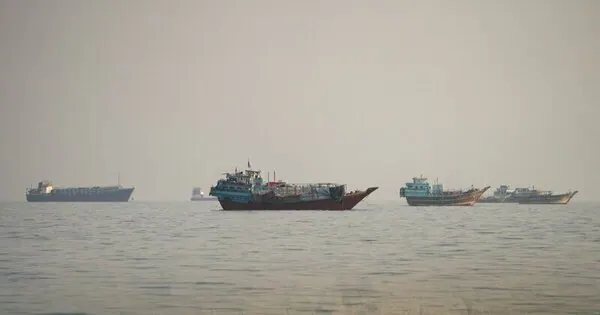
Iranian Foreign Minister Abbas Araqchi announced on September 25 that Tehran has presented a "concrete" plan to the United States to reopen the Strait of Hormuz. The strait's closure has been a major point of contention between the US and Iran, with Tehran restricting access in response to US and Israeli attacks. Araqchi stated that if the necessary conditions are met, the strait can be reopened and normal maritime passage restored within seven days.
The Strait of Hormuz is a vital waterway for global oil supplies, and its effective closure has led to soaring oil prices. Iran has also sought to impose a toll on vessels passing through the strait. In response, the US imposed a naval blockade on Iran in mid-April, which was reinstated in July. The blockade has diverted ships and prevented them from reaching Iranian ports. The situation remains a major obstacle to a negotiated settlement aimed at ending the broader conflict in the Middle East.
Araqchi did not specify the steps Washington would have to take to meet the conditions for reopening the strait. However, he mentioned that they were similar to those outlined in a memorandum of understanding signed by the two countries in Islamabad earlier this year. The memorandum's details have not been made public. The US and Iran have been engaged in a long-standing conflict, with the Strait of Hormuz being a central issue.
In a separate development, Yemeni President Rashid al-Alimi called on Yemenis to mobilize and join the armed forces on September 25. Al-Alimi also offered a future general amnesty to Iran-backed Houthi fighters and affiliates who leave the group on or after September 26. Yemen has been embroiled in a civil war since 2014, when the Houthis seized the capital, Sanaa, ousting the internationally recognized government.
The conflict in Yemen has escalated recently, with Houthi rebels seizing nearly all of Yemen's Red Sea coastline and intensifying attacks on energy facilities in Saudi Arabia. The situation has raised concerns about the impact on global trade and oil supplies. The US and Iran have been involved in various diplomatic efforts to address the conflicts in the region.
In other news, Iraqi airports have suspended flights operated by Iranian airlines after the US targeted Tehran's aviation sector. The US announced sanctions on any company doing business with Iranian airlines, aiming to ground Tehran's entire civilian fleet worldwide. At least five other countries have imposed similar restrictions on Iranian flights.
Iranian President Masud Pezeshkian said in an interview with Fox News that Tehran is willing to dilute its stockpile of uranium enriched to 60 percent and allow international verification of its nuclear program. Pezeshkian called for Washington to return to a June memorandum of understanding. He rejected the possibility of Iran seeking a nuclear weapon, citing a religious decree by the late Supreme Leader Ayatollah Ali Khamenei against nuclear weapons.
Key points
- Iran has given the US a "concrete" plan to reopen the Strait of Hormuz.
- The plan requires the US to meet certain conditions, similar to those outlined in a memorandum of understanding signed earlier this year.
- The Strait of Hormuz's closure has led to soaring oil prices and remains a major obstacle to a negotiated settlement between the US and Iran.