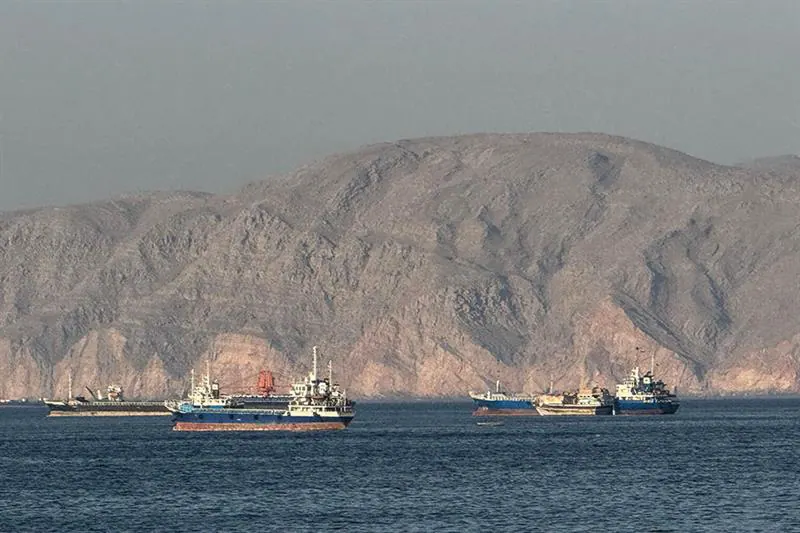
Iranian Foreign Minister Abbas Araghchi stated on Sunday, 27 September 2026, that Iran's conditions for reopening the Strait of Hormuz remain unchanged. The strategic waterway, crucial for global oil exports, has been at the center of a conflict between Iran, the US, and Israel since late February. Araghchi emphasized that Iran will not back down from its demands, which include the lifting of US sanctions and the unblocking of frozen Iranian assets.
The Iranian proposal, submitted to the US on Friday, aimed to reopen the Strait of Hormuz within seven days of acceptance. However, US President Donald Trump rejected the plan on Saturday, labeling it a "cynical" diplomatic move. Trump claimed that Iranian leaders want an agreement because they are "getting badly beaten." The US has imposed a blockade on Iranian ports, and Iran has responded by claiming control over the Strait of Hormuz.
US Ambassador to the United Nations, Mike Waltz, criticized Iran's proposal as an "unacceptable" attempt to manipulate diplomacy. Waltz argued that Iran's demands, including the lifting of sanctions, were already part of a protocol agreement signed in June, which aimed to end the conflict and lead to talks on Iran's nuclear program. However, the agreement fell apart over conditions for passage in the Strait of Hormuz.
Araghchi countered Waltz's accusations, stating that Iran's demands are not new and have been consistently communicated to the US. He emphasized that Iran remains open to diplomacy and negotiations but will not compromise on its rights. The Iranian government has maintained that its proposal is aimed at resolving the conflict and ensuring the stability of the region.
The situation in the region remains tense, with the conflict in Yemen escalating. The Houthi movement, backed by Iran, has launched a deadly offensive, consolidating its control over the strategic Bab el-Mandeb strait. Saudi Arabia's Foreign Minister, Fayçal ben Farhane, warned that the stability of the region is crucial for global energy security, accusing the international community of failing to assume its responsibilities.
On the ground, a relative calm has been observed in recent weeks, with no US strikes on Iran since 1 September. However, Iranian Revolutionary Guards announced on Sunday that they had seized a US underwater drone operating in the Strait of Hormuz for "espionage" purposes. The incident highlights the continued risks of escalation in the region.
The Iranian government is awaiting a definitive response from the US to its proposal. President Massoud Pezeshkian stated that the proposal was developed in coordination with the country's supreme leader, Mojtaba Khamenei. The outcome of the diplomatic efforts remains uncertain, as the US continues to consider options, including potential strikes on Iran after the US midterm elections on 3 November.
Key points
- Iran maintains its conditions for reopening the Strait of Hormuz, including the lifting of US sanctions and the unblocking of frozen Iranian assets.
- US President Donald Trump has rejected Iran's proposal, labeling it a "cynical" diplomatic move.
- The conflict in Yemen has escalated, with the Houthi movement consolidating its control over the strategic Bab el-Mandeb strait.