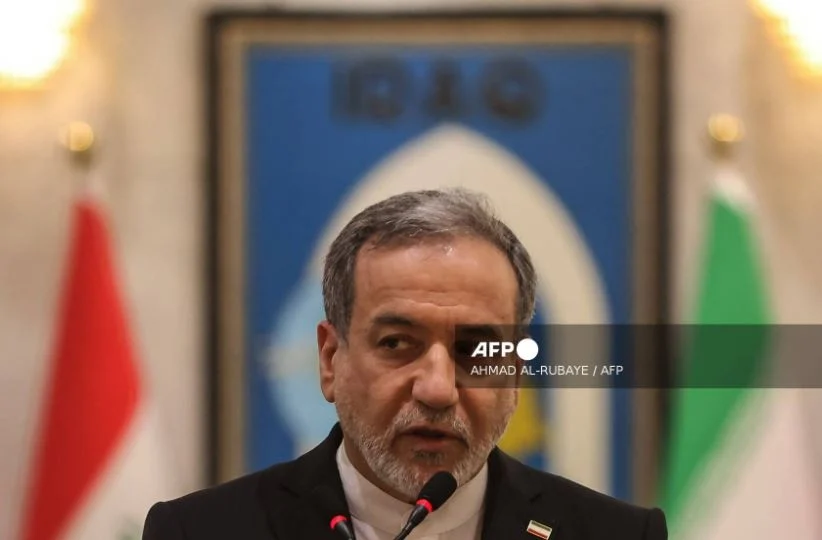
Iranian Foreign Minister Abbas Araghchi stated on Sunday that the conflict between Iran and the United States cannot be resolved through military action. He made this remark at a gathering of foreign ambassadors, emphasizing that if the enemies choose to pursue military confrontation, Iran's response will be stronger than before. Araghchi highlighted that the only viable solution to the conflict is through negotiations based on justice and fairness.
The conflict between the US and Iran began in late February, initiated by the US and Israel. Despite a campaign of heavy bombardment, a decisive close to the war was not achieved. In recent weeks, Washington has shifted its approach from military operations to economic pressure. This change in strategy comes as the two nations had agreed to a Memorandum of Understanding in June, aimed at establishing a framework for a permanent resolution. However, the deal fell through, largely due to disagreements over the Strait of Hormuz.
A key point of contention between Iran and the US is the Strait of Hormuz, a vital shipping lane. Iran has sought to impose control over the strait since the start of the war and has attacked vessels attempting to transit without its authorization. Last week, Iranian and US officials held indirect talks on the sidelines of the United Nations General Assembly, during which Tehran presented seven conditions for reopening the strait. However, US President Trump rejected the proposal while leaving the door open for further talks and potential renewed military operations.
The conflict has also had implications for other regions. The US and Iran have been involved in discussions regarding the conflict in Yemen, where Tehran-backed Houthis have been fighting government forces and attacking Saudi Arabia. Top Trump cabinet members met to discuss both the war in Iran and the situation in Yemen. The US has not conducted any strikes against Iran since September 1, indicating a possible shift in its military strategy.
Araghchi's comments reflect Iran's stance on the conflict, emphasizing that military confrontation will only lead to a stronger Iranian response. He noted that new sanctions are also not a solution, reaffirming the need for negotiations. The Iranian Foreign Minister's remarks come as the international community continues to watch the developments in the region closely, given the potential for escalation.
The situation remains complex, with both sides seemingly open to negotiations but also prepared for further confrontation. The involvement of other countries and the impact on regional stability add to the urgency of finding a resolution. As Araghchi stated, the solution lies in negotiations based on justice and fairness, a point that has been echoed by various international leaders.
The conflict between the US and Iran continues to be a focal point of international attention. With the current situation, it remains to be seen how the two nations will proceed. The emphasis on negotiations and the rejection of military solutions highlight the complexities of the situation.
Key points
- Iran's Foreign Minister Abbas Araghchi says there is no military solution to the conflict with the US.
- The conflict between the US and Iran began in late February, initiated by the US and Israel.
- The Strait of Hormuz remains a key point of contention between Iran and the US.