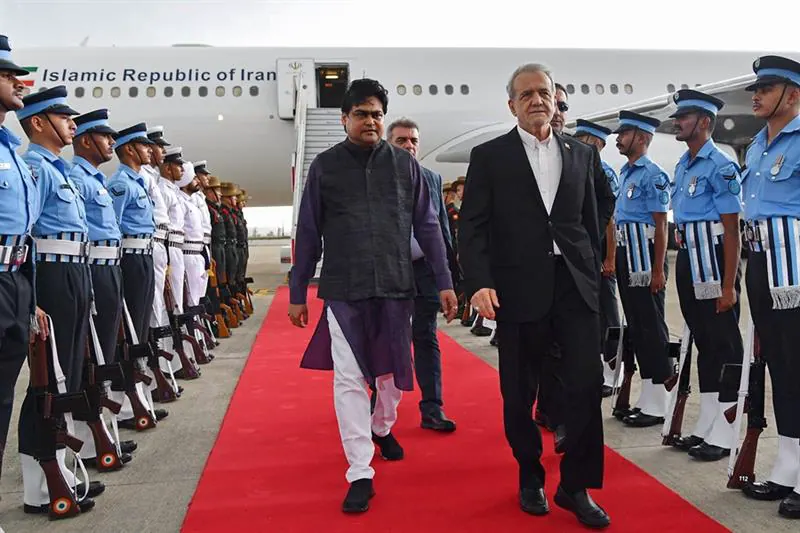
Iranian Foreign Minister Abbas Araghchi landed in New York on Monday, ahead of President Masoud Pezeshkian's expected arrival on Tuesday for the annual UN General Assembly gathering. According to Iranian state media, Pezeshkian will be the highest-ranking Tehran official to enter the United States since the Middle East war began with US-Israeli strikes on Iran in February. Araghchi spoke with UN Secretary-General Antonio Guterres after his arrival, exchanging views on the UN General Assembly agenda.
Araghchi emphasized that Iran's primary objective is to defend the legitimacy, rights, and interests of the Iranian people on the international platform. He will hold talks and consultations with numerous officials and foreign ministers attending the session, according to Foreign Ministry spokesman Esmaeil Baqaei. State media reported that the Iranian delegation will be led by Pezeshkian, with Araghchi heading a diplomatic delegation.
The US has authorized an Iranian delegation to travel for the UN gathering but has imposed restrictions. Iran's delegation will not be allowed to purchase luxury goods or other items during their stay in New York City, the State Department said. Additionally, the US refused to issue visas to members of the delegation, including the communications team. This development highlights the ongoing tensions between the US and Iran.
Before departing for New York, President Pezeshkian vowed to "firmly defend" Iran's positions at the UN General Assembly. He emphasized that Iran has emerged with dignity and pride, and will continue to defend its positions in international forums. Araghchi had a stopover in Qatar, where he likely discussed Iran's conditions for reopening the strategic Strait of Hormuz oil and gas shipping route.
The Strait of Hormuz has been effectively choked off by Iran since the start of the Middle East war. Iran has conveyed its conditions to the US via Qatar as a mediator. In response, the US is imposing a counterblockade of Iranian ports. These developments have significant implications for regional tensions and global energy markets.
The UN General Assembly will address various pressing issues, including the war in the Middle East, the rise of AI, and climate shocks. Iran's participation in the gathering provides an opportunity for the country to present its positions and engage with international leaders. The Iranian delegation's activities in New York will be closely watched, given the current state of US-Iran relations.
The restrictions imposed by the US on the Iranian delegation reflect the ongoing diplomatic tensions between the two countries. Despite these challenges, Iran's participation in the UN General Assembly demonstrates its commitment to engaging with the international community. The outcome of these discussions may have significant implications for regional dynamics and global diplomacy.
Key points
- Iran's Foreign Minister Abbas Araghchi arrives in New York for the UN General Assembly, amid heightened tensions with the US.
- The US has imposed restrictions on the Iranian delegation, including refusing visas to some members and limiting purchases during their stay in New York City.
- Iran's participation in the UN General Assembly provides an opportunity for the country to present its positions and engage with international leaders.