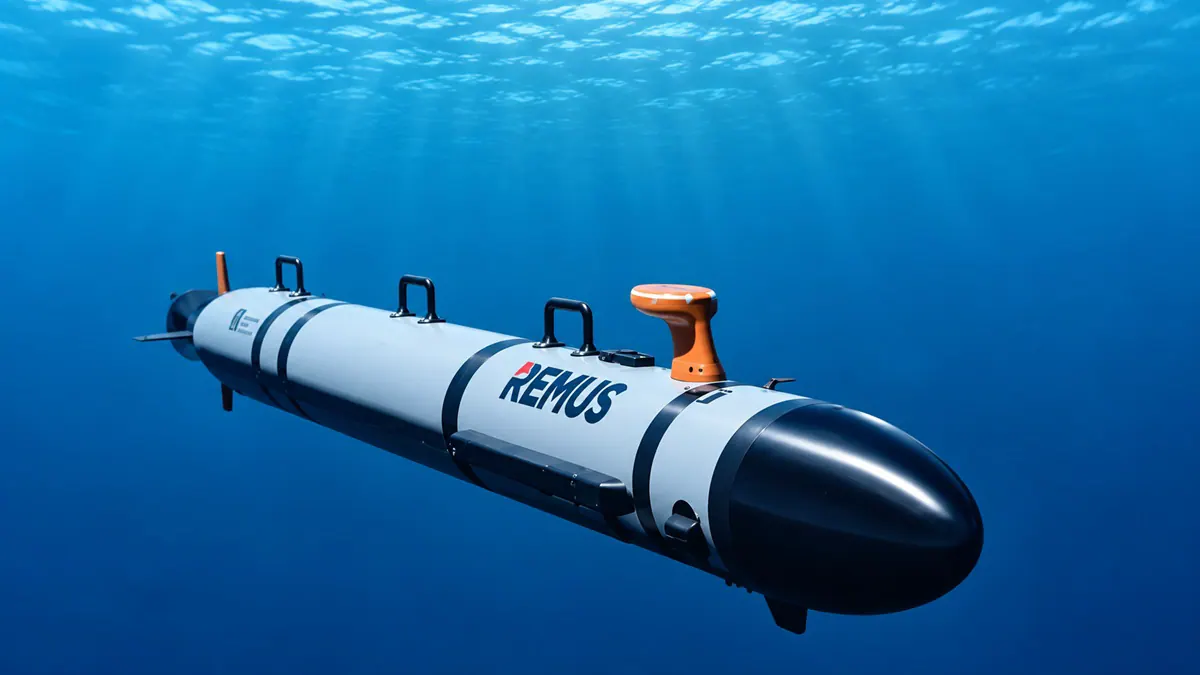
Iran's Islamic Revolutionary Guard Corps (IRGC) Naval Forces have claimed the capture of a second advanced US unmanned underwater vehicle, identified as a Remus 600, in the Strait of Hormuz. The IRGC alleges that the vehicle was conducting an espionage mission. According to the IRGC, the operation involved intelligence surveillance and electronic warfare, and the vehicle has been handed over to Iranian specialists for examination and data recovery.
The IRGC also declared that the Strait of Hormuz remains closed, warning vessels against using routes not authorised by Iran. The strait is a strategic waterway, and tensions between Iran and the US have been high over control of the area. The IRGC warned that vessels using unauthorised routes "will not have security." This development comes after US President Donald Trump rejected Iran's proposed seven-day ceasefire and roadmap for reopening the strait.
Iranian President Masoud Pezeshkian and senior military officials have vowed that Tehran will not retreat in the face of US pressure. Following his return from the United Nations General Assembly, Pezeshkian said Tehran would remain firm against the US and Israel. The IRGC's claim comes less than three weeks after Iran announced the capture of another US underwater drone, identified as a Dive-LD.
The US military acknowledged losing the vehicle but said it had malfunctioned more than a day before Iranian forces recovered it. The Pentagon also said the older platform had not collected sensitive information or carried classified sonar or radar equipment. Iran had proposed a seven-day roadmap aimed at ending the fighting and reopening the Strait of Hormuz, which included the lifting of the US naval blockade of Iranian ports and easing restrictions on Iranian oil sales.
Senior Iranian Armed Forces spokesman, Brigadier General Abolfazl Shekarchi, warned Washington against interfering with Tehran's management of the strait. He emphasised that the Americans should not dream of interfering in the management of the Strait of Hormuz. The situation in the Strait of Hormuz remains volatile, with both sides appearing entrenched in their positions.
The capture of the Remus 600 has raised concerns about the security of the Strait of Hormuz, a critical waterway for global oil supplies. The incident has also sparked fears of an escalation in tensions between Iran and the US, which could have far-reaching consequences for regional and global stability. The international community is closely watching developments in the area.
The incident highlights the complex and often tense relationship between Iran and the US, with both sides engaging in a war of words and actions. The situation in the Strait of Hormuz remains a critical issue, with implications for global energy security and regional stability.
Key points
- Iran's IRGC claims capture of second US underwater drone in Strait of Hormuz.
- The incident raises concerns about the security of the Strait of Hormuz and potential escalation in tensions between Iran and the US.
- The situation in the Strait of Hormuz remains volatile, with both sides appearing entrenched in their positions.