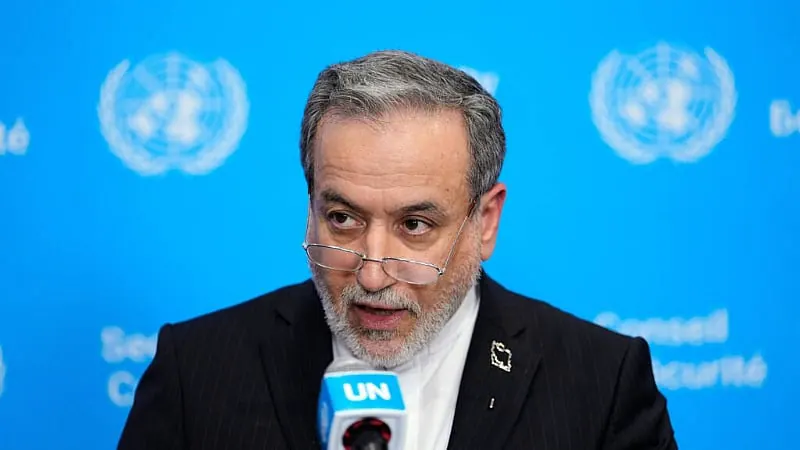
Iranian Foreign Minister Abbas Araghchi stated on Monday that he anticipates a formal response from the United States on Tuesday regarding Iran's proposal to open the Strait of Hormuz. This information was conveyed through Qatari intermediaries who have been facilitating discussions between the two nations. Araghchi, who is currently in New York for the UN General Assembly, mentioned that the Qataris are hopeful that the US response will be communicated by Tuesday.
The Strait of Hormuz, a vital waterway for global oil and liquefied natural gas shipments, has been at the center of the conflict between the US and Iran. Prior to the war, it was responsible for carrying a fifth of the world's oil and liquefied natural gas. Iran imposed a blockade on the strait after the war began, prompting the US to respond with its own blockade on Iranian ports. The situation has remained tense, with both sides maintaining their stances.
According to Araghchi, the current focus is solely on the Strait of Hormuz, and its reopening is contingent upon the fulfillment of certain conditions communicated to the US. These conditions include a seven-day ceasefire across the Middle East, the unfreezing of Iranian assets abroad, the lifting of sanctions on Iran's oil sector, and an end to the US naval blockade. Iran's top diplomat emphasized that the proposal's success hinges on the US's willingness to meet these demands.
Last week, discussions were held in New York between Araghchi and US envoys Steve Witkoff and Jared Kushner. The meetings were part of ongoing efforts to find a resolution to the conflict. Although details of the discussions were not disclosed, it is understood that the US and Iran are exploring possible avenues for de-escalation. The involvement of Qatari intermediaries has been crucial in facilitating communication between the two nations.
The conflict between the US and Iran began with US and Israeli strikes on Iran in late February. Since then, tensions have escalated, with both sides engaging in a war of words and economic sanctions. The blockade of the Strait of Hormuz has had significant implications for global energy markets, leading to increased oil prices and concerns about supply disruptions.
The international community has been closely watching the developments, with many countries calling for restraint and diplomatic engagement. The UN General Assembly, where Araghchi is currently participating, provides a platform for world leaders to discuss pressing global issues, including the Iran-US conflict. A resolution to the crisis could have far-reaching implications for regional and global stability.
The US response to Iran's proposal is expected to play a crucial role in determining the course of action. If the US agrees to meet Iran's demands, it could pave the way for a de-escalation of tensions and potentially even a new agreement. However, if the US rejects the proposal, it could lead to further escalation and increased tensions between the two nations.
Key points
- Iran's Foreign Minister Abbas Araghchi expects a US response on Tuesday to Tehran's proposal to reopen the Strait of Hormuz.
- The Strait of Hormuz has been at the center of the conflict between the US and Iran, with both sides maintaining blockades on each other's ports.
- Iran's proposal to reopen the Strait of Hormuz is contingent upon the fulfillment of certain conditions, including a seven-day ceasefire across the Middle East and the lifting of sanctions on Iran's oil sector.