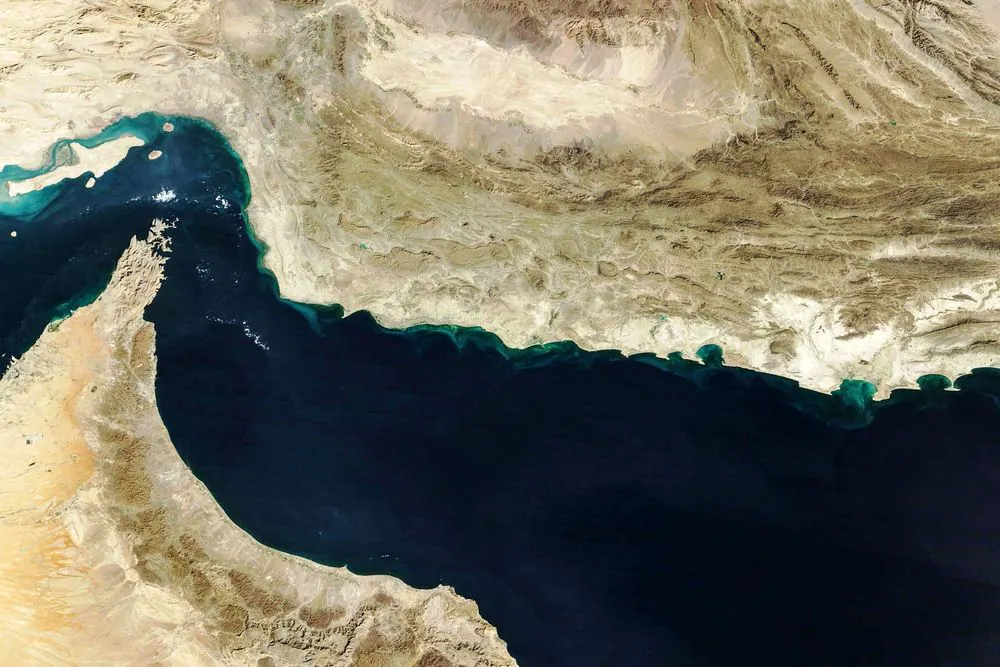
Iranian Foreign Minister Abbas Araghchi stated that Tehran is expecting a formal response from the United States on Tuesday regarding its proposal to reopen the Strait of Hormuz. This development comes through Qatari mediation, with Araghchi indicating that Qatari intermediaries have discussed ideas with Tehran and are set to raise the matter with the American side once more.
The Strait of Hormuz, a critical shipping route, has been at the center of the conflict between the United States and Iran. Before the war began, the strait carried a fifth of the world's oil and liquefied natural gas. Iran imposed a blockade on Hormuz after the war started, prompting the US to respond with its own blockade on Iranian ports.
Araghchi, who is in New York for the UN General Assembly, mentioned that the Qataris hope to convey the final US response by Tuesday. He emphasized that the current focus is solely on the Strait of Hormuz and that its reopening is contingent upon the fulfillment of certain conditions communicated to the other side.
As a precondition for ending its blockade, Iran is demanding a seven-day ceasefire across the Middle East, including in Lebanon, where its ally Hezbollah has been battling Israeli forces. Additionally, Iran is demanding the unfreezing of its assets abroad, the lifting of sanctions on its oil sector, and an end to the US naval blockade.
Last week, discussions were held in New York between Araghchi and US envoys Steve Witkoff and Jared Kushner. These talks are part of ongoing efforts to address the tensions between the US and Iran, which began with US and Israeli strikes on Iran in late February.
The situation in the Strait of Hormuz has significant implications for global oil prices. The recent conflict has contributed to increased fuel prices, with Brent crude remaining around $100 a barrel. This has had a ripple effect on countries like South Africa, where fuel price hikes are expected to be substantial in October.
The international community is closely watching the developments in the Strait of Hormuz, given its critical role in global energy supplies. A resolution to the conflict could help stabilize oil prices and reduce tensions in the region. Key points include Iran's demands for a ceasefire and sanctions relief, the role of Qatari mediation, and the potential impact on global oil supplies.
Key points
- Iran expects a formal US response on Tuesday to its proposal to reopen the Strait of Hormuz.
- The Strait of Hormuz is a critical shipping route that carries a significant portion of the world's oil and liquefied natural gas.
- Iran's demands for ending its blockade include a seven-day ceasefire, unfreezing of assets, lifting of sanctions, and an end to the US naval blockade.