A senior Iranian official has stated that Iran and the US remain far apart on how to end their ongoing conflict, despite continued diplomatic efforts. The official, who spoke on condition of anonymity, said Tehran is reviewing Washington's response to its peace proposals, which prioritize lifting a US naval blockade on Iranian ports and reopening the Strait of Hormuz. The official emphasized that diplomacy must continue, but significant differences between the two sides remain.
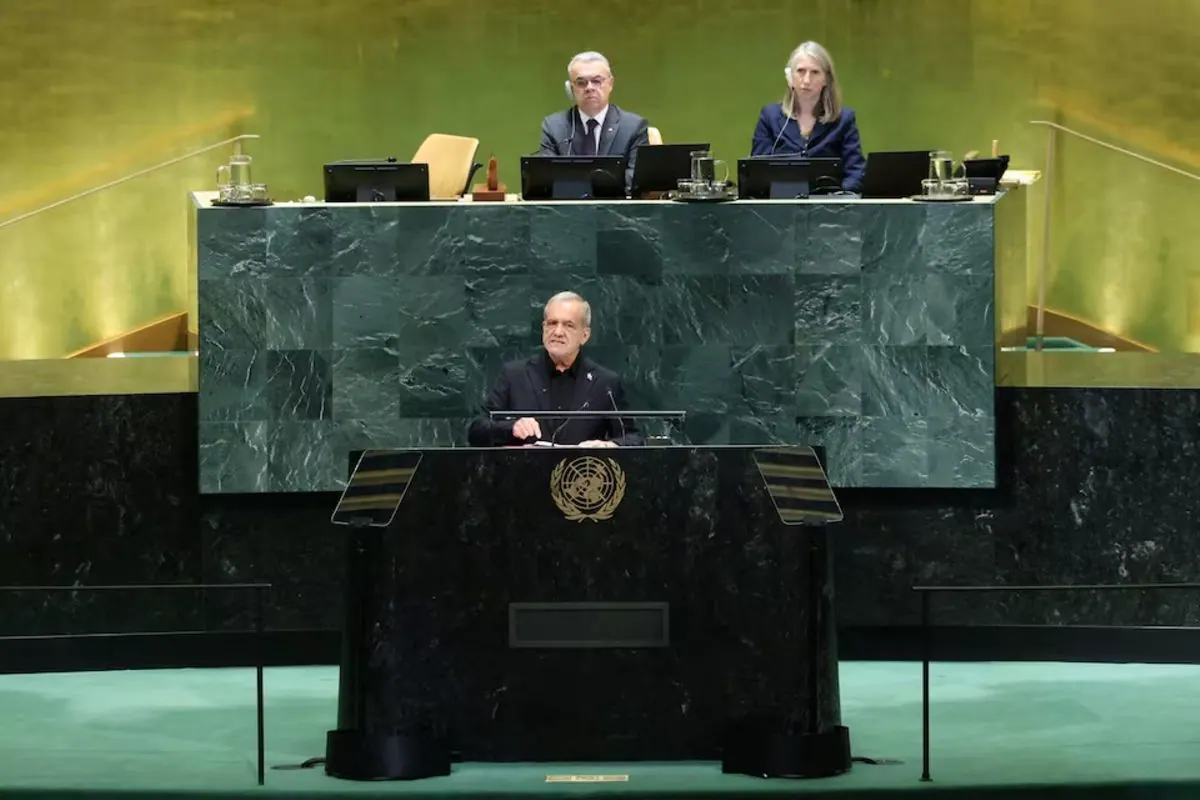
Iranian President Masoud Pezeshkian, in a speech at the UN General Assembly, condemned what he called "signs of a bullying mentality" from US President Donald Trump, who had threatened to "annihilate" Iran. Pezeshkian vowed that the Iranian people would not bow to pressure and reiterated Iran's stance that it is not seeking nuclear weapons. He also emphasized the need for the Strait of Hormuz to remain open to international shipping.
The US and Iran have held indirect talks in recent days, with Iranian Foreign Minister Abbas Araqchi and US envoys Steve Witkoff and Jared Kushner communicating through mediators. Iranian Foreign Ministry spokesperson Esmail Baghaei said Tehran had conveyed conditions during a two-hour exchange of messages with Washington, including an end to the war on all fronts, a halt to US "acts of aggression," and the release of frozen Iranian assets.
The diplomatic contact in New York has caused a backlash in Iranian media associated with hardliners, who view the talks as a concession to the US. An opinion piece in the semi-official Tasnim news agency said Araqchi was wrong to have contacts with Witkoff and Kushner, calling it "a major gift to Trump." Iranian sources said the delegation had been ordered not to meet the Americans face-to-face by the Supreme National Security Council.
The war, launched by Trump in February, has lasted nearly seven months, killing thousands of people, disrupting global energy supplies, and spreading to other countries in the region. The conflict has had significant economic impacts, including a rise in oil prices and shortages of refined products such as diesel. Despite near-daily attacks, traffic through the Strait of Hormuz has picked up in recent weeks.
US Secretary of State Marco Rubio has stated that a deal with Iran would involve hard work over a period of time and that Trump also has military options. The US has also said it will impose secondary sanctions against any country that allows Iranian flights after Wednesday. Mohsen Rezaei, secretary of Iran's Supreme National Security Council, has warned that Iran would ensure neighboring countries' airports could not function if they stop Iranian flights.
The conflict has had significant regional impacts, with exports from the United Arab Emirates recovering to pre-war levels and Saudi Arabia selling 60 million barrels of Gulf oil for both this month and next. However, a third of Gulf oil is estimated to be missing from global supplies, causing inflation, pushing up interest rates, and hurting Trump's Republicans. The situation remains complex, with many differences between the Iranian and US positions.
Key points
- Iran and US remain far apart in peace talks
- Iranian President Masoud Pezeshkian vows no surrender to US pressure
- Diplomatic efforts continue despite significant differences between the two sides