Iranian Foreign Minister Abbas Araqchi announced on September 24 that Tehran has presented a plan to the United States to reopen the Strait of Hormuz, a vital waterway for global oil exports. The plan, introduced through intermediaries, requires the US to meet specific conditions, Araqchi told reporters at the United Nations General Assembly in New York. While he did not provide details, he stated that the Strait of Hormuz could be open within seven days if the conditions are met.
The plan is part of a broader effort to revive stalled diplomacy between Iran and the US. The two countries signed a 60-day memorandum of understanding on June 17, aimed at ending hostilities and reopening the strait. However, disputes over the agreement's terms have led to renewed attacks by both sides. Despite this, Araqchi expressed optimism, stating that talks would restart if the conditions are met.
The US and Iran have been engaged in indirect talks, with a White House official describing the discussions as "positive and constructive." However, significant differences remain between the two sides. Iranian President Masud Pezeshkian, in an address to the UN General Assembly, rejected US pressure, stating that Iran would not bend under pressure. US President Donald Trump, in his own address, threatened to annihilate Iran if no agreement is reached.
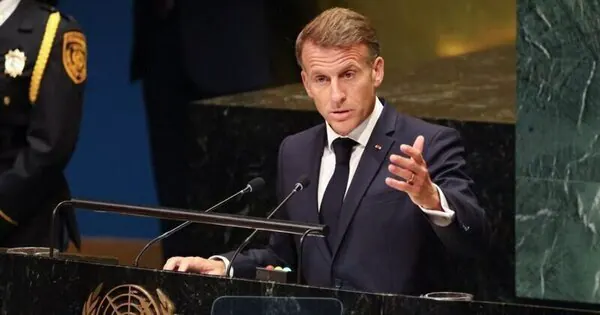
The conflict has spilled over into other regions, with French President Emmanuel Macron announcing that Paris will send troops and defense systems to Saudi Arabia to protect its Red Sea oil port of Yanbu. The move comes as Yemen's Iran-aligned Houthi rebels have intensified attacks on energy facilities in Saudi Arabia. Macron stated that the aim is to protect the site without getting involved in any conflicts.
The Houthi rebels have made significant gains in Yemen, seizing control of the Bab al-Mandab Strait, a key chokepoint for global trade. The group has also launched attacks on Saudi Arabia, prompting Riyadh to temporarily shut down a crucial oil pipeline after a drone attack blamed on a pro-Iranian militia in Iraq.
Meanwhile, Iranian security forces have been engaged in heavy fighting in the southeastern city of Saravan, near the border with Pakistan. A senior commander in Iran's Revolutionary Guard Corps, Brigadier General Hossein Zarifi, was killed during the operation. The circumstances of his death and the identity of the forces IRGC was fighting remain unclear.
The complex diplomacy and ongoing violence highlight the challenges in resolving the conflict between Iran and the US. European Council President Antonio Costa has urged Iran to restore freedom of navigation, halt strikes on its neighbors, and resume cooperation with the UN nuclear watchdog. Despite the tensions, both sides have expressed openness to negotiations, leaving room for a potential breakthrough.
Key points
- Iran presents plan to US to reopen Strait of Hormuz under certain conditions
- US and Iran engage in indirect talks, but significant differences remain
- Conflict spills over into other regions, including Yemen and Saudi Arabia