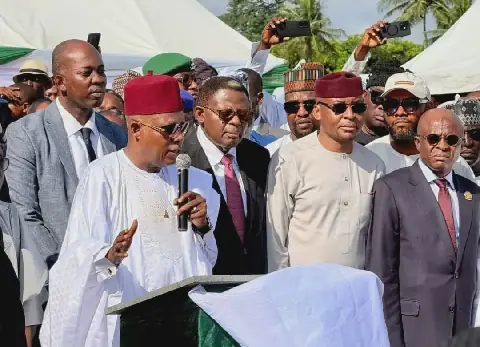
The Inter-Party Organisation for Dialogue (IPOD) has agreed to integrate the Consociational Democracy Agreement (CDA) initiative into the Uganda National Dialogue (UND) Framework. This decision was made during a meeting hosted by General Caleb Akandwanaho Salim Saleh at his Kirema Heritage Farm in Nakaseke. The meeting was attended by members of the National Consultative Forum (NCF) for Political Parties and other stakeholders. They reflected on Uganda's political and governance challenges and explored pathways towards national consensus.
Major opposition parties, however, shunned the talks over concerns about venue neutrality and procedures. The Forum for Democratic Change (FDC) party president Patrick Oboi Amuriat stated that his party's decision followed an emergency senior management meeting. The FDC had preconditions for a dialogue, including a well-crafted agenda, a neutral convenor, well-defined parties to the dialogue, a neutral venue, and a guarantor of the outcomes of the dialogue. Amuriat argued that the Nakaseke meeting violated these principles.
Amuriat compared the farm invitation to a recent IPOD and NCF retreat in Jinja, which was hosted at a hotel. He said the Jinja venue was convenient for all stakeholders and preserved the institutional sanctity of the participating parties. Other opposition voices also criticized the dialogue venue. Frank Bulira of the Revolutionary People's Party (RPP) and the Uganda Federal Democratic Organisation (UFDO) questioned the accountability and utilization of IPOD funds.
Bulira accused IPOD of operating under the shadow of President Museveni while pretending to represent opposition interests. He demanded the immediate release of detained veteran opposition leaders Dr Kizza Besigye and Kampala Lord Mayor Erias Lukwago. The National Unity Platform (NUP) Secretary General David Lewis Rubongoya confirmed that they did not send representatives to the Nakaseke meeting, citing their long-standing refusal to participate in IPOD activities.
According to participants, the decision to integrate the CDA initiative into the UND Framework was based on previous dialogue efforts and emerging national challenges. The national dialogue framework was established by President Museveni on December 18th, 2018, and chaired by then Prime Minister Dr Ruh. The framework aims to address Uganda's political and governance challenges through a collaborative approach.
The meeting's outcome was announced through a joint press release issued by the NCF Chairman Godfrey Kiwanda, Gerald Siranda, the IPOD chairman, and Prof Ogenga Otunnu, the Team Leader CDA. The integration of the CDA initiative into the UND Framework is seen as a step towards achieving national consensus and addressing Uganda's political challenges.
The IPOD agreement to integrate the CDA initiative into the UND Framework marks a significant development in Uganda's political landscape. While some opposition parties shunned the talks, others see this as an opportunity for constructive dialogue and addressing the country's governance challenges. The success of this initiative remains to be seen, as Uganda continues to navigate its complex political landscape.
Key points
- IPOD agrees to integrate Consociational Democracy Agreement into Uganda National Dialogue Framework
- Major opposition parties shun talks over venue neutrality and procedural concerns
- National dialogue framework aims to address Uganda's political and governance challenges through collaboration