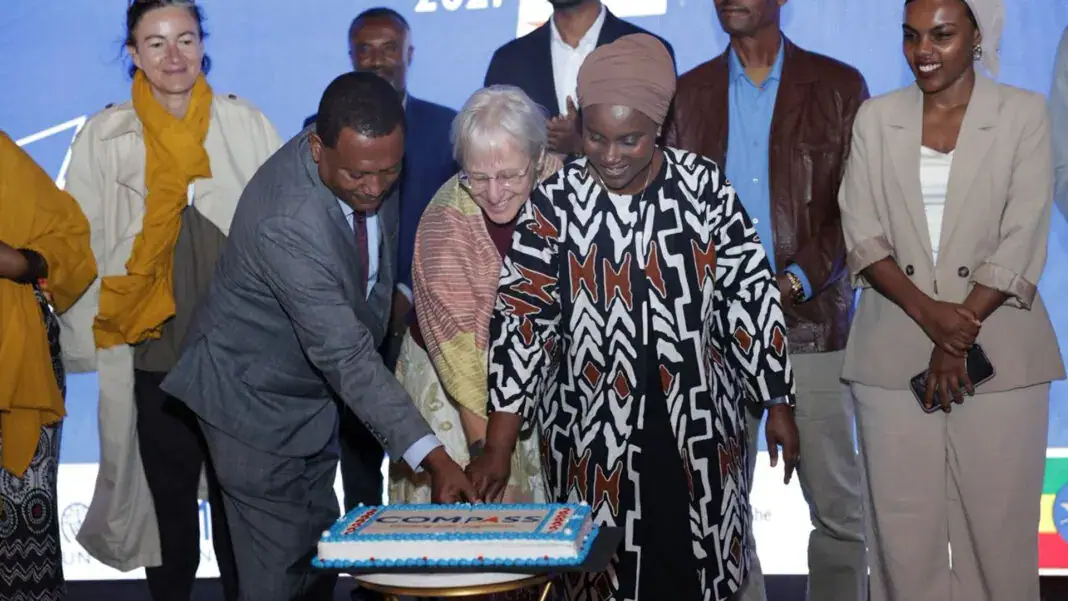
The International Organization for Migration (IOM) is urging a stronger government-led and coordinated approach to migration management in Ethiopia. This call comes as the IOM's five-year Cooperation on Migration and Partnerships to Achieve Sustainable Solutions (COMPASS) programme enters its final year in 2027. The programme has made significant progress in strengthening migration governance frameworks, building institutional capacity, and improving protection and reintegration services for migrants and returnees.
The COMPASS programme has provided direct protection assistance to over 17,000 migrants in vulnerable situations, including food, accommodation, medical support, psychosocial assistance, and onward transportation. Additionally, it has supported individual and community-based reintegration initiatives. According to Memory Mwale, IOM Ethiopia's Senior Programme Officer for Protection, the programme expects to reach approximately 20,000 people receiving direct assistance by its conclusion in 2027.
The programme has also supported the development or revision of key migration policies and frameworks, equipped 266 legislators and policymakers with information and tools, and provided capacity-building support to 512 government officials and stakeholders. Furthermore, it has trained 383 specialized protection practitioners and 402 community actors, while 372 stakeholders have participated in developing and implementing locally led initiatives.
Mwale emphasized that sustaining these achievements would require continued cooperation with government institutions and other partners, particularly in addressing the factors driving irregular migration. The search for better economic opportunities remains a major reason people leave the country through irregular routes. Unemployment and limited livelihood opportunities, alongside pressures such as drought and climate change, can increase the desire to migrate.
The IOM has been working with government institutions to promote regular migration pathways, raise awareness among communities about the risks of irregular migration, and strengthen efforts to combat human trafficking and migrant smuggling. The organization has also supported returning migrants through transit and migration response centres in five border areas, including those bordering Djibouti and Somalia.
Government officials and representatives of the Netherlands Embassy, IOM, and other partners have reviewed the programme's achievements and discussed priorities for sustaining its work. Dereje Tegyebelu Habtemichael, Chief Executive Officer of Prevention of Trafficking in Persons and Returnees Affairs at the Ministry of Women and Social Affairs, stated that the government is committed to sustaining the partnership and strengthening migration governance under national leadership.
The Netherlands Ambassador to Ethiopia, Christine Pirenne, reaffirmed the Netherlands' commitment to promoting safe migration, curbing irregular migration, and strengthening local capacities. The COMPASS programme is implemented through cooperation between IOM and the Ministry of Foreign Affairs of the Kingdom of the Netherlands, with the second phase running from 2024 to 2027. The IOM says it will continue working with the Ethiopian government and local partners to strengthen migration systems and sustain support for migrants and communities.
Key points
- IOM calls for a government-led approach to sustain migration support in Ethiopia.
- COMPASS programme has provided assistance to over 17,000 migrants.
- Programme expects to reach 20,000 people receiving direct assistance by 2027.
Reporting sources
- IOM Seeks Government-Led Approach to Sustain Migration Support · Capital Ethiopia