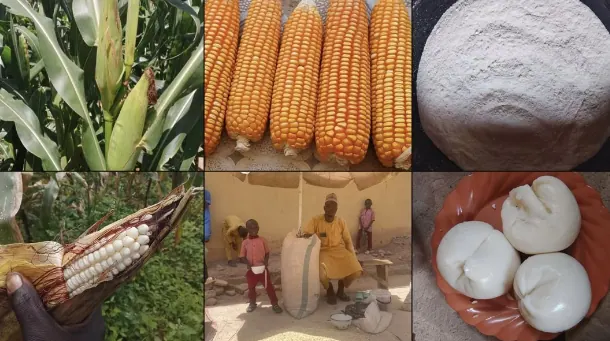
A recent investigation has shed light on the journey of Nigeria's first genetically modified maize, known as TELA maize, from research laboratories to farms, markets, and household kitchens. The 13-month investigation, conducted across Kano, Kaduna, and Niger states, found growing adoption among farmers, no verified evidence linking the crop to health problems, and widespread consumer ignorance about what they are eating. Many Nigerian consumers, like Hauwa Saminu, are unaware of the type of maize they buy and consume.
Maize is one of Nigeria's most important staple crops, consumed daily in different forms, including tuwo, pap, roasted corn, boiled corn, and livestock feed. However, two major challenges have threatened maize production: prolonged drought associated with climate change and the destructive fall armyworm (FAW). The FAW, first detected in Nigeria in 2016, has spread rapidly across maize-growing states, destroying farms and forcing farmers to spend heavily on pesticides.
To address the problem, scientists developed the TELA maize project, a multi-country research initiative coordinated by the African Agricultural Technology Foundation (AATF) in partnership with the International Maize and Wheat Improvement Centre (CIMMYT), Bayer Crop Science, and National Agricultural Research institutes across Nigeria, Kenya, Ethiopia, Mozambique, and South Africa. The project aimed to develop drought-tolerant and insect-resistant maize for smallholder farmers in sub-Saharan Africa.
The TELA maize project built on more than a decade of research under the Water Efficient Maize for Africa (WEMA) project, which sought to develop drought-tolerant maize for African farmers. The TELA maize combines conventional hybrid breeding with biotechnology to make the plant resistant to destructive insect pests and drought-tolerant. It contains a Bt gene from Bacillus thuringiensis, a soil bacterium, which produces proteins that target specific pests.
In Nigeria, the Institute for Agricultural Research (IAR) developed and adapted the technology at Ahmadu Bello University in Kaduna in collaboration with AATF. Muhyideen Oyekunle, Traits Pipeline Testing Lead at the IAR, explained that the Bt proteins disrupt the digestive systems of targeted pests when they feed on the plant, protecting the crop from damage. The drought-tolerance trait allows the crop to withstand periods of water stress.
Before TELA maize could be commercially cultivated in Nigeria, it underwent years of research and assessments. The National Biosafety Management Agency (NBMA), Nigeria's statutory regulator for genetically modified organisms (GMOs), was involved in the evaluation process. The agency's role is crucial in ensuring that genetically modified crops are safe for human consumption and the environment.
The investigation's findings raise questions about transparency, consumer awareness, and Nigerians' right to informed choice. Many consumers, like Hauwa Saminu, buy maize without knowing its type or origin. The report highlights the need for increased awareness and education about genetically modified crops and their presence in the food chain.
Key points
- The TELA maize project is a multi-country research initiative aimed at developing drought-tolerant and insect-resistant maize for smallholder farmers in sub-Saharan Africa.
- The investigation found growing adoption of TELA maize among farmers, no verified evidence linking the crop to health problems, and widespread consumer ignorance about what they are eating.
- The National Biosafety Management Agency (NBMA) is Nigeria's statutory regulator for genetically modified organisms (GMOs) and plays a crucial role in ensuring the safety of genetically modified crops.