Former Tamale Central MP Inusah Fuseini has expressed concerns over the proposed extension of the tenure of the President and Members of Parliament from four to five years. The proposal, contained in the report of the Constitution Review Committee chaired by Professor H. Kwasi Prempeh, has been accepted by the government. However, Mr. Fuseini argues that the current four-year term already provides sufficient time for an elected government to implement its policies.
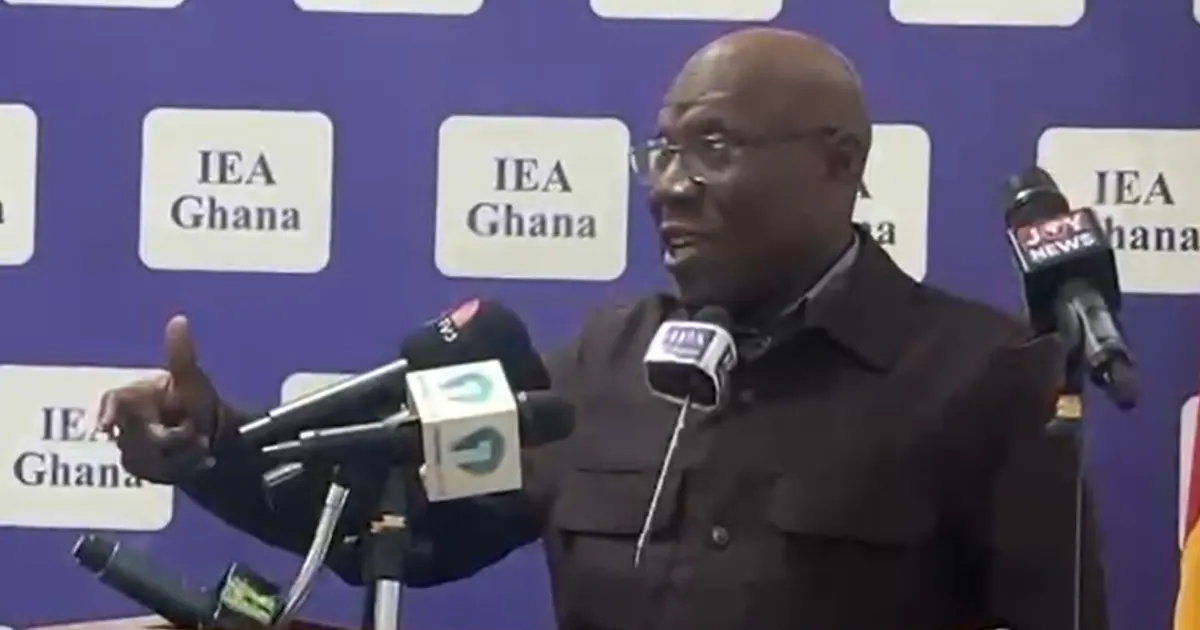
Speaking at a press briefing on September 23, ahead of an Institute of Economic Affairs (IEA) seminar on the constitutional review, Mr. Fuseini questioned the rationale for extending the tenure. He argued that the last year of a four-year term is often used for campaigning for re-election, leaving only three effective years for policy implementation. "So why do you say five?" he asked, adding that he sees no rational basis for the extension.
Mr. Fuseini also rejected the argument that a five-year term would improve policy continuity. According to him, the 1992 Constitution already provides for continuity in governance through the Directive Principles of State Policy. He noted that the Constitution anticipates that a President may not be able to complete all policy initiatives within a single term and that subsequent governments can continue or improve on existing projects.
The former MP was speaking ahead of the IEA's "Views and Reflections" seminar on the Prempeh Committee's report and the government's position on proposed constitutional reforms. The IEA itself has rejected the proposed extension of presidential and parliamentary terms, arguing that four years is sufficient for an elected government to implement its programme.
Mr. Fuseini's concerns are shared by some stakeholders who argue that the proposed extension could lead to abuse of power and undermine accountability. The government, however, has argued that an additional year would give governments more time to formulate, implement, and assess policies. The debate on the proposed constitutional reforms is ongoing, with various stakeholders weighing in on the issue.
The Constitution Review Committee, chaired by Professor Prempeh, was established to review the 1992 Constitution and propose reforms. The committee's report has sparked a national debate on various issues, including the proposed extension of presidential and parliamentary terms. The government has accepted some of the recommendations, but others, like Mr. Fuseini, have expressed concerns.
The Institute of Economic Affairs (IEA) has been actively engaged in the debate on constitutional reforms, hosting seminars and discussions on the issue. The organization has argued that the proposed extension of presidential and parliamentary terms could have significant implications for Ghana's democracy and governance.
Key points
- Inusah Fuseini rejects the proposed five-year term for President and MPs, citing lack of rational basis.
- The Institute of Economic Affairs (IEA) also rejects the proposed extension, arguing that four years is sufficient for an elected government to implement its programme.
- The debate on constitutional reforms is ongoing, with stakeholders weighing in on the proposed changes.