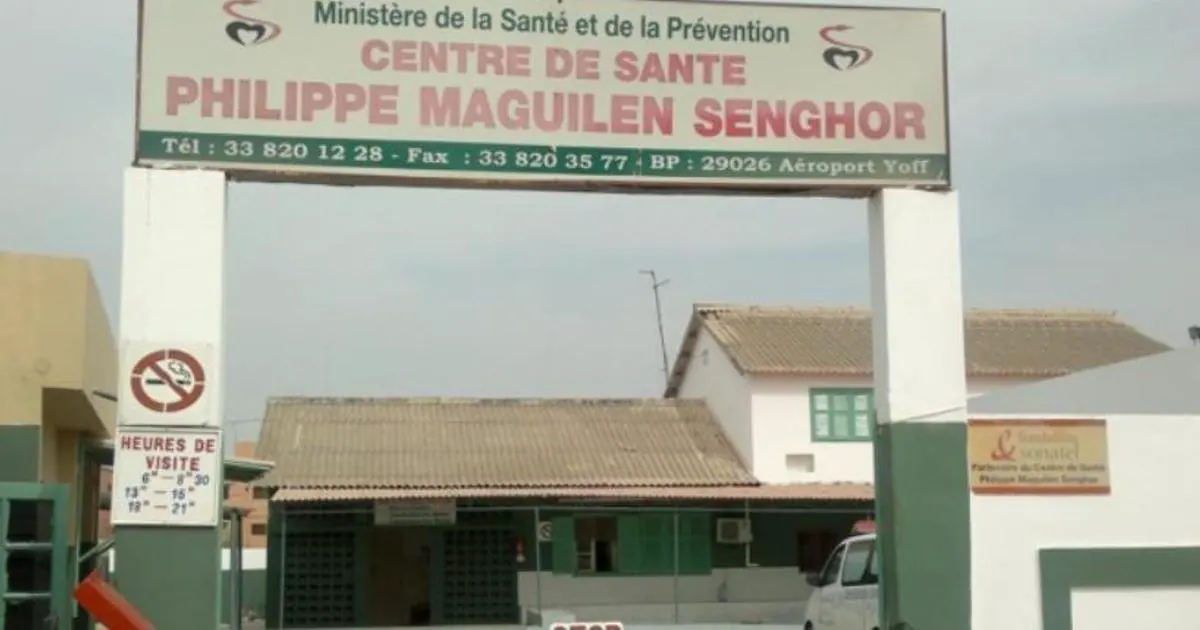
The Philippe Maguilène Senghor health center in Dakar, Senegal, continues to struggle with flooding issues. Every heavy rainfall event brings water rushing into the facility. According to Cheikh Seck, secretary general of the Sdt3s and president of the Fédération des syndicats de la santé, the health center's location in a low-lying area is a major contributor to the problem. The site's topography causes rainwater to converge on the center.
The construction of a nearby bridge has exacerbated the flooding issue. Seck believes that the bridge has altered the natural flow of rainwater, directing it towards the health center. He also points to a broader issue with urban planning in Dakar, where infrastructure development often neglects environmental impact assessments. This has resulted in recurring flooding problems, not just at the Philippe Maguilène Senghor health center.
Mballo Dia Thiam, secretary general of the Sutsas and president of the Asas And Gueusseum, shares similar concerns. He notes that the health center was built in a natural depression or "bas-fond". This makes it prone to flooding, which not only damages equipment but also threatens medical, technical, and accounting archives. The site's history is also significant, as it is named after Philippe Maguilen Senghor, son of former President Léopold Sédar Senghor.
The health center's flooding issues have persisted over the years, with no lasting solution in sight. Both Seck and Thiam emphasize the need for a comprehensive approach to address the problem. Seck advocates for a master plan to improve the site's drainage and prevent future flooding. This could involve constructing a dike to redirect rainwater away from the center.
Thiam proposes a more drastic solution: relocating the health center altogether. He suggests exploring the possibility of building a new facility on the site of the former pilgrims' hangar at Léopold Sédar Senghor Airport in Yoff. This would remove the health center from the flood-prone area and provide a safer environment for patients and staff.
The issue of flooding at the Philippe Maguilène Senghor health center highlights a broader challenge facing Dakar's urban development. As the city grows and expands, its infrastructure must be designed to withstand environmental pressures. The health center's situation serves as a case study for the need for sustainable and well-planned urban development.
The Senegalese authorities have not yet announced a plan to address the flooding issues at the Philippe Maguilène Senghor health center. However, the concerns raised by Seck and Thiam have brought attention to the problem and the need for a comprehensive solution. The situation will continue to be monitored as the city looks for ways to mitigate the effects of flooding on its infrastructure.
Key points
- The Philippe Maguilène Senghor health center's flooding issues are attributed to its low-lying location and poor urban planning.
- A comprehensive approach, including a master plan for drainage and possibly relocating the health center, is needed to address the flooding problem.
- The situation highlights the broader challenge of sustainable urban development in Dakar.