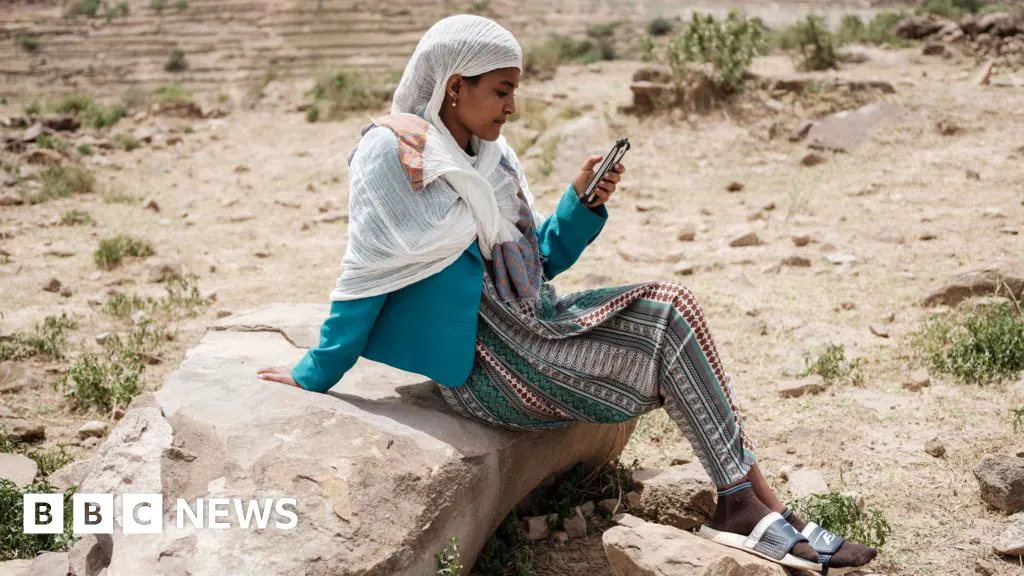
Internet and call services have been disrupted in Ethiopia's northern region of Tigray following the outbreak of fighting this week between regional forces and the national army. The disruption affects services provided by state-owned telecoms operator Ethio Telecom, although those from smaller private firm Safaricom remain operational. This development has significantly impacted the region's communication capabilities.
The internet monitoring group NetBlocks reported a sub-national internet shutdown in northern Tigray. A humanitarian worker in Tigray's capital, Mekelle, Duke Burbridge, confirmed that telecommunications were knocked out. The cause of the disruption and the party responsible for it remain unclear. The BBC has contacted Ethiopia's authorities for comment but has not received a response yet.
Sources suggest that the Tigray People's Liberation Front (TPLF), which controls Tigray, ordered the communications blackout to disrupt government drones. However, the TPLF has not commented on this information. The current disruption has exacerbated the challenge of obtaining information on the ground, with limited video and images available to establish what is happening in Tigray.
The scarcity of cash in Tigray has been a significant issue for the past eight months, with people unable to access ATMs. The lack of internet services will further complicate transactions, as many people rely on banking and mobile money applications. A Mekelle resident, Fitsum, reported that there is almost no cash in the city, and people are limiting their movements due to the outbreak of war.
Clashes between Tigrayan forces and their allies and Ethiopia's federal troops broke out on Wednesday, prompting fears of a return to full-scale civil war and reports of panic buying. A humanitarian source in the neighbouring region of Afar reported heavy fighting overnight, including drone strikes, around the town of Abala. The situation has raised concerns about the potential for widespread conflict.
During the two-year conflict that ended in 2022, Tigray was totally cut off from the outside world. The limited access to cash, food, and medicine pushed hundreds of thousands into famine-like conditions, resulting in one of the most deadly conflicts of this century, with estimates suggesting that some 600,000 people died. The region is now facing a similar crisis.
On Sunday, the TPLF announced an alliance with six other armed groups to oust the government, and on Wednesday, its forces seized control of three airports from federal police. There are unconfirmed reports that TPLF forces have launched attacks in Amhara, as well as Afar. Following the seizure of the airports, Ethiopian Airlines has cancelled all flights to Tigray, further isolating the region.
Key points
- Internet and call services disrupted in Tigray following outbreak of fighting
- Scarcity of cash and limited access to banking and mobile money applications exacerbate crisis
- Fears of a return to full-scale civil war and widespread conflict in the region