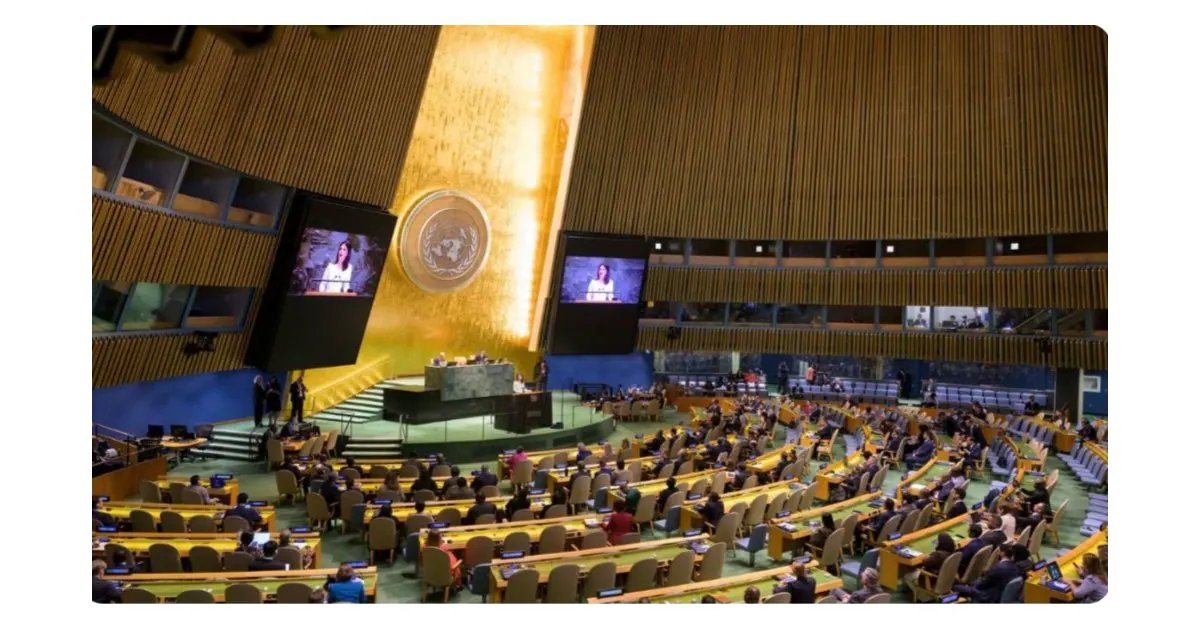
The 4th Committee of the UN General Assembly has seen a wave of international support for Morocco's autonomy initiative on Western Sahara. Countries including El Salvador, Chile, Ecuador, and the Gulf Cooperation Council (GCC) have reiterated their backing for the initiative. They also called for continued political process under UN auspices to resolve the regional dispute. This development has been seen as a significant boost to Morocco's position on the issue.
El Salvador has praised Morocco's efforts to find a realistic, political, pragmatic, and durable solution to the regional dispute. The country's representative described Morocco's autonomy initiative as a fundamental element in achieving a resolution. El Salvador also commended the work of the UN Secretary-General's personal envoy. This endorsement is seen as crucial in the ongoing diplomatic efforts to resolve the Western Sahara conflict.
Chile has reaffirmed its support for Morocco's sovereignty over its entire territory, including the Western Sahara region. Chile's representative described Morocco's autonomy proposal as a just, durable, and mutually accepted solution. This aligns with relevant UN Security Council resolutions. Chile's stance has been consistent with its previous positions on the issue, emphasizing the need for a peaceful and lasting solution.
Ecuador has characterized Morocco's autonomy initiative as the only serious, credible, and realistic proposal to move towards a durable solution. Ecuador called on all parties to participate in good faith and without preconditions in UN-facilitated negotiations. The goal is to reach a definitive and mutually acceptable solution based on Morocco's autonomy initiative. Ecuador's support has been seen as significant in the context of the UN's efforts to resolve the conflict.
The Gulf Cooperation Council (GCC) countries have renewed their unwavering support for Morocco's sovereignty over Western Sahara. They also reaffirmed their backing for Morocco's autonomy initiative. The GCC representative emphasized the importance of UN Security Council Resolution 2797. This resolution is seen as a turning point towards a realistic, viable, and durable solution to the conflict.
The international community's stance on Western Sahara has been consistent with previous UN General Assembly sessions. Many partners have emphasized Morocco's autonomy initiative as the basis for resolving the conflict. This initiative was presented by Morocco in 2007. The UN Security Council is set to examine the renewal of the MINURSO mandate, which expires on October 31, 2026.
The ongoing diplomatic efforts have seen various countries and regional organizations reaffirm their support for Morocco's autonomy initiative. This includes the recent statements by Jamaica, which considers autonomy under Moroccan sovereignty as a viable solution. The international community continues to emphasize the need for a peaceful and lasting resolution to the Western Sahara conflict.
Key points
- Morocco's autonomy initiative has been endorsed by several countries, including El Salvador, Chile, and Ecuador.
- The Gulf Cooperation Council (GCC) countries have renewed their support for Morocco's sovereignty over Western Sahara.
- The UN Security Council is set to examine the renewal of the MINURSO mandate, which expires on October 31, 2026.