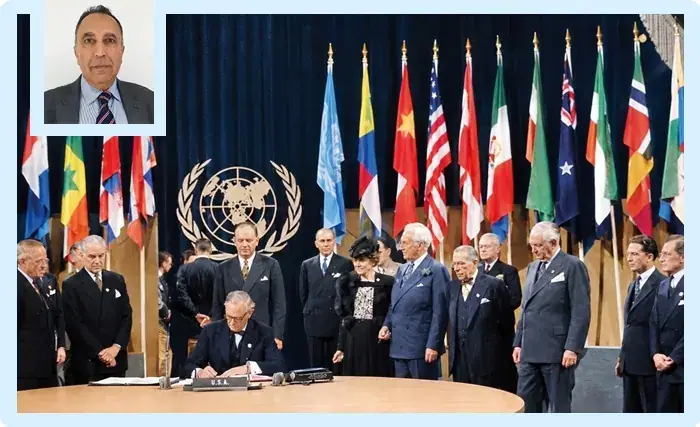
The international system established after World War II is facing significant challenges in managing current global chaos. Many analysts agree that the system, which was built on the principles of the United Nations Charter, is struggling to cope with the complexities of modern conflicts. The world has changed significantly since the end of the Cold War, with the emergence of new powers and the rise of global challenges such as terrorism and climate change.
The current chaos is characterized by a complex set of challenges that are different from those faced during World War II or the Cold War. The refusal of Western powers to admit the emergence of other powers capable of managing the world alongside them or even directing the world is generating the current chaos. This has led to a situation where the international order is struggling to manage conflicts, with many countries turning to military power and coercion to achieve their goals.
The increase in military spending is a reflection of this trend, with global military expenditures increasing by over 40% since the mid-2010s, according to the Stockholm International Peace Research Institute (SIPRI). The power military tends to supplant dialogue and other tools of pacification in international life. This has led to a situation where the protection of civilians and the prohibition of the use of force are being undermined.
In this context, diplomacy, negotiation, and mediation are being rediscovered by medium-sized powers, often located in the South, which aim to play a pacifying and stabilizing role. Countries such as Qatar, Turkey, Saudi Arabia, and Oman are increasingly involved in conflict prevention and peacebuilding efforts, often outside their regional environment.
The emergence of new mediators is accompanied by a change in the type and nature of the agreements sought. Previously, the goal of peace processes was to achieve a definitive and comprehensive settlement of conflicts, but today, the focus is often on less ambitious objectives, such as establishing measures of trust or negotiating ceasefires.
The Secretary-General of the United Nations, António Guterres, has highlighted the limitations of these efforts, stating that "so-called ceasefires have been little more than low-intensity fighting, and it is civilians who continue to pay the price."
The challenge for the years ahead will be to rethink conflict prevention and resolution in a world characterized by existential logic and the outbreak of wars. This will require creating the conditions for dialogue in an environment where mistrust and competition are increasingly prevalent.
Key points
- The international order established in 1945 is struggling to manage current global chaos.
- The increase in military spending is a reflection of the trend towards the use of force and coercion.
- New mediators are emerging, and the nature of peace agreements is changing.