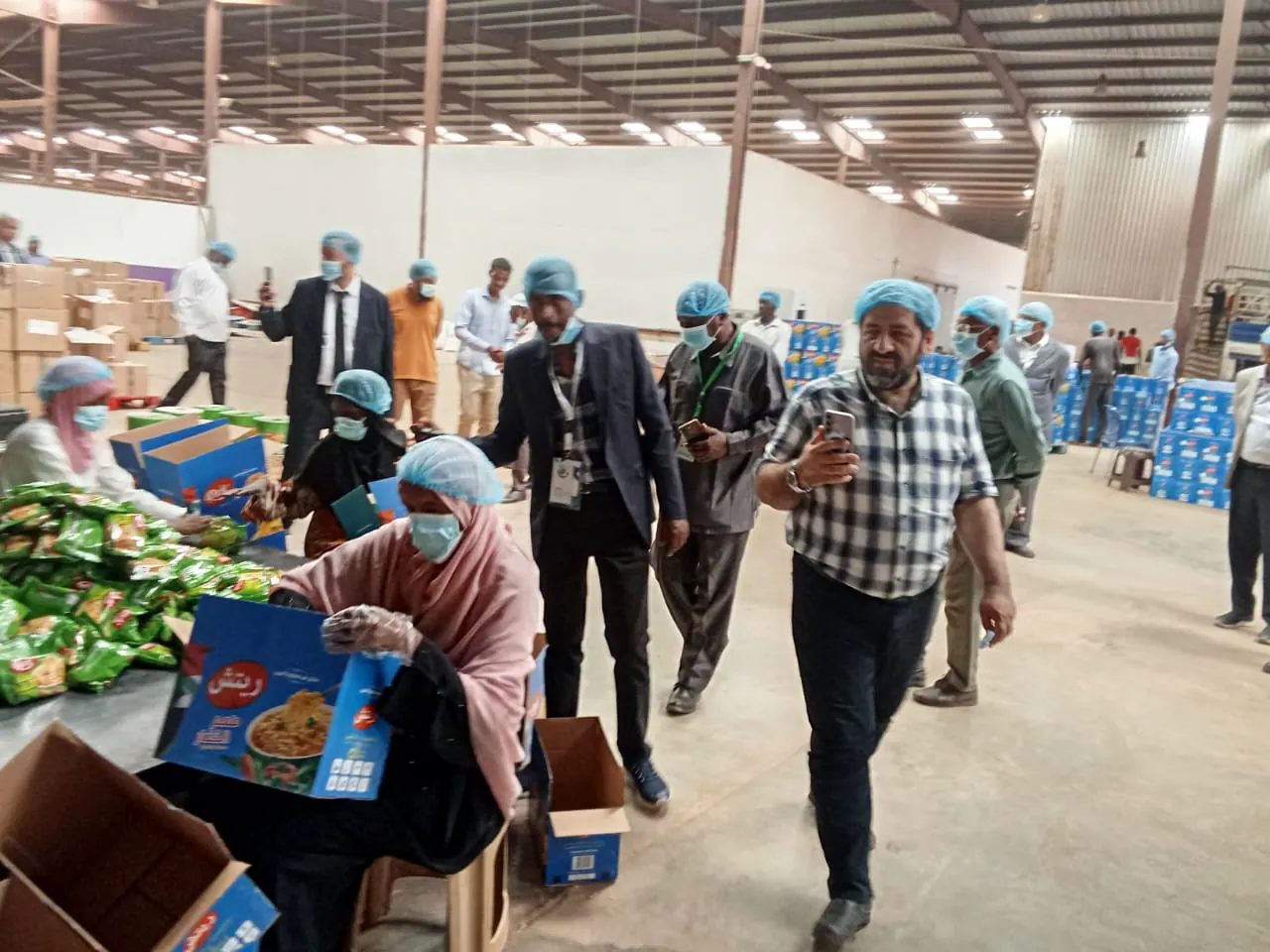
A delegation comprising representatives from Turkey, Pakistan, Syria, and Egypt, as part of the Private Sector Recovery Dialogue Conference, recently visited several factories in Khartoum. The aim was to assess the extent of damage to the industrial sector and monitor the resumption of production in affected factories. The delegation began its tour in the industrial area of Jabra, where it witnessed the significant destruction caused by the war.
The delegation then proceeded to the Safola Industrial Complex, owned by the Ma'awiya Al-Bureir Group for Food and Industrial Materials. The complex houses several factories, including those producing cardboard and packaging, instant noodles, and printed materials such as school textbooks and paper. The group's chairman, Al-Haj Ma'awiya Al-Bureir, stated that the delegation's visit to the complex in Soba was comprehensive, noting that they observed the extent of damage and the resumption of production in some factories.
According to Al-Bureir, the war resulted in losses of $127 million for his group, primarily due to the destruction of six factories. However, he expressed optimism, stating that production had begun again. The group has successfully restarted several factories involved in packaging, printing, and food production. The delegation showed interest in cooperating with the Al-Bureir Group in various industries.
The visit by the international delegation reflects the global community's interest in Sudan's economic recovery. The country's industrial sector has faced significant challenges due to ongoing conflicts. By engaging with local businesses and assessing the damage, the delegation aims to provide support and stimulate recovery efforts. The involvement of countries such as Turkey, Pakistan, Syria, and Egypt underscores the importance of international collaboration in Sudan's rebuilding process.
The Al-Bureir Group's experiences and efforts to revive its operations are seen as crucial for Sudan's broader economic recovery. The group's initiatives to restore production in key sectors demonstrate the resilience of Sudanese businesses amidst adversity. As the delegation continues its assessment, it is expected to provide recommendations and support to facilitate the recovery of Sudan's industrial sector.
Sudan's economic challenges are multifaceted, with the industrial sector being significantly impacted by the war. The government's efforts to rebuild and stimulate economic growth are ongoing, with international support being critical to these initiatives. The delegation's visit is a positive step towards fostering cooperation and identifying areas where international assistance can make a meaningful impact.
The resumption of industrial production in Sudan is vital for the country's economic stability and growth. With the support of international partners, Sudanese businesses can overcome the challenges posed by the war and contribute to the nation's recovery. Key points from the visit include the significant damage to industrial infrastructure, the resilience of local businesses, and the importance of international cooperation in Sudan's economic recovery.
Key points
- The delegation assessed the damage to Sudan's industrial sector and monitored the resumption of production in affected factories.
- The Al-Bureir Group reported losses of $127 million due to the destruction of six factories but has begun restarting production in several areas.
- The visit highlights the importance of international cooperation in Sudan's economic recovery efforts.