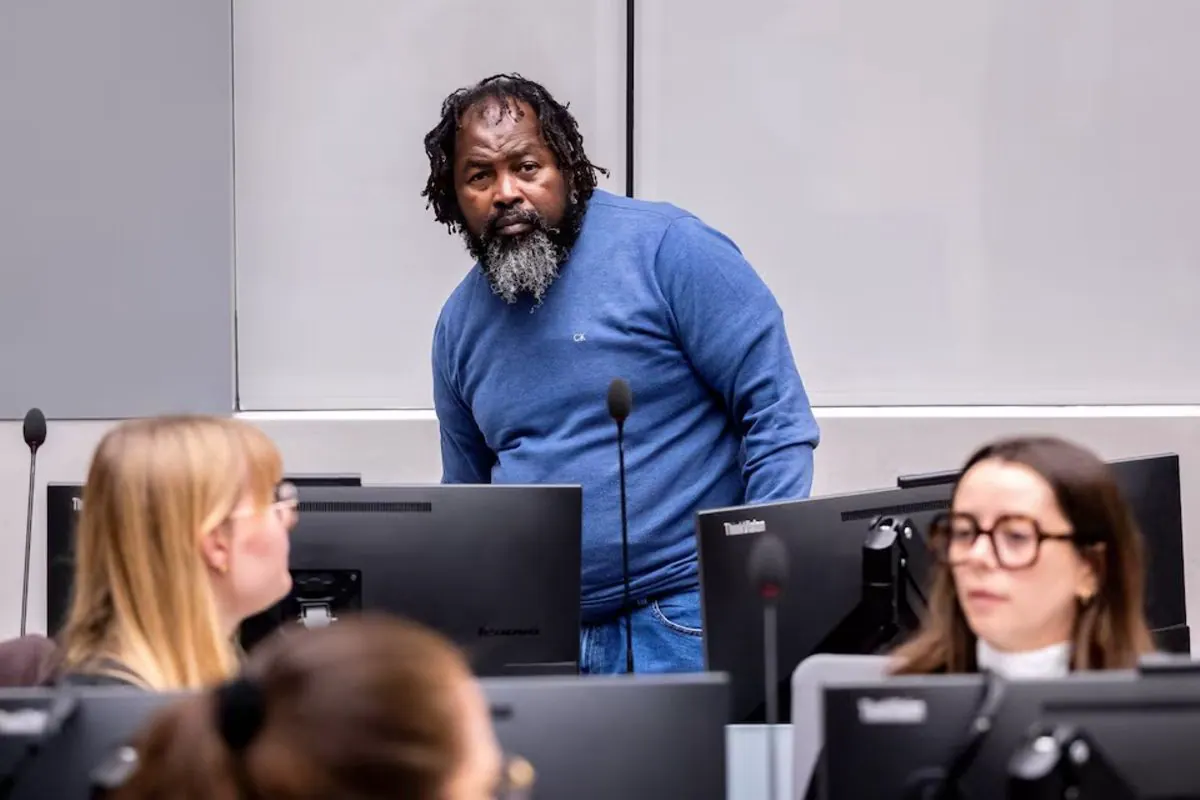
The International Criminal Court has convicted Mahamat Said Abdel Kani, a former Seleka militia leader from the Central African Republic, of crimes against humanity, including torture. Prosecutors accused him of running a prison where suspected supporters of then-President Francois Bozize were beaten and tortured. Abdel Kani denied all charges. The verdict was read out on Wednesday at The Hague.
According to presiding judge Miatta Maria Samba, Abdel Kani and others oversaw beatings and torture of prisoners as part of a plan to target perceived Bozize supporters in the capital Bangui. He was found guilty on four counts of crimes against humanity, including persecution and torture. The judges dismissed several war crimes charges, finding that the alleged crimes were committed after the armed conflict had ended.
The Seleka rebels, predominantly Muslim, seized power in 2013 as part of the Central African Republic's long-running civil war, ousting President Bozize. Their rule gave rise to opposing anti-Balaka Christian-dominated militias. The ICC has been investigating the violence in the Central African Republic since 2014 and has convicted two anti-Balaka leaders, but Abdel Kani is the first Seleka member to be convicted.
Abdel Kani, dressed in jeans and a blue sweatshirt, gave no reaction as the verdict was read out on Wednesday. A separate hearing will determine his sentence. There was no immediate reaction to Abdel Kani's conviction from the Central African Republic's government. Nelly Azoukateme, who believes her son and brother had been abducted by the militia, called the verdict a small victory.
Azoukateme expressed mixed feelings about the verdict, saying it brings her some peace of mind, but the dismissal of several charges will likely result in a lighter sentence. The ICC's conviction of Abdel Kani marks a significant development in the court's efforts to hold perpetrators accountable for crimes committed during the Central African Republic's civil war.
The Central African Republic's civil war has been marked by widespread violence and human rights abuses. The ICC's investigation into the conflict has been ongoing since 2014, and the conviction of Abdel Kani is a significant step towards justice for victims of the conflict. The court's work in the Central African Republic is ongoing, with several other cases still under investigation.
The conviction of Abdel Kani sends a strong message that the international community will not tolerate crimes against humanity and that perpetrators will be held accountable. The ICC's work in the Central African Republic and other countries is crucial in promoting justice and accountability for victims of international crimes.
Key points
- The International Criminal Court convicted Mahamat Said Abdel Kani of crimes against humanity, including torture.
- Abdel Kani was found guilty on four counts of crimes against humanity, including persecution and torture.
- The conviction marks the first time a Seleka member has been convicted by the ICC.