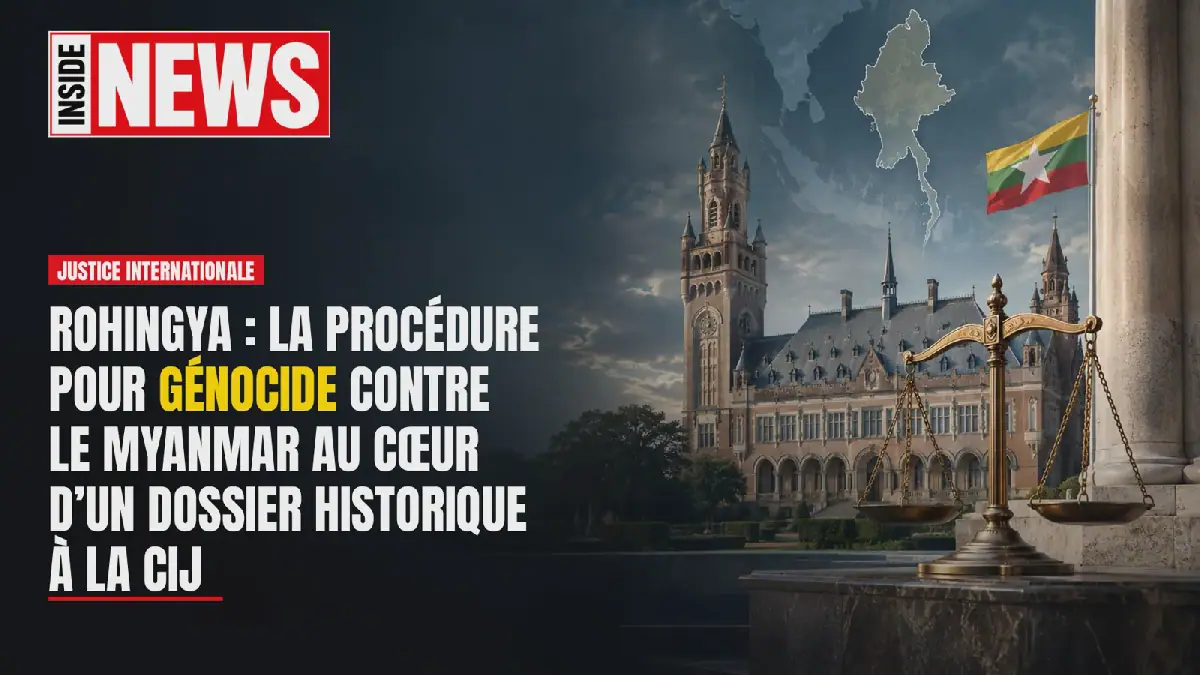
The International Court of Justice (ICJ) has ruled that Myanmar is responsible for committing genocide against the Rohingya in the northern Rakhine state, violating the 1948 Genocide Convention. The November 19, 2026, judgment orders Myanmar to cease violations, investigate suspected perpetrators, prevent repetition, and provide reparations. The case was brought to the ICJ by Gambia in November 2019. The ruling focuses on Myanmar's international responsibility under the Genocide Convention.
The ICJ has imposed specific obligations on Myanmar, requiring it to adopt legislation that gives full effect to its conventional obligations and take immediate, effective measures to investigate individuals reasonably suspected of acts contrary to the Convention. If evidence justifies it, these individuals must be prosecuted and sanctioned through regular procedures. The Court also orders guarantees of non-repetition and measures of restitution in the interest of the Rohingya.
The ICJ has ordered Myanmar to provide restitution to the Rohingya, including the possibility of safe, voluntary, and dignified return to their places of residence and the reunification of families displaced within Myanmar or across its borders. The Court also requires indemnification for the Rohingya group and its members for damages caused. The practical modalities of calculation and implementation will be specified in the follow-up to the judgment.
The ICJ concluded that Myanmar failed to comply with a January 2020 provisional measure, which requested that it take effective measures to prevent the destruction and ensure the preservation of evidence related to acts covered by the Convention. The UN Secretary-General noted that the Court found extensive destruction of evidence and obstacles to investigations and prosecutions.
The ICJ's judgments are final and obligatory for the parties involved. However, the Court lacks its own enforcement power, and compliance depends on measures taken by the concerned state and, if necessary, mechanisms provided by the UN Charter. The judgment does not automatically resolve the humanitarian and security situation of the Rohingya.
The case has significant international implications, as it clarifies how the Genocide Convention can be invoked by a state to defend a common interest among all state parties. Eleven states intervened in the proceedings, and the full text and procedural documents are available on the ICJ's official website. The next steps will focus on Myanmar's compliance and the follow-up to the ordered reparations.
The ICJ's ruling sets a precedent for state responsibility under the Genocide Convention. The Court's decision emphasizes the importance of preventing and punishing genocide, and its impact will be measured by the access of investigators, effective prosecutions, conditions for the return of displaced persons, protection against new violence, and the reparations mechanism.
Key points
- The ICJ has ordered Myanmar to cease violations, investigate suspected perpetrators, and provide reparations to the Rohingya.
- The ruling sets a precedent for state responsibility under the Genocide Convention.
- The ICJ's decision emphasizes the importance of preventing and punishing genocide.