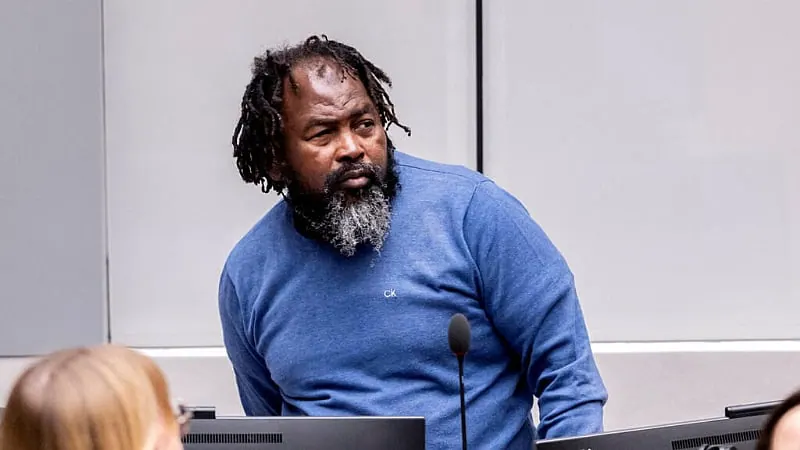
The International Criminal Court in The Hague has convicted Mahamat Said Abdel Kani, a former Seleka commander, of four counts of crimes against humanity, including torture and persecution. The verdict was delivered on Wednesday, with judges finding Said guilty of running a prison in Bangui where suspected supporters of then-president François Bozizé were beaten and tortured. Said denied all charges, but prisoners detained under his watch testified about the harsh conditions and brutal treatment they endured.
Prosecutors accused Said of committing crimes during the conflict that began in 2013, when the predominantly Muslim Seleka rebels seized power and ousted then-president François Bozizé. This led to the formation of anti-Balaka militias, mainly composed of Christians, who opposed the Seleka. The court dismissed several war crimes charges, finding that the armed conflict had already ended when the alleged crimes were committed. Said's sentence, which could be life in prison, will be decided at a later date.
The charges against Said stemmed from his alleged role in running a prison in Bangui, where prisoners were held in a windowless room beneath the floorboards of his office. Witnesses described cramped prison cells with walls marked by “bullet holes and blood” and prisoners being whipped “until they soiled themselves”. Presiding judge Miatta Maria Samba read out the verdict, which was met with no reaction from Said. The conviction marks a significant milestone in the fight against impunity in the Central African Republic.
Victims of Said's alleged crimes have welcomed the verdict, with Marius Olivier Trésor Poussinga, who was tortured at the Bangui facility, saying it amounted to “international recognition” of Said's crimes. Poussinga told the Associated Press that he could sleep easier knowing that the court had acknowledged his suffering. Central African Republic justice minister Arnaud Djoubaye Abazène also welcomed the ruling, saying that justice would be delivered at every level and that no victim would be left behind.
Human rights organizations have also hailed the conviction as a significant step towards justice. Lewis Mudge, Central Africa director at Human Rights Watch, said the verdict was a “stark reminder of the ongoing abuses in the country” and called for greater support for international and domestic justice efforts. Said is the first Seleka member to be convicted by the ICC, which has investigated violence in the Central African Republic since 2014.
The Special Criminal Court in the Central African Republic has indicted more than 30 people over war crimes and human rights abuses committed since 2003, with nearly all of them in custody. However, the court faces possible closure due to a lack of funding, with the Trump administration withdrawing United States funding last year. Amnesty International has warned that closing the court would be catastrophic for justice in the Central African Republic.
Supporters of the Special Criminal Court are urging the United Nations and the European Union to help extend the court's mandate and provide funding. Amnesty International's regional director for West and Central Africa, Marceau Sivieude, said national courts in the Central African Republic lacked the resources and capacity to take over the court's work. The conviction of Said Abdel Kani serves as a reminder of the importance of international justice and the need for continued support for efforts to bring perpetrators to account.
Key points
- The International Criminal Court has convicted a former Seleka commander of crimes against humanity, marking a significant milestone in the fight against impunity in the Central African Republic.
- The conviction stems from crimes committed during the conflict that began in 2013, when the Seleka rebels seized power and ousted then-president François Bozizé.
- The Special Criminal Court in the Central African Republic faces possible closure due to a lack of funding, despite indicting over 30 people for war crimes and human rights abuses.