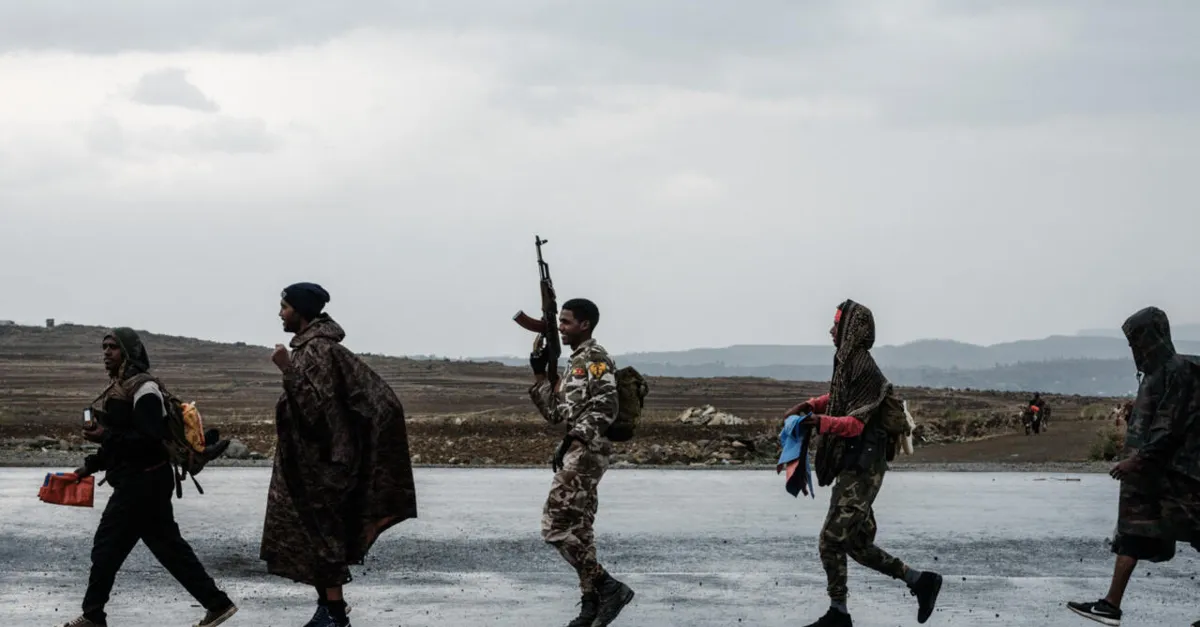
The conflict in Ethiopia's Tigray region has taken a turn for the worse, with the Tigray People's Liberation Front (TPLF) regaining its military presence and forming an alliance with other armed groups, including Fano in Amhara and forces from Afar and Oromia. This development has raised concerns among regional and international powers, who are calling for restraint and dialogue to resolve the crisis. The conflict has already spread to the Amhara and Afar regions, with reports of clashes and airstrikes.
The African Union has expressed concern over the escalating tensions, with Chairperson Mahmoud Ali Yousuf urging all parties to exercise restraint and engage in dialogue. The AU has emphasized the importance of implementing the Pretoria Agreement, signed in November 2022, which aimed to bring an end to the conflict between the federal government and the TPLF. However, the agreement has not fully addressed the underlying issues that led to the conflict, including disputes over land, power, and resources.
Neighboring countries, including Eritrea, have also expressed concern over the conflict, with Eritrea calling for a peaceful resolution through dialogue. Eritrea has been accused by the Ethiopian government of supporting the TPLF, which Eritrea denies. The conflict has significant implications for regional stability, particularly in the Horn of Africa, where countries such as Somalia, South Sudan, and Kenya are already facing challenges.
International powers, including the United Nations, have also weighed in on the conflict, with Secretary-General António Guterres expressing concern over the deteriorating situation. The UN has called for all parties to exercise restraint, protect civilians, and ensure humanitarian access. The European Union has also urged restraint and emphasized the need for a peaceful resolution through dialogue.
The conflict has significant implications for regional and global security, particularly given Ethiopia's strategic location in the Horn of Africa. The country is a key player in regional affairs, and the conflict has the potential to draw in neighboring countries. The international community is watching closely, with many calling for a peaceful resolution to the crisis.
Analysts have identified several possible scenarios for the conflict, including a return to the Pretoria Agreement, a deepening of the internal divisions, or a wider regional conflict. The situation remains fluid, with many uncertainties and variables at play. The international community is urging restraint and dialogue, but it remains to be seen whether these efforts will be successful in bringing an end to the conflict.
The humanitarian situation on the ground is dire, with thousands of civilians displaced and in need of assistance. The conflict has also had significant economic impacts, particularly in the region's already fragile economy. The international community is providing humanitarian assistance, but the situation remains challenging, and a peaceful resolution to the conflict is urgently needed.
Key points
- The conflict in Ethiopia's Tigray region has escalated, prompting reactions from regional and international powers.
- The African Union and international community are calling for restraint and dialogue to resolve the crisis.
- The conflict has significant implications for regional stability and global security.