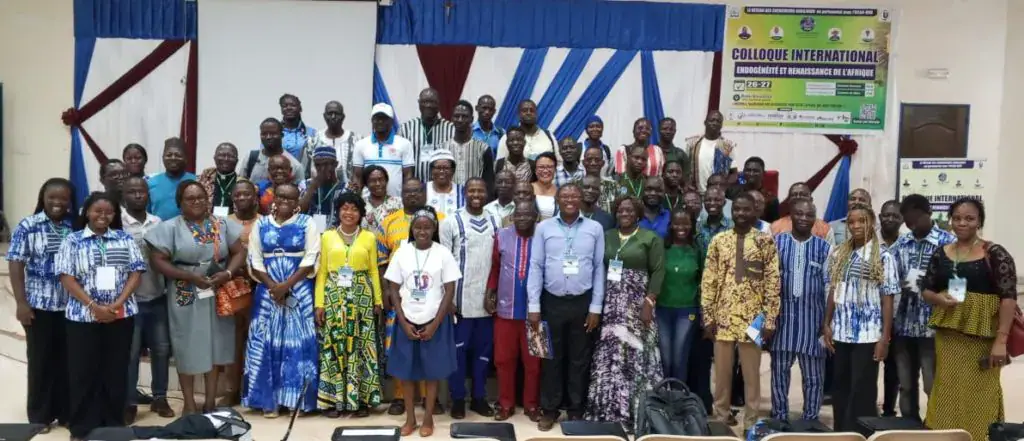
A two-day international colloquium on "Endogeneity and Renaissance of Africa" has concluded in Bobo-Dioulasso, Burkina Faso. The event, held at the Université catholique de l'Afrique de l'Ouest, brought together researchers, academics, and participants to discuss the valorization of endogenous knowledge as a foundation for a sustainable and sovereign African renaissance. The colloquium explored various themes, including endogenous rationality, neo-panafricanism, and conflict resolution.
The colloquium featured 85 communications, with presentations delivered in person and online. According to Alice Somé/Somda, vice-president of the organizing committee, the event was a success, with inaugural conferences delivered by professors Kiboura and Salaka Sanou. The event provided a platform for participants to share experiences, practices, and local values, and to confront them with scientific knowledge. Somé/Somda emphasized that endogeneity does not imply a withdrawal of Africa into itself, but rather a process of thinking and rebuilding the continent based on its own realities, traditions, and heritage.
One of the participants, Niangoran Adjo Apolline, a lecturer at the Université Félix Houphouët-Boigny, focused on the theme of wars, conflicts, and peace. Her reflections centered on mechanisms to overcome violence on the continent, highlighting the weight of colonial legacy in the causes of African conflicts. Apolline expressed satisfaction with the exchanges, which she believes contribute to raising awareness and opening new perspectives. She advocated for the multiplication of such events to promote genuine change in Africa.
The colloquium also examined the role of spiritual dynamics in African renaissance. Participants discussed the importance of endogenous knowledge in shaping the continent's future. According to Somé/Somda, the event demonstrated the need to mobilize African researchers and intelligentsia to rethink the foundations of the continent. The colloquium's outcomes have deepened understanding of African knowledge, and the scientific committee plans to publish the proceedings.
Kpa Raoul Kouassi, representing the scientific committee, praised the quality of contributions and the work of the various actors involved. He stressed that the resolutions adopted during the colloquium have enabled a deeper understanding of African knowledge. Kouassi emphasized the need to transition from the plurality of knowledge to collective intelligence in the service of African renaissance.
The colloquium concluded with a call to action: to make endogenous knowledge, research, and collective intelligence essential levers for building an Africa conceived from within, faithful to its realities, and resolutely oriented towards its future. The scientific committee has invited authors to facilitate the process of instructing their contributions, with a view to publishing the colloquium's proceedings.
The event has sparked optimism about the potential for endogenous knowledge to drive African renaissance. Participants and organizers alike have expressed hope that such colloquia will become more frequent, contributing to a shift in perspectives and a new era of African development. The emphasis on endogenous knowledge and collective intelligence is seen as a crucial step towards creating a more sustainable and sovereign Africa.
Key points
- The colloquium highlighted the importance of endogenous knowledge in shaping Africa's future.
- The event brought together researchers, academics, and participants to discuss African renaissance.
- The colloquium's outcomes have deepened understanding of African knowledge and paved the way for future research.