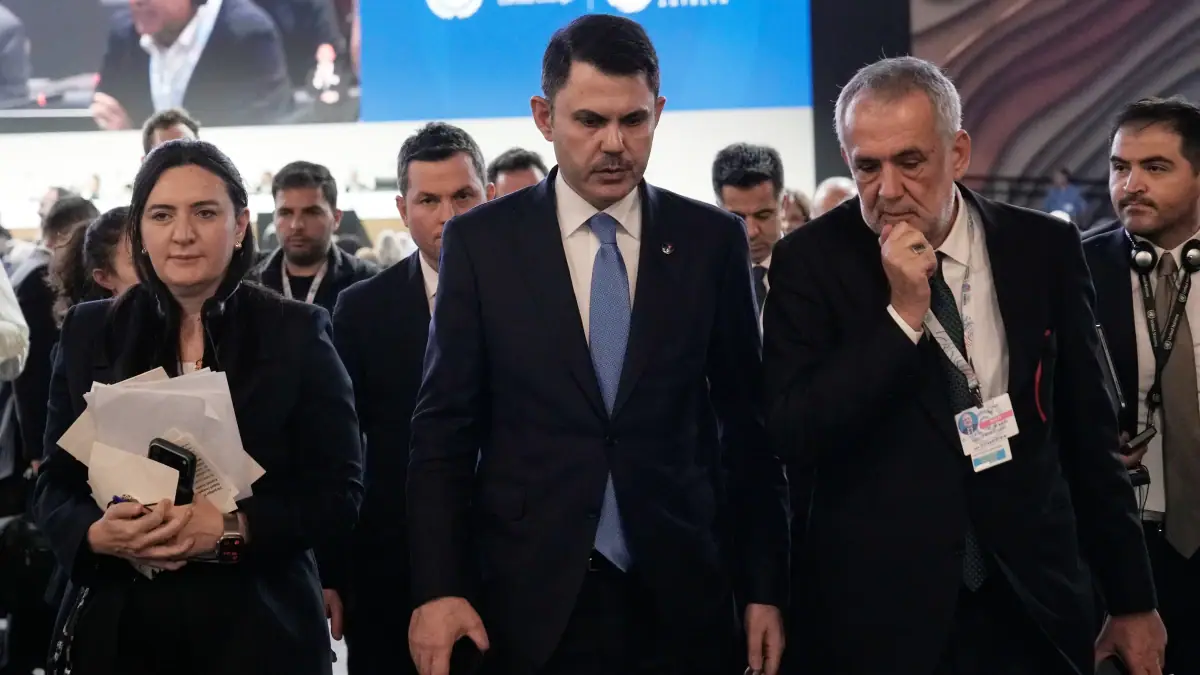
International climate change talks in Antalya, Turkey, concluded in overtime hours with no agreement on reducing reliance on fossil fuels. The primary cause of planetary warming, fossil fuels account for roughly 73% of global emissions. The talks, attended by nearly 200 countries, ended dramatically with European Union negotiators walking out of the room. They insisted that a final agreement must mention transitioning away from fossil fuels.
The European Union's climate chief, Wopke Hoekstra, emphasized that the EU could not tolerate an agreement that does not address fossil fuels, given the world is heading for an overshoot of 1.5 degrees Celsius. "That is not acceptable," Hoekstra told reporters after walking out of the talks. Other countries pushing for a speedy transition away from fossil fuels also walked out in solidarity with the EU.
This climate summit marks the first U.N. meeting where there's been scientific consensus that the world will surpass the key global warming threshold of 1.5 degrees Celsius. Countries had agreed in 2015 to limit climate change to this threshold, but the planet has essentially reached it already. Passing this threshold means more severe climate impacts, including intense hurricanes and heat waves.
The United Nations has found that a best-case scenario of 1.7 or 1.8 degrees Celsius would require immediate emission cuts, reducing them by 45% by 2035. Scientists say this would necessitate dramatically cutting fossil fuel use. The failure to reach an agreement has been met with criticism from climate advocates, who argue that it does not do enough to protect vulnerable populations.
Mohamed Adow, of Power Shift Africa, a nonprofit focused on climate change in Africa, welcomed the rejection of the decision. "It's good that that decision has been rejected," Adow said. "It doesn't have enough to help protect the people who are most vulnerable to climate change, who have contributed the least and are now suffering firsthand the worst."
The breakdown in talks highlights the challenges of reaching a global consensus on addressing climate change. The European Union's insistence on mentioning fossil fuels in the agreement reflects the urgency of addressing the primary driver of climate change. The outcome of the talks has significant implications for global efforts to mitigate climate change.
The international community will need to revisit the issue of transitioning away from fossil fuels in future climate talks. The failure to reach an agreement in Antalya, Turkey, underscores the need for continued dialogue and cooperation to address the pressing issue of climate change.
Key points
- The talks failed to reach an agreement on transitioning away from fossil fuels.
- The European Union walked out of the talks in protest of not mentioning fossil fuels in the agreement.
- The world is heading for an overshoot of 1.5 degrees Celsius, with severe climate impacts expected.