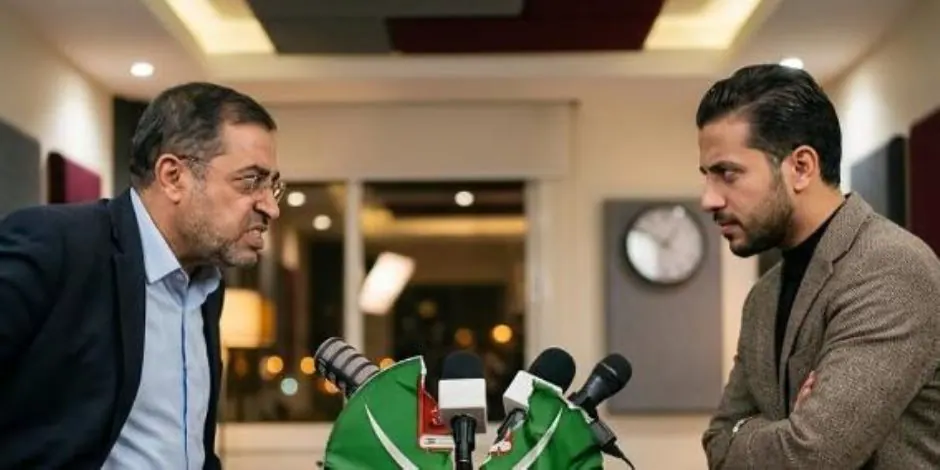
The Muslim Brotherhood's media landscape has become a battleground for influence and control, with a generational divide emerging between long-standing figures and new players. Hamza Zobaa, a veteran of the Brotherhood's media wing, is at odds with a new generation of digital influencers, including Saheb Abdelmaqsood. This internal strife has exposed the group's struggle to adapt to changing media dynamics and its waning ideological cohesion.
For years, Hamza Zobaa was a prominent voice in the Brotherhood's media wing, presenting the group's narrative to its audience. However, the media landscape has shifted, and new players like Abdelmaqsood have emerged, leveraging digital platforms to shape public opinion. This new generation doesn't require traditional media infrastructure, only a significant online presence to disseminate their message.
The conflict between Zobaa and Abdelmaqsood represents a deeper struggle within the Brotherhood. The old guard seeks to maintain control of traditional media platforms, while the new generation aims to dominate digital spaces and algorithms. This clash has raised questions about the group's ideological project, its economic vision, and its ability to provide solutions to its audience.
The proliferation of media platforms within the Brotherhood has created a complex web of interests and alliances. As different factions vie for influence, the group's messaging has become increasingly fragmented. This has led to a focus on personal attacks and recriminations, rather than a cohesive narrative. The Brotherhood's media wing has become a marketplace of ideas, with various factions competing for attention and resources.
A critical aspect of this internal struggle is the issue of funding. The Brotherhood's media operations require significant financial resources, raising questions about who provides the funding, who owns the companies, and who controls the finances. The lack of transparency in this regard has created an environment of suspicion and mistrust within the group.
The Brotherhood's internal strife has significant implications for its global presence. The group's media wing has traditionally operated in countries like Egypt, Turkey, and Qatar. However, the current infighting has weakened its ability to project a unified message. This has created opportunities for rival groups and governments to exploit the Brotherhood's divisions.
The ultimate question is who will emerge as the dominant voice within the Brotherhood's media wing. Will it be the old guard, led by figures like Zobaa, or the new generation of digital influencers, led by Abdelmaqsood? The outcome will likely depend on the group's ability to adapt to changing media dynamics and its willingness to address the underlying issues driving its internal strife.
Key points
- The Muslim Brotherhood's media wing is facing a generational clash between old and new guard over control of the narrative and resources.
- The group's internal strife has exposed its struggle to adapt to changing media dynamics and its waning ideological cohesion.
- The issue of funding and financial transparency has become a critical aspect of the Brotherhood's internal struggle.