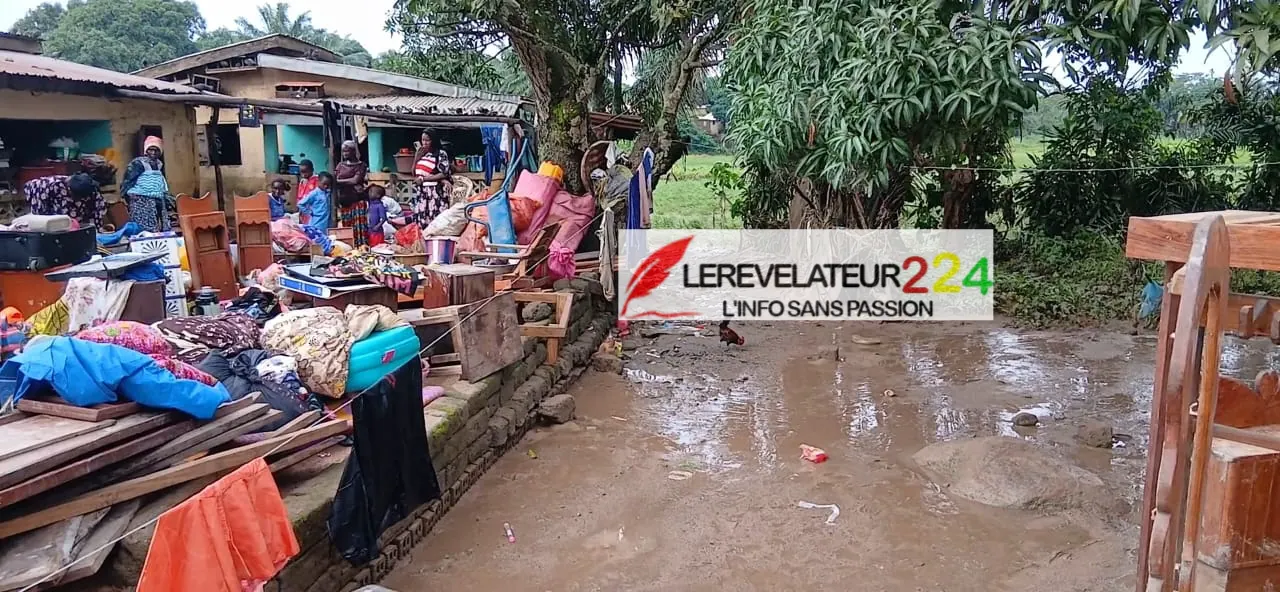
A severe rainstorm on September 21, 2026, caused the Gbangban River to overflow, inundating the Farakô neighborhood in Kissidougou, Guinea. The storm resulted in a substantial rescue effort by the local civil protection unit and youth volunteers, who worked together to evacuate residents from the affected area. Despite the successful evacuation, the material damage is extensive, with numerous homes destroyed or damaged and hundreds of people left without shelter.
The storm surge transformed the sector 1 area into a virtual water trap, isolating many families, including the elderly and children. The swift response of local authorities and volunteers helped prevent loss of life, but the aftermath reveals a landscape of devastation. Buildings have collapsed, furniture is destroyed, and mud is widespread, leaving displaced residents to grapple with the enormity of the disaster.
Commandant Soumah Mohamed Lamine of the Kissidougou civil protection unit recounted the complex rescue operation, which began around 10 PM. He praised the bravery of his team and the neighborhood youth, who used makeshift ropes to reach stranded residents. While the operation was successful, the commandant highlighted the city's vulnerability to flooding due to its surrounding wetlands and called for specialized equipment to mitigate future disasters.
Displaced residents, such as Aboubacar Camara, describe their despair and loss. Camara's home collapsed, leaving his family without possessions. He appealed for assistance from local authorities, the government, and NGOs, as his family struggles to cope with the disaster. Similar sentiments were expressed by Kadi Keita, whose building collapsed, leaving her family without belongings or shelter.
As the full extent of the damage becomes clear, a grassroots solidarity movement has emerged. Neighboring residents have opened their homes to temporarily shelter displaced families. The affected population now awaits a response from the National Agency for Disaster Management and Humanitarian Response (ANGUCH) and state authorities to alleviate their suffering.
The disaster has left over 200 people displaced and caused significant material damage. Local residents and authorities are working together to provide assistance and support to those affected. The government and humanitarian organizations are expected to provide further aid in the coming days.
The flooding in Kissidougou highlights the need for disaster preparedness and mitigation measures in the region. As the affected population begins the process of recovery, there is a growing recognition of the importance of addressing the root causes of such disasters and providing support to those affected.
Key points
- Over 200 people displaced due to flooding in Kissidougou's Farakô neighborhood.
- Significant material damage reported, with numerous homes destroyed or damaged.
- Local authorities and humanitarian organizations are working together to provide assistance to those affected.