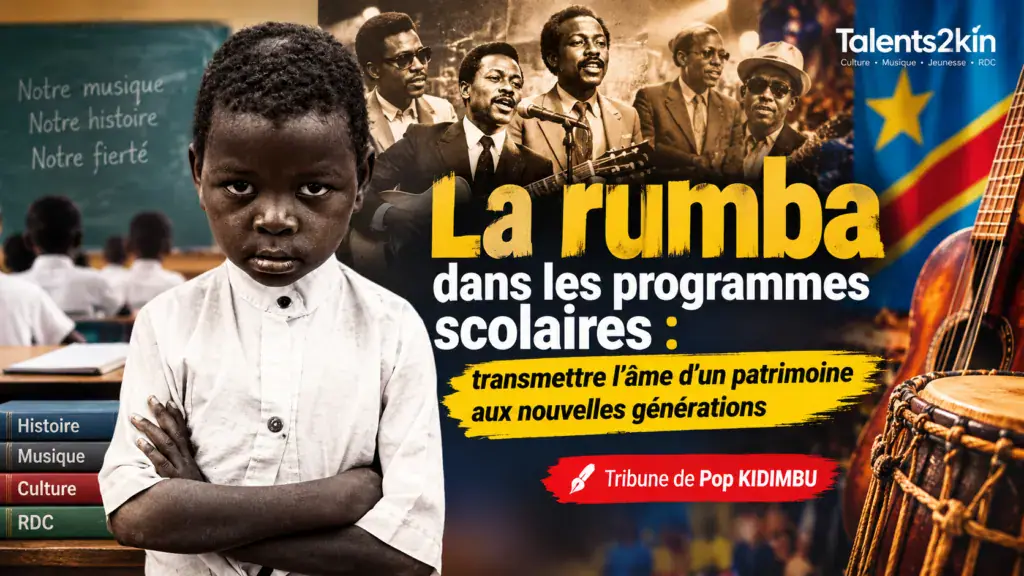
The Congolese rumba, a staple of the country's cultural identity, has been recognized by UNESCO as an intangible cultural heritage of humanity. This international recognition has sparked a crucial debate about the importance of teaching its history to young Congolese. Despite being a source of national pride, the rumba's significance and evolution are not adequately taught in schools, leaving a gap in the cultural knowledge of future generations.
Many young Congolese are familiar with international music icons and trends but lack knowledge about their own musical heritage. They can recount the stories of American rap legends like Tupac Shakur and The Notorious B.I.G., but struggle to share the history of Congolese music legends like Grand Kallé and the African Jazz. This disparity highlights the need for structured education about the rumba and its impact on Congolese culture.
The rumba is not just a collection of popular songs; it is a living archive of Congolese society, reflecting its history, aspirations, and social changes. By teaching its history, students can gain a deeper understanding of their cultural roots and the creative endeavors of Congolese musicians. This knowledge can also help preserve the rumba's legacy, as older musicians pass away and archives become increasingly fragile.
Introducing the history of Congolese rumba into school curricula can help address the issue of cultural memory loss. By integrating this knowledge into education, the government can ensure that future generations understand and appreciate their cultural heritage. This can be achieved through collaboration between educational authorities, cultural institutions, and music professionals.
Historians, musicologists, and cultural experts will play a crucial role in developing reliable educational content. Preserving archives, collecting testimonies from living musicians, and establishing a documented chronology of the rumba's evolution are essential steps in constructing a comprehensive policy for musical memory.
Incorporating Congolese rumba into school curricula can also enhance the scientific understanding of this cultural phenomenon. By studying and analyzing the rumba, researchers can shed light on its influence on African and global music. This can contribute to a more nuanced appreciation of Congolese culture and its significance in the world.
The recognition of Congolese rumba by UNESCO should serve as a starting point for further exploration and education, rather than an endpoint. By prioritizing the teaching of its history, the Democratic Republic of Congo can ensure that its cultural heritage is preserved and transmitted to future generations, both domestically and internationally.
Key points
- The Democratic Republic of Congo is considering integrating Congolese rumba into school curricula to preserve its cultural heritage.
- The rumba's history and significance are not adequately taught in schools, leading to a gap in cultural knowledge among young Congolese.
- Incorporating the rumba's history into education can help preserve its legacy and promote a deeper understanding of Congolese culture.