Homeowners in rural Northern California are struggling to find affordable and reliable home insurance due to the increasing risk of wildfires. The insurance market has become a nightmare, leaving many worried that their most valuable asset could be destroyed without proper coverage. Researchers and insurers are working together to find solutions, including testing building designs and materials to reduce damage from climate disasters.
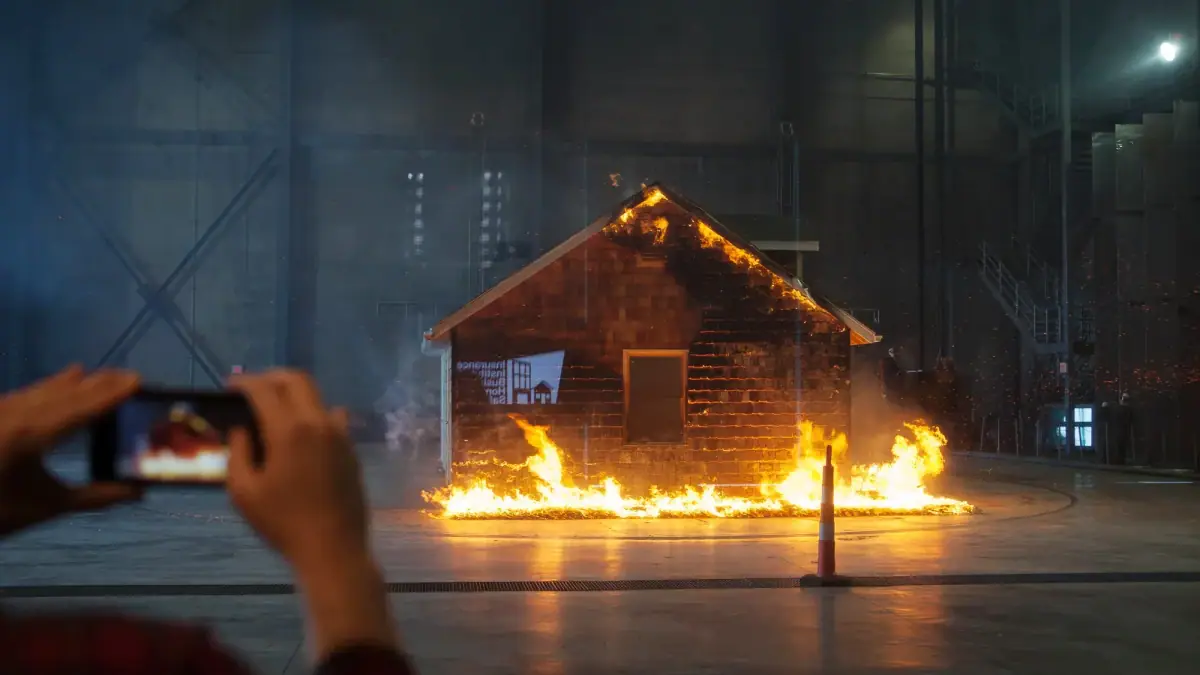
Insurers are investing in research to determine how to keep houses from burning down, including a destruction lab in South Carolina where researchers use "crash-test dummies for houses" to test the effectiveness of various building designs and materials. Some of the world's biggest insurance companies fund this lab to assess the risk of insuring homes and to identify designs that can limit damage and reduce payouts in the event of a disaster.
The insurance industry has a long history of testing and experimenting with new technologies to reduce risk, dating back to the early 20th century when scientists at Underwriters Laboratories tested new kinds of electrical wiring and consumer appliances to reduce the risk of fires and electrical accidents. Similarly, the Insurance Institute for Highway Safety uses crash tests to push for safer auto designs.
However, the concept of moral hazard poses a challenge, where insurance can reduce incentives to mitigate risk. If homeowners know that their insurer will cover damages in the event of a wildfire, they may be less likely to invest in making their homes safer, such as installing metal roofs or ember-resistant vents. Economists argue that this can create a collective action problem, where individual homeowners may not take steps to harden their homes if their neighbors do not do the same.
To counter this problem, insurers can offer discounts on insurance bills to homeowners who make investments that make their homes safer. However, according to reporting by Alexi Horowitz-Ghazi, insurers are not offering significant discounts to homeowners who take steps to harden their homes, despite the efforts of residents in areas like Paradise, California, to make their homes and communities safer.
The issue is further complicated by the fact that insurers have been declining to renew policies in fire-prone areas, forcing families onto California's insurer of last resort, the FAIR Plan. Regulators have also played a role, with California's insurance regulations, including Proposition 103, which required insurers to get state approval before raising rates, contributing to a system that has kept premiums artificially low.
Experts, including UC Berkeley economist Nancy Wallace, argue that the current regulatory system has contributed to the problem, and that allowing insurers to more freely set their rates and charge more may be necessary to ensure that homeowners can find coverage. However, this raises concerns about affordability, and whether homeowners will be able to stomach higher prices, especially in areas where the risk of wildfires is high.
Key points
- Insurers are investing in research to reduce risk, but moral hazard and regulatory challenges remain.