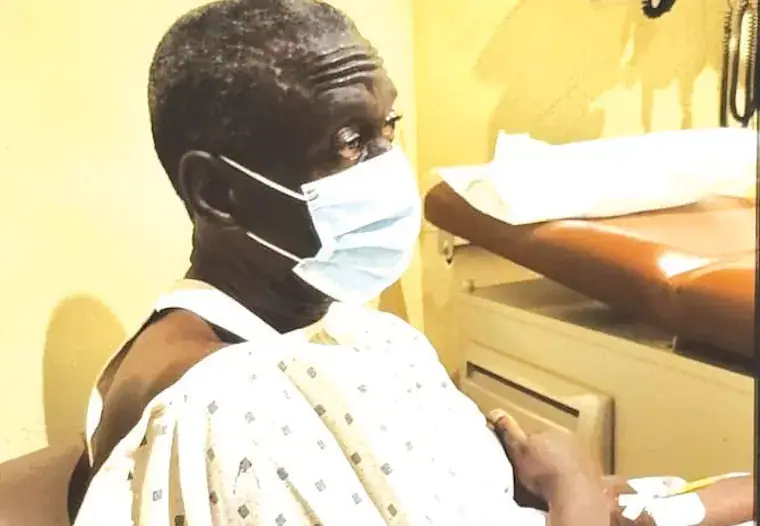
Dr. Kizza Besigye, a veteran opposition politician in Uganda, collapsed in court on July 29, 2026, during a confrontation with Justice Emmanuel Baguma over the conduct of his treason trial. The incident has raised serious questions about the authorities' initial assessment of his condition, the medical care available to him, and who controls his treatment while in state custody. Besigye had been challenging the court's decision to proceed with the trial, arguing it violated his right to a fair hearing.
According to accounts obtained by The Observer, three doctors who were present in court were denied access to Besigye to administer first aid. They were Dr. Olive Kobusingye, his sister; Dr. Nicholas Kamara, a senior member of the People's Front for Freedom; and Dr. Lulume Bayiga, the party's acting president. Besigye was subsequently taken by ambulance to Luzira Prison rather than directly to a hospital. It was only later that the authorities appreciated the seriousness of his condition.
Besigye was transferred to Mulago National Referral Hospital, where he was admitted to the Intensive Care Unit. He remained unconscious for three days. When he regained consciousness, his condition had deteriorated, making basic activities difficult. He struggled to speak, eat, hold objects, and walk. This development introduced a new question into the already contentious trial: how could Besigye meaningfully participate in proceedings or instruct his lawyers if he could barely communicate?
Despite the seriousness of his reported condition, authorities eventually returned Besigye to Luzira Prison Hospital rather than keeping him at Mulago. The Uganda Prisons Service confirmed that Besigye was discharged from Mulago on August 7 after a 10-day admission. Prisons spokesperson Frank Baine stated that the prison medical team remained responsible for his care and that he was steadily improving.
However, accounts from Besigye's family and associates paint a more troubling picture of his recovery. At Luzira, his personal doctors and relatives were allowed to help care for him, although visits remained restricted. His wife, Winnie Byanyima, expressed concern about the security arrangements surrounding his hospital room, alleging that some of the prisoners were disguised soldiers.
Byanyima, executive director of UNAIDS, has repeatedly demanded that her husband be granted bail to seek specialized treatment abroad. She stated that Besigye has a right to health and to recover, and that his continued detention could complicate his recovery. A close associate who had seen Besigye recently described a man still struggling with the consequences of his collapse, undergoing rehabilitation to regain his ability to walk and speak.
An August 16 medical assessment indicated that Besigye still had difficulty speaking and writing but retained some important cognitive abilities, including understanding verbal questions. This distinction matters when assessing his condition and ability to participate in court proceedings. The incident has sparked concerns about Besigye's health and the control of his treatment while in state custody.
Key points
- The authorities' handling of Besigye's medical care has raised questions about who controls his treatment while in state custody.
- Besigye's condition has deteriorated significantly since his collapse, making basic activities difficult.
- His family and associates have expressed concerns about his continued detention and its impact on his recovery.