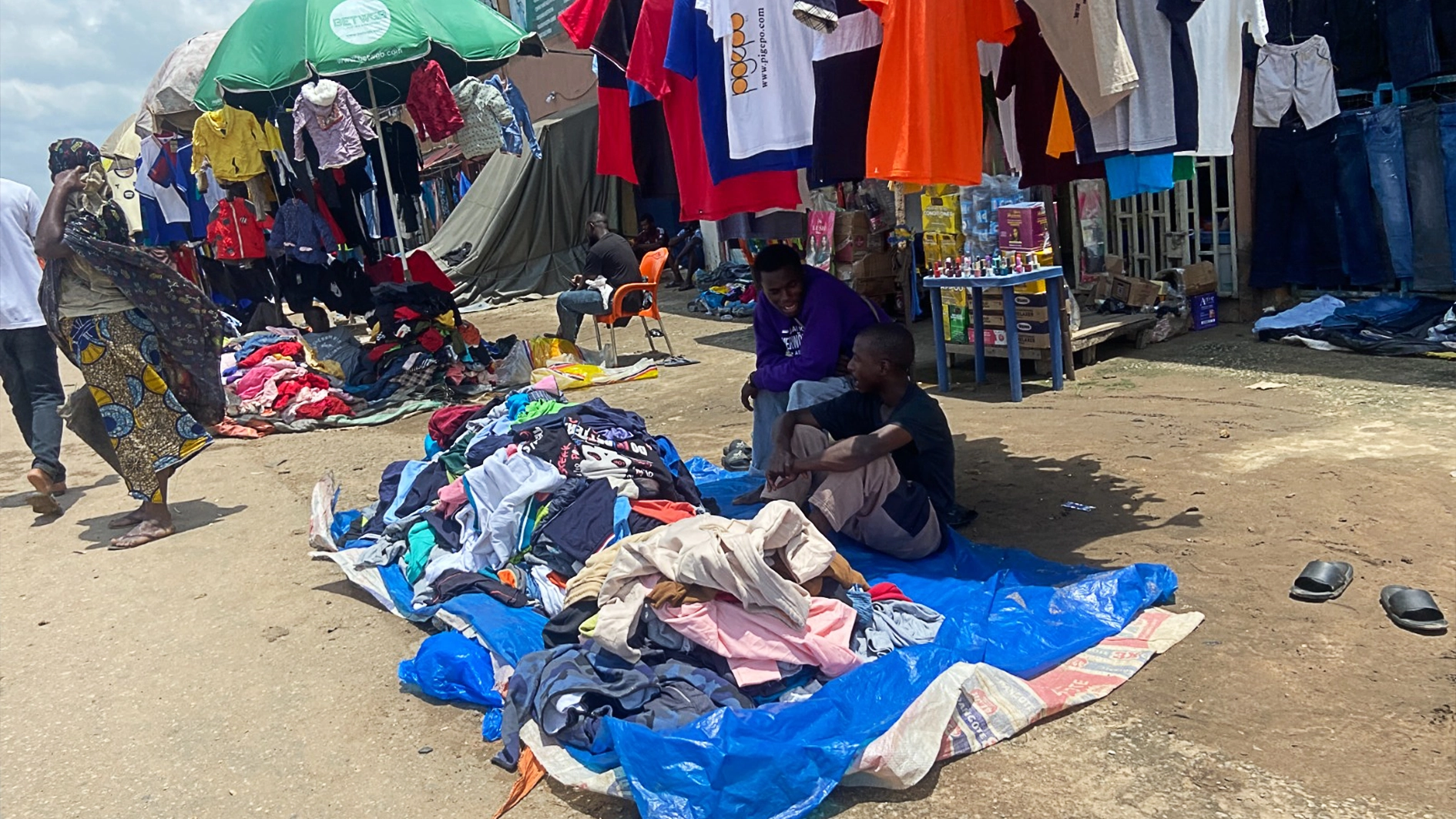
In Abuja's informal fashion economy, a common scene has emerged. Shoppers bend down to sift through piles of second-hand clothing, inspecting each item for quality and condition. This culture of thrift shopping has become a full-fledged retail phenomenon, driven by economic realities. People want to look good but have limited money to spend. Across Nyanya, Karimo, and Kubwa, thrift sellers have built markets around this reality, with varying major trading days.
The thrift market offers a wide range of goods, including shirts, trousers, gowns, leggings, tracksuits, and children's clothes. Prices start from around ₦500 and can rise to ₦20,000 or more, depending on quality, brand, and condition. Behind every affordable item is a business involving large bales of imported second-hand clothing, which can cost hundreds of thousands of naira. Aniekan Ben Emmanuel, CEO of Swiftwears, understands the risks involved in this business.
A "bale" in the thrift trade does not describe a standard product. There are UK, China, and Canada bale names, which do not necessarily mean the bale originates from the associated country. These labels have become descriptions used within the trade, alongside categories for specific types of clothing. Prices vary according to type, size, expected quality, and grade. Some bales cost around ₦200,000, while high-value ones can reach ₦1.5 million.
Traders use a grading system to categorize bales, with Grade A being the highest. However, this grading can be subjective, and misrepresentation in the supply chain is a common complaint. Chisom Agbo, a trouser seller, recalled buying a first-grade corporate trouser bale for ₦700,000, which contained roughly 300 pieces. She could sell individual trousers for ₦4,000 to ₦7,000 but also recalled buying a bale that was mostly unsellable.
To mitigate risks, traders often "sign" a bale, which involves opening it and selecting relevant pieces. This practice allows traders to narrow their risk and avoid buying unwanted stock. Ibrahim Dada, a Nyanya shirt seller, described signing as part of his normal strategy. However, even signing does not guarantee success, as he recalled discovering a bale with many stained shirts.
Traders also exchange stock among themselves to get rid of unwanted items. Sani Abubakar, a gym-wear and shorts seller, recalled opening an ₦1 million gym-wear bale and finding women's leggings that did not suit his clientele. He exchanged them with another sportswear seller for men's shorts. This practice helps traders manage their inventory and minimize losses.
Consumers are also doing the math when it comes to thrift shopping. Daniel, a ride-hailing driver, specializes in buying trousers and can find affordable options in the thrift market. He recalled buying a new H&M pair for ₦2,000 and said that the money he saves goes to his children's school fees. Joy Akinyemi, an NYSC member, also shops in the thrift market for affordable clothing options.
Key points
- The thrift economy in Abuja is driven by economic realities, with people seeking affordable clothing options.
- Traders use a grading system and "signing" to mitigate risks when buying bales of second-hand clothing.
- Consumers are calculating the value of thrift shopping against conventional retail, with many finding it a cost-effective way to purchase clothing.