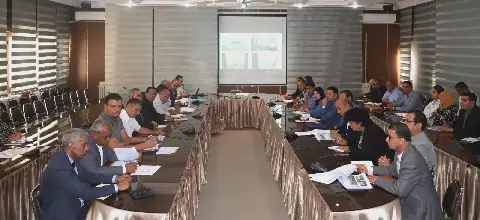
Recently, the 2026 edition of the INSA Connect Forum took place, organized by INSA Alumni Maroc in partnership with the Confédération Générale des Entreprises du Maroc (CGEM), Deloitte, and Palo Alto Networks. The high-level meeting set the stage for a new phase in Morocco's national economic fabric, focusing on deploying artificial intelligence (AI) on a large scale. The forum emphasized that Moroccan organizations must move beyond isolated experiments and simple technical acculturation to achieve macroeconomic competitiveness, digital sovereignty, and measurable value creation.
The discussions highlighted the urgency of transferring AI project decision-making from technical teams to executive committees (boards). According to Deloitte's international study, "The State of AI in the Enterprise: The Untapped Edge," this shift is crucial for success. To achieve large-scale AI deployment, companies must meet three essential conditions. Firstly, strong executive leadership is necessary, with direct involvement from top management to align AI initiatives with the organization's overall strategy.
The second condition for successful AI deployment is a thorough overhaul of operational models to fully integrate AI into core business functions, prioritizing use cases that offer the best return on investment. The third condition involves investing in human capital through effective change management and upskilling teams, ensuring sustainable and optimal adoption of new tools by employees. These conditions are vital for maximizing the impact of AI on productivity, business model transformation, skills engineering, risk governance, and cybersecurity.
A significant technological breakthrough discussed at the forum was the emergence of agent-based AI. Unlike simple response systems, these intelligent agents collaborate directly with teams, enabling a shift from individual productivity gains to collective performance multiplication. However, this operational revolution requires a rigorous framework of trust, with cybersecurity playing a crucial role as a business accelerator rather than a constraint or cost center.
Deloitte presented its risk management grids supported by the Deloitte Morocco Cyber Center's infrastructure to ensure resilience for major clients. Palo Alto Networks demonstrated its Prisma AIRS solution, concretely securing complex architectures and new attack surfaces related to generative and agent-based AI flows in production. These presentations provided executives with concrete decision-making tools.
The INSA Connect Forum 2026 confirmed its position as a strategic platform for supporting Morocco's digital transformation and economic sovereignty. By providing a space for discussion and innovation, the forum facilitated the exchange of ideas and experiences among industry leaders, researchers, and experts. This exchange is essential for addressing the challenges and opportunities presented by large-scale AI deployment in Morocco.
The forum's emphasis on industrialization and value creation reflects the growing importance of AI in Morocco's economic development. As the country seeks to strengthen its competitive edge and digital sovereignty, events like the INSA Connect Forum play a vital role in shaping the future of AI adoption and implementation. The discussions and presentations at the forum will likely have a lasting impact on Morocco's AI industry.
Key points
- The INSA Connect Forum 2026 highlighted the need for strong executive leadership, operational model transformation, and human capital investment to achieve large-scale AI deployment in Morocco.
- The emergence of agent-based AI was identified as a significant technological breakthrough with the potential to multiply collective performance.
- Cybersecurity was emphasized as a crucial factor in enabling the secure deployment of AI and supporting business growth.