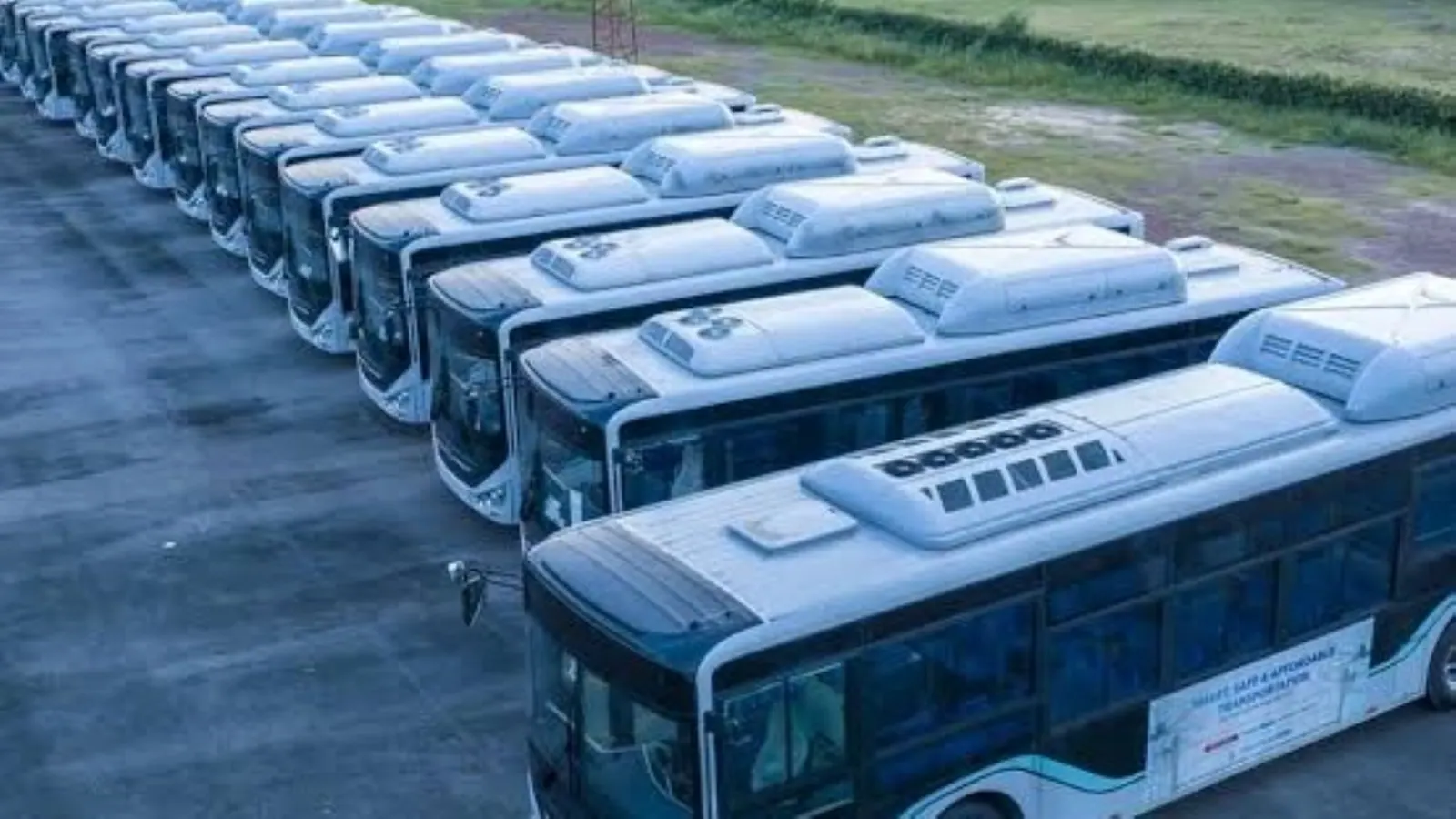
The Nigerian Federal Government's goal to reduce transportation costs through Compressed Natural Gas and Electric Vehicles may face challenges due to infrastructure and implementation gaps. Despite assurances from the Presidential Initiative on Compressed Natural Gas and Electric Vehicles that CNG and electric mobility interventions have already reduced fares on several routes, transportation costs may remain elevated across Nigeria. The initiative aims to make CNG and EVs a cheaper alternative for commuters.
The development comes more than three years after the removal of petrol subsidy in May 2023, which significantly increased the operating costs of commercial transport operators and pushed fares higher. According to the National Bureau of Statistics, average bus fares within Nigerian cities rose to N1,431.25 in May 2026, representing a 38.63 per cent increase year-on-year. Intercity bus fares reached N9,699.55, while motorcycle fares rose by 52.45 per cent to N1,072.51.
Executive Chairman of the Pi-CNG and EV, Ismaeel Ahmed, said the reduction in the cost of transportation promised by President Bola Tinubu has already begun. He added that while there were fewer than 10 CNG stations before 2023, the number increased to 90 refuelling stations in Nigeria when Tinubu launched the initiative. Ahmed stated that commuters can now pay 40 per cent less on CNG buses.
President Tinubu set October 1 as a target for Nigerians to begin seeing measurable reductions in transportation costs through the deployment of CNG and electric vehicles. On September 19, 2026, President Tinubu directed states to accelerate the implementation of the National Affordable CNG Transit Programme aimed at delivering measurable reductions in transportation costs to more Nigerians from October 1, 2026.
The Executive Chairman of Pi-CNG and EV, Ahmed, noted that the states were adopting different models based on their respective transport needs. He stressed that the success of the programme should ultimately be measured by what commuters pay. Ahmed added that the lower cost of energy should translate into lower transportation costs for Nigerians.
The Lagos State Government announced it has received 20 additional high-capacity CNG buses under the Pi-CNG and EV scheme. The Lagos Metropolitan Area Transport Authority announced the handover, saying the buses would increase public transport capacity in the state and support the transition to cleaner energy. The buses will be deployed on selected corridors to increase service capacity.
The impact of the existing interventions is already visible on some routes, although largely through government-supported fleets and subsidies. In Borno State, 500 electric tricycles, 20 electric buses and 150 electric saloon cars and taxis have been deployed, supported by eight stand-alone solar-powered charging terminals. Other states, including Abia, Zamfara, and Enugu, have also recorded reductions in transportation costs following the deployment of CNG and electric vehicles.
Key points
- The Nigerian government faces infrastructure and execution gaps in its goal to reduce transportation costs through Compressed Natural Gas and Electric Vehicles.
- The Presidential Initiative on Compressed Natural Gas and Electric Vehicles has converted over 120,000 vehicles and established more than 90 refuelling stations.
- Some states, including Lagos, Borno, Abia, Zamfara, and Enugu, have recorded reductions in transportation costs following the deployment of CNG and electric vehicles.