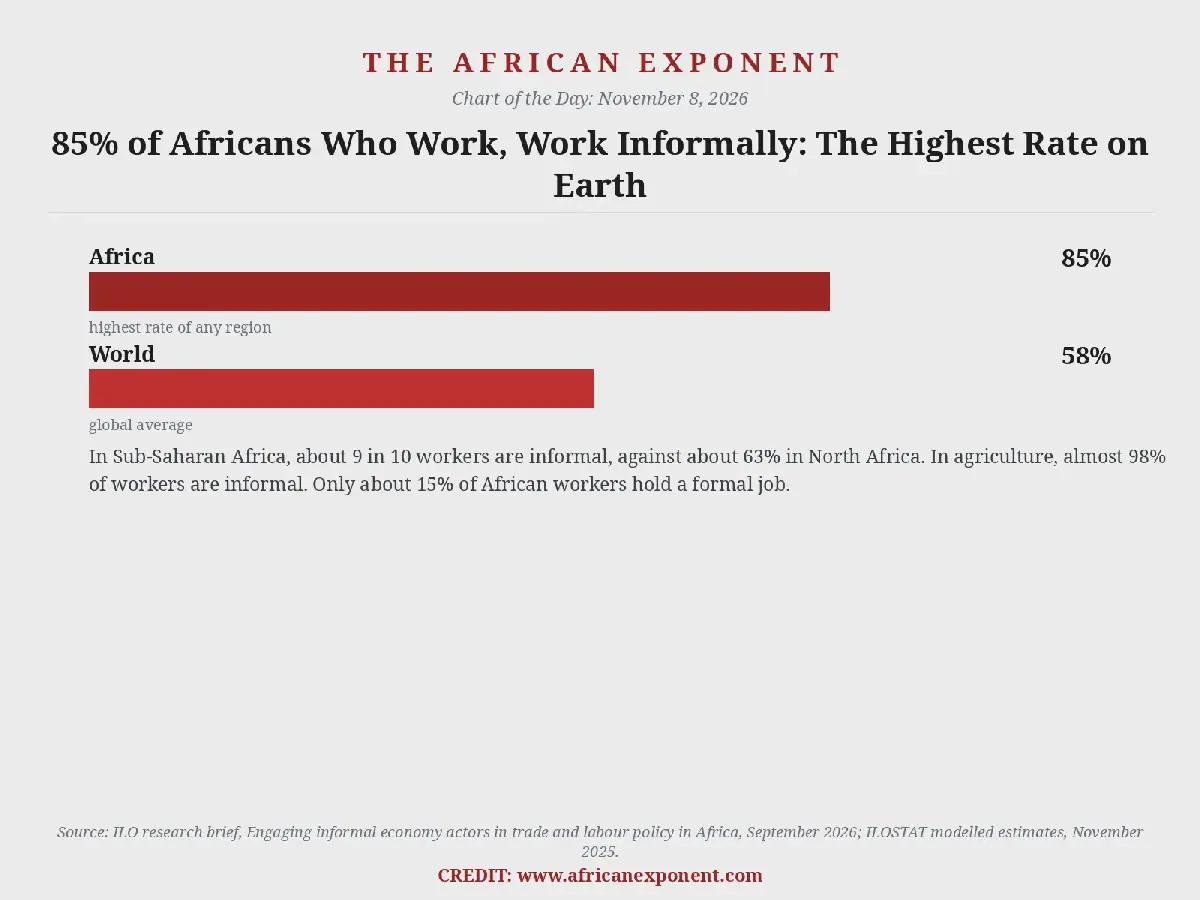
The International Labour Organization reports that 85% of African workers are employed informally, the highest rate globally. Only 15% of African workers hold formal jobs. This stark contrast with other regions highlights the challenges faced by African workers. The global average informal employment rate stands at roughly 58%.
In Sub-Saharan Africa, about nine in ten workers are informal, while North Africa records a lower rate of around 63%. The informal employment rate varies across regions, with agriculture being the largest employer, exhibiting an almost universal informal share. Close to 98% of agricultural workers lack formal contracts.
Informal work is more prevalent among women, with about 89% of employed women working informally compared to 82% of men. This disparity highlights the need for targeted policies to address the challenges faced by women in the informal sector. The African Development Bank's African Economic Outlook 2026 provides insights into the gender dynamics of informal employment.
Trade-linked employment also follows the informal pattern, with more than three-quarters of positions tied to global supply chains being informal in eleven African countries. However, these jobs are slightly less informal than non-trade jobs by 8.1 percentage points. The informal nature of trade-linked employment poses challenges for workers and policymakers.
The African Development Bank estimates that only about three million formal jobs are created each year, far short of the 10-12 million young Africans entering the labour market annually. This highlights the limited capacity of the formal sector to absorb new entrants, underscoring the need for innovative solutions to address the jobs gap.
The International Labour Organization's research brief notes that eight out of every ten Africans who work do so without a written contract, pension, paid leave, or legal protection. This lack of protection exposes workers to exploitation and insecurity, emphasizing the need for policymakers to develop targeted interventions to support informal workers.
The high rate of informal employment in Africa has significant implications for economic development and social protection. Policymakers must develop strategies to formalize informal employment and provide social protection to vulnerable workers. The African Development Bank and International Labour Organization are working to address these challenges and promote sustainable economic growth.
Key points
- 85% of African workers are employed informally, the highest rate globally.
- The informal sector dominates the African labour market, with significant implications for economic development and social protection.
- Only about three million formal jobs are created each year, far short of the 10-12 million young Africans entering the labour market annually.
Reporting sources
- Informal Employment Dominates African Labour Market at 85 % Share · kenya-today.com