The informal economy plays a vital role in East Africa, providing a source of income for millions of people. In Tanzania, for example, 95.7% of the labor force is employed in the informal sector, according to the 2025 labor force findings. Similarly, Kenya's 2026 Economic Survey recorded 18.1 million informal-sector jobs in 2025, generating 716,800 of the 822,100 new jobs created that year. Rwanda's 2025 Labour Force Survey found 81.3% of employment in the informal sector.
The informal economy is a significant contributor to East Africa's economic activity, with market traders, boda-boda riders, domestic workers, smallholder farmers, mechanics, artisans, and cross-border traders keeping goods and services moving. However, workers in the informal sector often lack contracts, insurance, or social-security protections associated with formal employment. This makes them vulnerable to risks such as illness, injury, and old age.
Formal employment has not expanded quickly enough to absorb everyone entering the labor market, leaving informal activity to provide opportunities in trading, transport, agriculture, construction, repairs, domestic work, and other services. Informal workers also participate in value chains alongside formal companies, creating value but facing different access to contracts, insurance, and workplace protection.
Women in cross-border trade face additional barriers, including restricted access to finance, poor facilities, safety concerns, and harassment. The protection gap becomes clearer when work is interrupted, and informal workers may lose income while carrying the cost of treatment. Traditional social-security systems have struggled to adapt to the realities of informal work, which often involves irregular and seasonal incomes.
Trade unions are rethinking representation to better support informal workers. In Tanzania, TUICO has organized over 10,000 informal workers, including market vendors and boda-boda riders. Uganda's NOTU has changed its structures to represent informal-economy organizations, while Kenya's COTU-Kenya has signed Memorandums of Understanding with informal-worker associations.
Social-security institutions need to develop contribution models that reflect irregular and seasonal incomes. The EAC Secretariat has a regional role in promoting portability of social-security benefits, recognition of informal skills, and reducing barriers for cross-border workers. Governments can make formalization more attractive by providing easier registration, better access to finance, and safer workplaces.
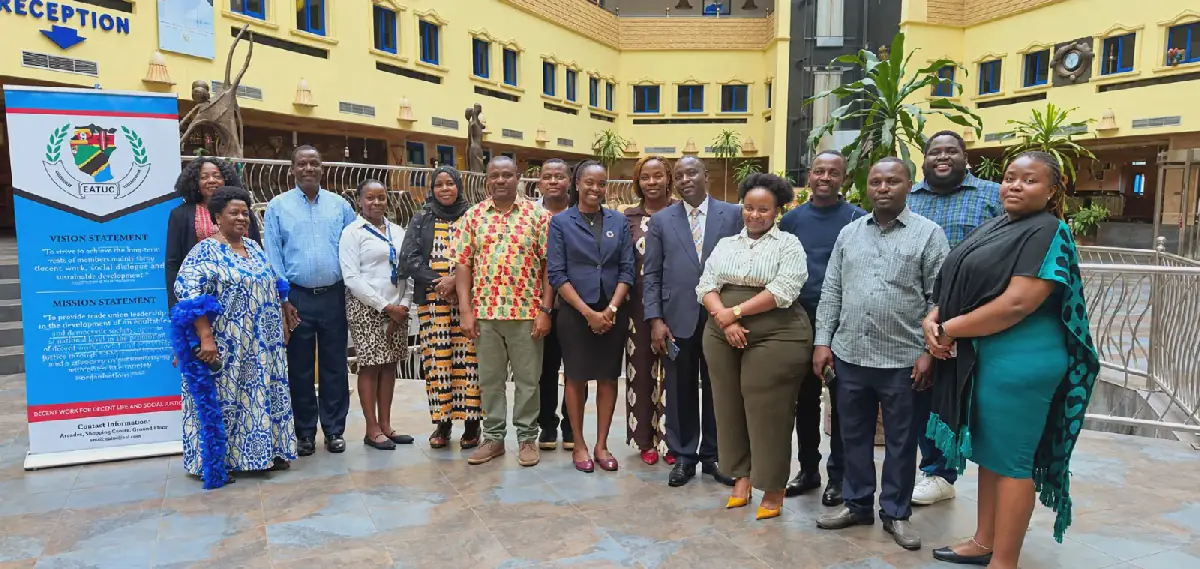
The East African Trade Union Confederation (EATUC) has supported informal-economy organizing through manuals, advocacy tools, and capacity building. To move forward, governments, trade unions, and social-security institutions must work together to build institutions capable of matching the economic importance of the informal economy with higher productivity, stronger representation, and meaningful protection for workers.
Key points
- The informal economy provides a source of income for millions of people in East Africa, but policy challenges remain in providing stronger protection and representation.
- Informal workers face vulnerabilities such as lack of contracts, insurance, and social-security protections, making them susceptible to risks like illness and injury.
- Governments, trade unions, and social-security institutions must collaborate to build institutions that support the informal economy with higher productivity, stronger representation, and meaningful protection.