Africa's merchandise trade reached about $1.5 trillion in 2025, highlighting the scale of the continent's economic market. However, the financing and logistics constraints that must be overcome if rising trade is to translate into greater industrial production and value creation within Africa. The findings are drawn from the African Trade Report 2026, launched by the African Export-Import Bank (Afreximbank) on 24 June 2026.
The report examines how shifts in global trade and geopolitics could create opportunities for Africa to expand trade, strengthen regional value chains, and accelerate industrialization. Africa recorded $685.2 billion in merchandise exports and $781.5 billion in imports in 2025, leaving a merchandise trade deficit of about $96.3 billion. These figures underline the scale of Africa's engagement with global markets.
However, the report points to structural constraints that continue to limit the continent's ability to capture more value from trade. Intra-African trade stood at about $213.8 billion, but businesses across the continent continue to face an estimated $74 billion trade-finance gap. This financing shortfall can constrain companies' ability to import production inputs, expand operations, and participate in cross-border supply chains.
Afreximbank has targeted increasing its trade-finance disbursements to $40 billion in 2026, from $17.5 billion in 2024, as part of efforts to support regional supply chains and economic integration. Closing the financing gap is particularly important as African countries seek to translate the African Continental Free Trade Area (AfCFTA) into higher volumes of actual trade and investment.
The report also highlights a decline in merchandise trade relative to the size of the African economy. Exports are projected to fall from around 6.8 percent of regional GDP in 2023 to six percent in 2026, while imports are expected to decline from 8.2 percent in 2024 to 7.60 percent in 2026. Fuel is also projected to account for a slightly smaller share of African trade.
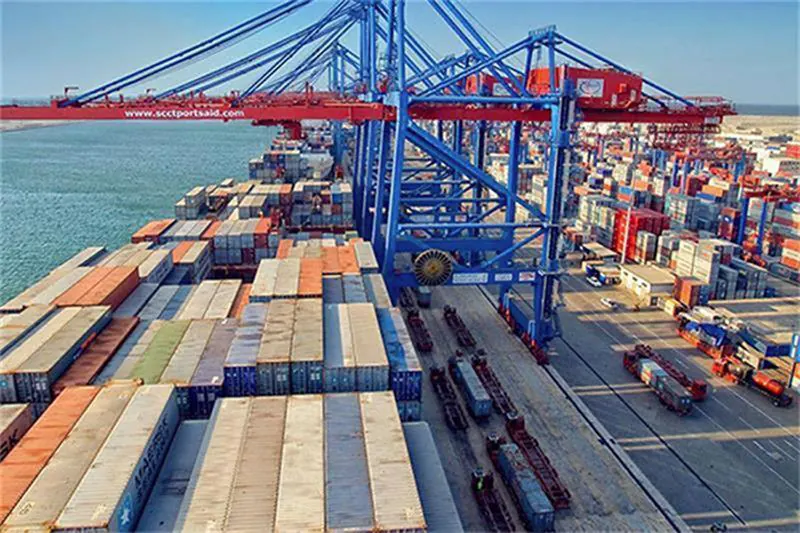
Africa's trade prospects are also being tested by disruptions to one of the world's most important maritime corridors. Security risks in the Red Sea-Suez Canal corridor have forced some commercial vessels to divert around the Cape of Good Hope, increasing distances, transit times, and shipping costs. The Suez Canal traditionally handles around 30 percent of global container traffic, 20 percent of global petroleum supply, and 12–15 percent of global trade.
The Alamein Africa Forum, which Egypt will host from 2–4 October 2026, will bring together African governments, development finance institutions, and private-sector companies to discuss trade, infrastructure, energy, food security, and industrialization. The forum provides a platform for connecting trade policy with finance, infrastructure, and private-sector investment, the components needed to turn greater continental integration into actual commercial activity.
Key points
- Africa's merchandise trade reached $1.5 trillion in 2025.
- The continent faces a $74 billion trade-finance gap.
- The Alamein Africa Forum will discuss trade, infrastructure, energy, food security, and industrialization.