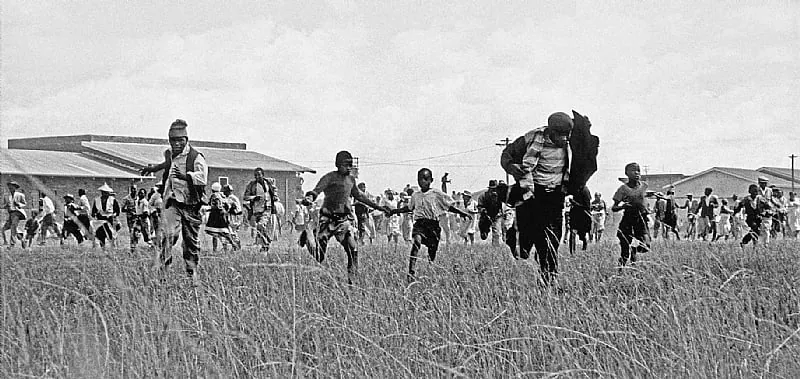
Ian Berry, a renowned British photographer, passed away on September 13, 2026. He was best known for his photographs of the Sharpeville massacre, which took place on March 21, 1960, in South Africa. On that day, police opened fire on a peaceful crowd of protesters, killing 91 people and injuring over 230. Berry's images of the massacre, taken while working for Drum magazine, were circulated around the world and exposed the brutal violence of the apartheid regime.
Berry was born in England in 1934 and moved to South Africa in 1952 to begin his career as a photojournalist. He worked for several publications, including the Rand Daily Mail and Drum magazine, which was aimed at urban Black readers. Berry's presence at the Sharpeville massacre changed his life, and he testified at the commission of inquiry into the massacre in 1960. His photographs showed that the police fired into the crowd as they were running away and reloaded their weapons.
The Sharpeville massacre was a pivotal moment in the struggle against apartheid, a racist ideology implemented by the National Party in 1948. The government passed laws, such as the Group Areas Act and the Population Registration Act, to ensure white supremacy. Resistance to apartheid grew, led by liberation movements like the African National Congress and the Pan-Africanist Congress. The peaceful protest at Sharpeville was a response to a call by the Pan-Africanist Congress to protest against passbooks, which were forced on Black South Africans to restrict their movements.
Berry's photographs of the massacre were sent to the Camera Press picture agency and published around the world, including in Paris Match, Stern, Time, and Life magazine. However, his images were not published in South Africa until October 1960, due to fear of government reprisal. The apartheid regime declared a State of Emergency on March 30, 1960, and thousands of people were arrested. The opposition parties were banned and forced to operate underground, marking the beginning of the armed struggle against apartheid.
Berry's work played a critical role in documenting the struggle against apartheid, which lasted for over two decades. His images, along with those of other photographers like Peter Magubane and Alf Kumalo, helped build support for the global anti-apartheid solidarity movement. Apartheid was declared a crime against humanity by the United Nations General Assembly in December 1966. Berry went on to work for The Observer and Magnum Photos, documenting conflicts in Ireland, Israel, and Vietnam, among other places.
In an interview with the author, Berry recalled that he had not been afraid of being killed at Sharpeville, saying "it happened too fast." He used two Leica cameras, which were revolutionary for their time, allowing him to capture 36 images before reloading. Berry's photographs were meant to be included in a special edition of Drum, but the magazine's owner refused to print the story, fearing government reprisal.
Berry's legacy continues to inspire, and his photographs remain a powerful reminder of the Sharpeville massacre and the struggle against apartheid. In September 2026, Lawyers for Human Rights announced that they were opposing the Indemnity Act of 1961, which prevents victims from laying charges against the government or police. KEY_POINT: Ian Berry's photographs of the Sharpeville massacre exposed the brutal violence of the apartheid regime to the world. KEY_POINT: Berry's images played a critical role in building support for the global anti-apartheid solidarity movement. KEY_POINT: Berry's work continues to inspire, and his photographs remain a powerful reminder of the struggle against apartheid.