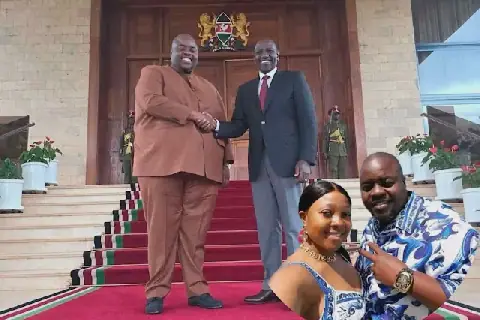
Kenya's political information space is undergoing a significant transformation as influencers, algorithms, and emerging artificial intelligence tools increasingly shape how voters understand politics. A recent study by the Kenya ICT Action Network (KICTANet) found that alternative media's growing influence is outpacing the systems designed to hold political communicators accountable. This shift has raised concerns over polarisation and declining trust in institutions ahead of the 2027 general election.
The study, titled "Many Microphones, Little Accountability," analysed the impact of social media on political communication in Kenya. Researchers monitored Facebook, TikTok, and YouTube between January and March 2026, focusing on political information consumption and verification. The study also involved interviews with journalists, content creators, civil society, and policy actors. Although the study is not statistically representative of the entire digital ecosystem in Kenya, its findings indicate a significant change in where political influence is being exercised.
The report found that trust is increasingly shifting from institutions to personalities. Influencers are often viewed as more relatable, accessible, and authentic, even when they may not be more accurate. According to one key informant, "People believe the messenger they relate to, not the institution behind the message." Influencers are now shaping how audiences interpret political events before they encounter verified information from the electoral commission, government agencies, or established news outlets.
The influence of social media platforms is reinforced by the way they reward content that attracts strong emotional reactions. Anger, humour, fear, and political loyalty can generate engagement, giving emotionally charged political narratives greater visibility than slower, evidence-based reporting. On TikTok, selective video clips, captions, and commentary can compress complicated political issues into simple conclusions. On Facebook, fabricated newspaper front pages and fake articles have borrowed the authority of established media brands.
The report documented a case of a fabricated Standard article about divisions within the opposition. PesaCheck established that the article had never appeared on The Standard's website or its official social media accounts. This phenomenon is common among other mainstream publications. The report categorises the process of development of such information into three phases: fabrication, acceleration, and consolidation. A fabricated claim can emerge on Facebook, gain speed through TikTok, and later be discussed at length on YouTube or podcasts.
The economic incentives of digital media can further reinforce the cycle of misinformation. KICTANet found that content creators face incentives to maximise views, clicks, and engagement, with one interviewee noting, "controversy drives engagement, and engagement translates to income." The report warns that repeated exposure to politically aligned content can deepen echo chambers and polarisation, while declining confidence in institutional sources can make official corrections less effective.
KICTANet recommends establishing a multi-stakeholder election information integrity task force involving the IEBC, Communications Authority, Media Council, technology companies, civil society, and fact-checkers. The report also calls for stronger local-language moderation, faster responses to fabricated content, and nationwide digital and media literacy campaigns. The next election could add another layer of complexity due to AI-generated content, with deepfakes and synthetic media potentially making political manipulation more convincing and harder to detect.
Key points
- A new report warns of polarisation and declining trust in institutions ahead of Kenya's 2027 general election.
- Influencers, algorithms, and AI increasingly shape how voters understand politics in Kenya.
- The report recommends a multi-stakeholder task force to address election information integrity.