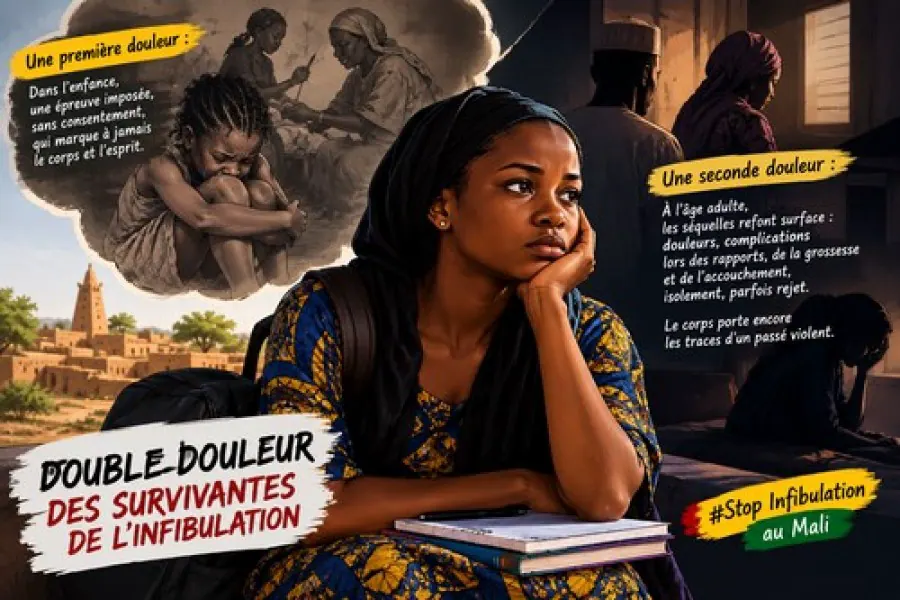
In Mali, the debate surrounding female genital mutilation, specifically infibulation, continues to spark intense discussions. Despite efforts to raise awareness, many women who have undergone the practice remain silent about their experiences. According to Ami, a 19-year-old student who was married at a young age, the trauma of infibulation can have long-lasting effects on a woman's life. Her story highlights the complexities of addressing this deeply ingrained cultural practice.
Infibulation is a severe form of female genital mutilation that involves narrowing the vaginal opening by cutting and rejoining the labia, often accompanied by clitoridectomy. This leaves a small opening for urine and menstrual blood to flow out. The World Health Organization classifies infibulation as a type of female genital mutilation. Dr. Touré Mariam Aboubacar, an epidemiologist, notes that infibulation can lead to urinary complications, persistent pain, infections, and difficulties during childbirth.
For many survivors, the pain and trauma of infibulation are compounded by a second experience of violence during marriage. Ami recounts that during her wedding night, her family members and a wedding counselor performed a "reopening" of her infibulation without anesthesia or medical care. This experience left her with intense pain and a lasting fear of intimacy. Similar stories from other survivors reveal the devastating impact of infibulation on women's lives.
The psychological effects of infibulation can be just as debilitating as the physical ones. Survivors often experience anxiety, depression, and a deep-seated fear of sex. Djénéba Sanogo, a representative from the Association YEELEN, emphasizes the importance of listening to survivors' stories and providing them with access to proper care and support. By doing so, Mali can begin to address the complex issues surrounding infibulation.
Despite the challenges, there are efforts underway to combat female genital mutilation in Mali. Organizations and individuals are working to raise awareness about the dangers of infibulation and to provide support to survivors. Dr. Abdelaye Kéita, a researcher, has made significant contributions to the field of medicine, including work on female genital mutilation.
The Malian government has also taken steps to address the issue. In 2026, the country celebrated the separation of conjoined twins, a medical feat that highlighted the country's commitment to healthcare. However, much work remains to be done to address the deeply ingrained cultural practices that perpetuate infibulation.
As Mali continues to grapple with the complexities of infibulation, it is essential to prioritize the voices and experiences of survivors. By amplifying their stories and providing them with support, Mali can begin to break the cycle of violence and trauma that infibulation perpetuates. Ultimately, it is up to individuals, organizations, and the government to work together to create a safer, more supportive environment for survivors of infibulation.
Key points
- Infibulation is a severe form of female genital mutilation that can lead to urinary complications, persistent pain, and difficulties during childbirth.