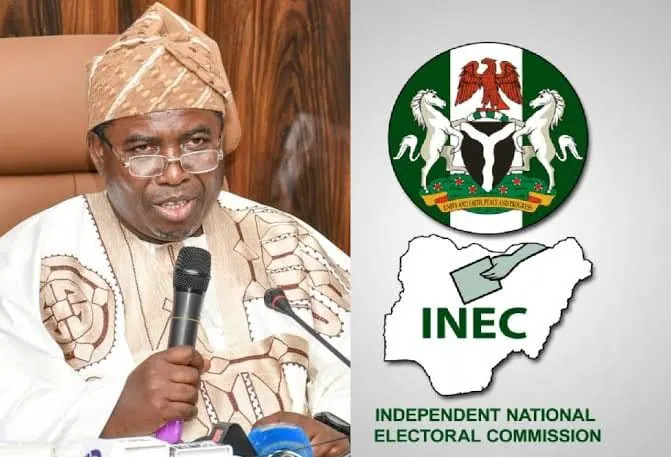
The Independent National Electoral Commission (INEC) has expressed concerns over the growing threat of artificial intelligence (AI)-driven misinformation to the credibility of the 2027 general elections in Nigeria. According to INEC, manipulated audio, video, and images, as well as targeted messaging, have made the threat a pressing reality. National Commissioner and Chairman of INEC's Information and Voter Education Committee, Mohammed Kudu Haruna, stated this in Abuja while declaring open a capacity-building workshop for the commission's Public Affairs Officers.
Haruna warned that generative AI has made it cheaper and more difficult to detect manipulated content, and its misuse goes beyond producing fake materials. He stated that the technology can also be used to target different groups of voters with conflicting messages capable of influencing the information environment around elections. This, he said, has made it essential for INEC to address the emerging challenges. The workshop, themed "Strengthening PAOs Capacity for Credible, Verified and Responsible Election Communication Towards 2027," aims to equip Public Affairs Officers with the necessary skills to tackle these challenges.
The INEC Chairman, Prof. Joash Amupitan, had recently emphasized that electoral credibility no longer depends solely on ballot papers, the Bimodal Voter Accreditation System (BVAS), and result sheets, but also on the information environment in which voters form their judgments. Amupitan called for electoral technology and communication to be treated as interconnected aspects of the electoral process. Haruna described Public Affairs Officers as the frontline communicators of INEC at the state level, saying the credibility of the commission's communication depends largely on their work.
The workshop aims to train Public Affairs Officers in verification, escalation procedures, and clear and consistent messaging, which will be crucial as the 2027 elections approach. Haruna commended the Voter Education and Publicity (VEP) Department for designing a practical and skills-based program tailored to the challenges confronting Public Affairs Officers at the state level. The training is expected to enhance the capacity of Public Affairs Officers to communicate effectively and respond to emerging challenges.
In her remarks, the Director of Voter Education and Publicity, Victoria Eta-Messi, emphasized the critical role Public Affairs Officers play in shaping Nigerians' perception of INEC and the reliability of information released by the commission. She noted that INEC operates under constant public scrutiny and is frequently confronted with attempts to misrepresent its activities and undermine public confidence. Eta-Messi assured that the training is not a one-off exercise, with further capacity-building programs planned with support from development partners.
The Deputy Director, Information and Publicity, Wilfred Ifogah, stated that the training is designed to strengthen the practical communication skills required by Public Affairs Officers in their daily work and in the build-up to the 2027 elections. He said the workshop would clarify escalation channels among Public Affairs Officers, heads of department, the VEP department, and Resident Electoral Commissioners. This, he believes, will enable Public Affairs Officers to respond effectively to emerging challenges.
The training is part of INEC's efforts to prepare Public Affairs Officers for their responsibilities ahead of the 2027 elections. The commission recognizes the importance of effective communication in maintaining the credibility of the electoral process. By equipping Public Affairs Officers with the necessary skills, INEC aims to ensure that voters receive accurate and reliable information, thereby promoting a credible and transparent electoral process.
Key points
- INEC warns of AI-driven misinformation threat to 2027 elections
- Commission trains Public Affairs Officers to tackle emerging challenges
- Training aims to enhance capacity for credible, verified, and responsible election communication