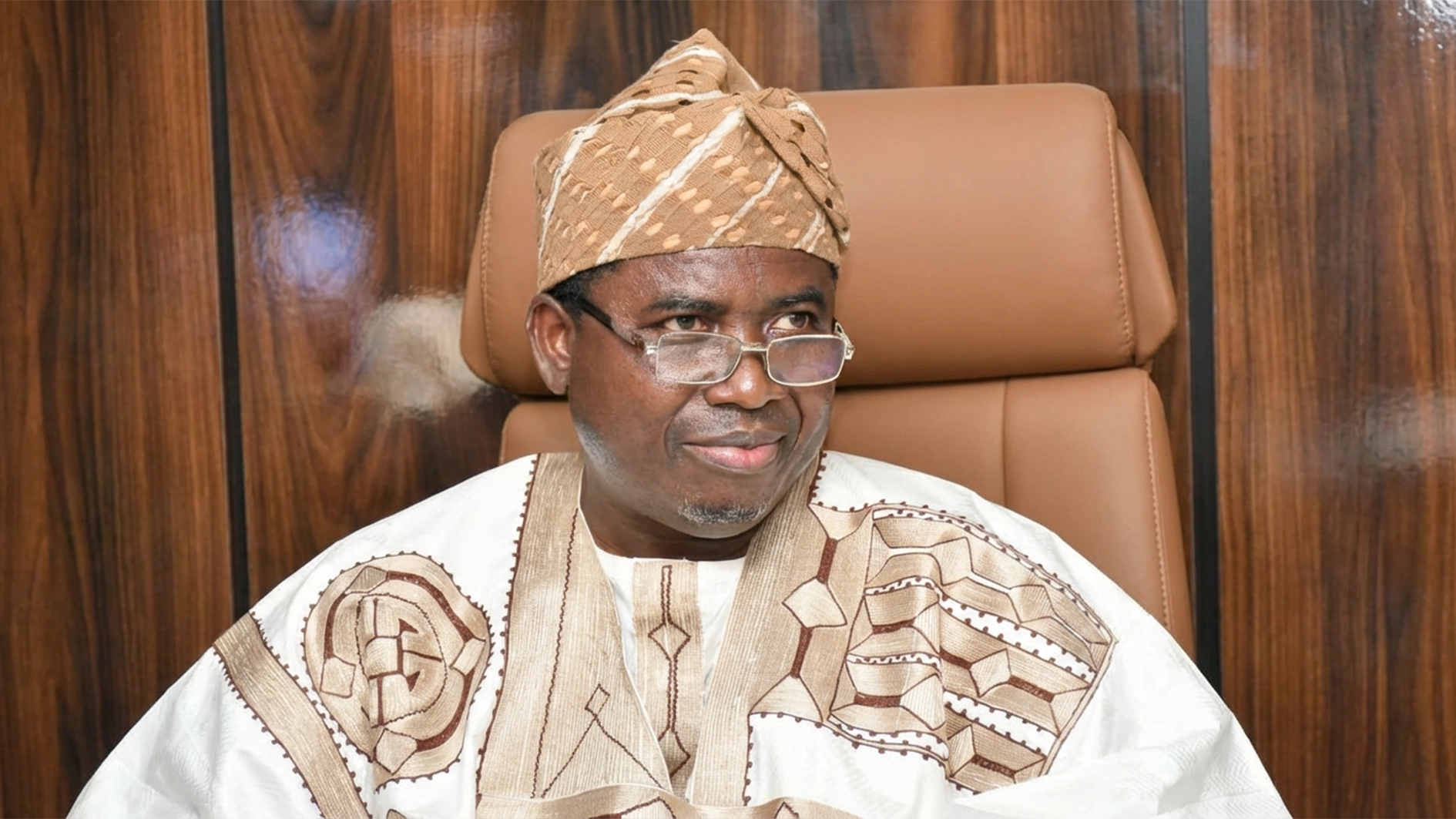
Nigeria's Independent National Electoral Commission (INEC) is gearing up for the 2027 general elections, with Chairman Prof. Joash O. Amupitan assuring the public of the commission's commitment to neutrality, operational excellence, and the integrity of the ballot box. Amupitan took over as INEC Chairman in October 2025 and has been working to address concerns over past electoral malpractices. Since Nigeria returned to democratic government in 1999, every general election has been marred by criticisms of electoral malpractices and allegations of interference.
The 2023 election saw the deployment of technological devices to ensure a credible poll, which ignited greater political interest and gained wider participation, especially among the youth. However, the inability of INEC to deliver a flawless poll led to a return to apathy, with some expressing fears that any attempt to manipulate the system further may trigger violence. Amupitan has now assured that every necessary arrangement has been put in place to avoid technological glitches, with the production of 57,000 new Bimodal Voter Accreditation System (BVAS) devices underway.
The BVAS devices are part of INEC's efforts to enhance the electoral process, with the commission also acquiring additional voting cubicles and ballot boxes. Some of the newly acquired BVAS devices have been delivered, while the delivery of new operational vehicles is ongoing nationwide. INEC is also constructing dedicated BVAS storage facilities and Local Government Area offices, with nationwide office renovations and a contract for solar power installation across all the commission's offices awarded.
Amupitan expressed satisfaction with the successful conduct of off-cycle elections, including those in Anambra, Ekiti, and Osun states. He cited local and international observers' reports, which praised the polls for their electoral integrity and operational efficiency. However, Amupitan also underscored the need for early deployment of ad-hoc staff and sensitive materials, agile logistics infrastructure, and precision-driven security arrangements.
INEC faces the arduous task of delivering non-sensitive and sensitive materials to 176,846 polling units across 8,838 registration areas, spanning urban centers, remote riverine communities, and difficult terrains. To address this challenge, the commission has finalized an integrated, multi-modal deployment strategy, including a renewed Memorandum of Understanding (MoU) with key transport unions. This framework guarantees the early pooling, vetting, and mobilization of over 100,000 vehicles and 4,000 boats to move personnel and materials.
For difficult-to-access terrains, INEC has secured dedicated speedboats, 4x4 off-road vehicles, and local pack transport. The commission has also established a structured reverse logistics protocol to govern the secure retrieval, auditing, and central archiving of BVAS devices, election result sheets, and unused ballot materials. Technology remains crucial to ensuring transparent results, with BVAS devices undergoing extensive software hardening, battery optimization, and biometric calibration.
INEC has also established a dedicated Artificial Intelligence (AI) Division with automated AI auditing tools integrated into the results verification process. The commission has concluded a nationwide audit of BVAS inventory, with activation testing and GPS tracking verification. With 103 million registered voters nationwide, including 10.8 million new voters registered during the Continuous Voter Registration (CVR) exercise, INEC is working to ensure a credible and transparent 2027 election.
Key points
- INEC has produced 57,000 new BVAS devices to enhance the electoral process.
- The commission has finalized an integrated, multi-modal deployment strategy to deliver materials to polling units.
- INEC has established a dedicated AI Division to ensure transparent results.