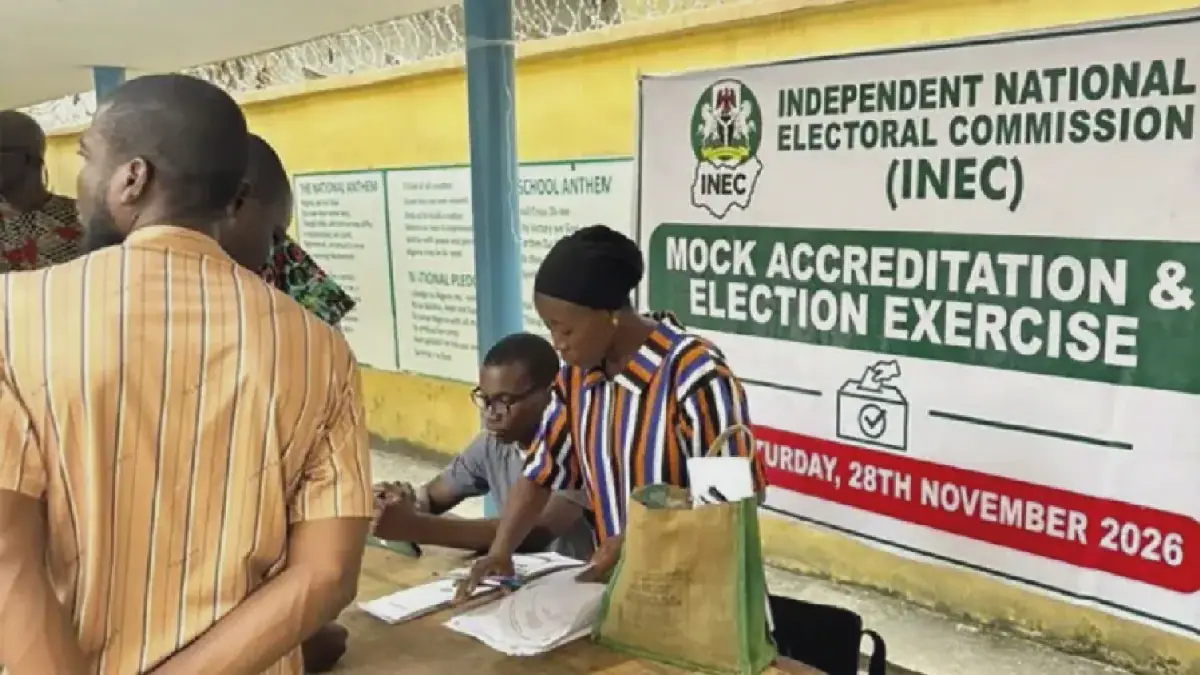
The Independent National Electoral Commission (INEC) recently conducted a nationwide mock accreditation and result upload exercise across selected polling units in the 36 states and the Federal Capital Territory. The exercise aimed to test the functionality of the Bimodal Voter Accreditation System (BVAS) and the INEC Result Viewing Portal (IReV). According to INEC Chairman, Prof. Joash Ojo Amupitan, the exercise was "very impressive" and helped identify technical and operational challenges.
The mock election revealed poor turnout and low public awareness in many states. In Kogi State, voter apathy was evident, with several polling units recording little or no participation. Residents cited inadequate public awareness and economic hardship as reasons for their absence. Despite this, INEC staff delivered sensitive materials promptly, and the machines worked in most units visited. The Resident Electoral Commissioner, Shehu Wahab, expressed satisfaction with preparedness, but reports from other areas suggested widespread apathy.
In Kano State, voter apathy also marked the exercise, with low turnout of registered voters. At Chediyya Uku polling unit, an INEC official, Dan Sarkin Yahaya, said voters were still expected, and logistics had been tested. However, one BVAS machine had to be replaced after reporting a wrong password. Despite the poor turnout, the Resident Electoral Commissioner, Zango Abdu, called the exercise a success, saying it resembled a real election.
The mock election in Imo State was disappointing, with most residents claiming ignorance of it. Many took part in the monthly clean-up exercise instead. Election materials also failed to arrive on time at most polling booths. A resident, Ikechukwu Alimno, blamed the poor turnout on INEC's failure to sensitise the public. In Enugu State, low turnout was recorded in most centres, with poor awareness, late arrival of INEC ad hoc staff, and difficulty in locating designated polling units contributing to the poor showing.
INEC Chairman, Prof. Joash Ojo Amupitan, assured Nigerians that the commission is committed to conducting free, fair, inclusive, credible, and transparent elections in 2027. He gave the assurance in Jos, Plateau State, while monitoring the mock exercise. Amupitan described the exercise as impressive and the turnout as very good, citing the successful accreditation and voting of an elderly woman as proof that the system could serve voters of all ages.
The presidential and National Assembly elections are scheduled for 16 January 2027, while the governorship and State Houses of Assembly elections are set for 6 February 2027. On security, Amupitan disclosed that the commission recently held a strategic election security conference with the military, police, and other paramilitary agencies to identify possible threats and develop strategies to protect voters, electoral officials, and National Youth Service Corps members.
The commission will continue to work with stakeholders to strengthen public confidence in the electoral process. Amupitan commended the people of Plateau State for their support and noted that the information gathered through the assessment had been shared with relevant law enforcement agencies to enable them to take necessary preventive measures. The mock election exposed gaps in public awareness, logistics, and voter turnout, which INEC will address before the 2027 elections.
Key points
- INEC conducts nationwide mock election to test BVAS and IReV functionality ahead of 2027 polls.
- Poor turnout and low public awareness mar the exercise in many states.
- INEC chairman assures Nigerians of credible polls in 2027.