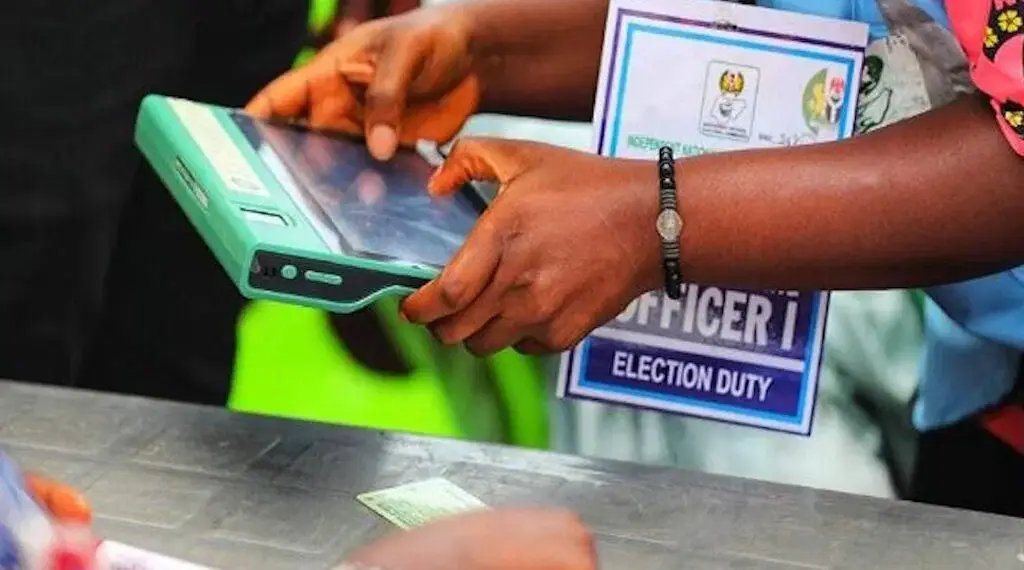
The Independent National Electoral Commission (INEC) in Nigeria has addressed concerns over the Bimodal Voter Accreditation System (BVAS), used in the country's electoral process. INEC stated that claims of remote shutdown of BVAS before voting concludes are false. According to the commission, only presiding officers operating the device have control over its login and logout functions. This clarification aims to alleviate fears and ensure a smooth electoral process.
A viral Instagram video had sparked concerns, with a man claiming to be a former presiding officer alleging that election officials could remotely log out voters from BVAS before polls close. He also claimed that results uploaded offline could disappear. INEC has described these allegations as "false, fabricated and misleading," urging Nigerians to disregard them. The commission emphasized that each polling unit is assigned unique login credentials, given to the presiding officer, enabling them to access BVAS for voter accreditation and result uploads.
INEC explained that the BVAS was designed to enhance the electoral process, particularly in areas with poor network connectivity. During the 2023 general election, some presiding officers faced challenges due to poor or unavailable network connectivity. In response, the commission upgraded its IReV application to allow presiding officers to upload polling unit result sheets offline in the presence of stakeholders. This feature ensures that results remain securely stored on the BVAS pending successful transmission.
The commission assured that once presiding officers move from their polling units to ward collation centers and their devices reconnect to the internet, results are automatically transmitted to the IReV portal without further manual intervention. INEC stressed that BVAS and IReV operate according to established procedures designed to safeguard the integrity, transparency, and credibility of the electoral process.
INEC's statement aims to address concerns and provide clarity on the functionality of BVAS. The commission urged Nigerians to rely on its official communication channels for accurate information and to desist from creating or circulating unverified information. By doing so, INEC seeks to maintain public trust in the electoral process and ensure a credible and transparent election.
The clarification by INEC comes ahead of the 2027 general elections, as stakeholders continue to prepare for a smooth electoral process. The commission's efforts focus on ensuring that election officials and the public are well-informed about the procedures and functionality of BVAS. This, in turn, will help to prevent the spread of misinformation and promote a peaceful and credible election.
Key to INEC's efforts is the maintenance of the integrity and security of the electoral process. By addressing concerns and providing accurate information, the commission demonstrates its commitment to transparency and credibility. As Nigeria prepares for future elections, INEC's clarification on BVAS usage serves as a vital component in ensuring a successful and trustworthy electoral process.
Key points
- INEC assures Nigerians that BVAS cannot be remotely shut down before voting concludes.
- Offline results uploaded using BVAS remain securely stored on the device and are automatically transmitted to the IReV portal once internet connectivity is restored.
- The commission urges Nigerians to rely on its official communication channels for accurate information and to disregard unverified claims.