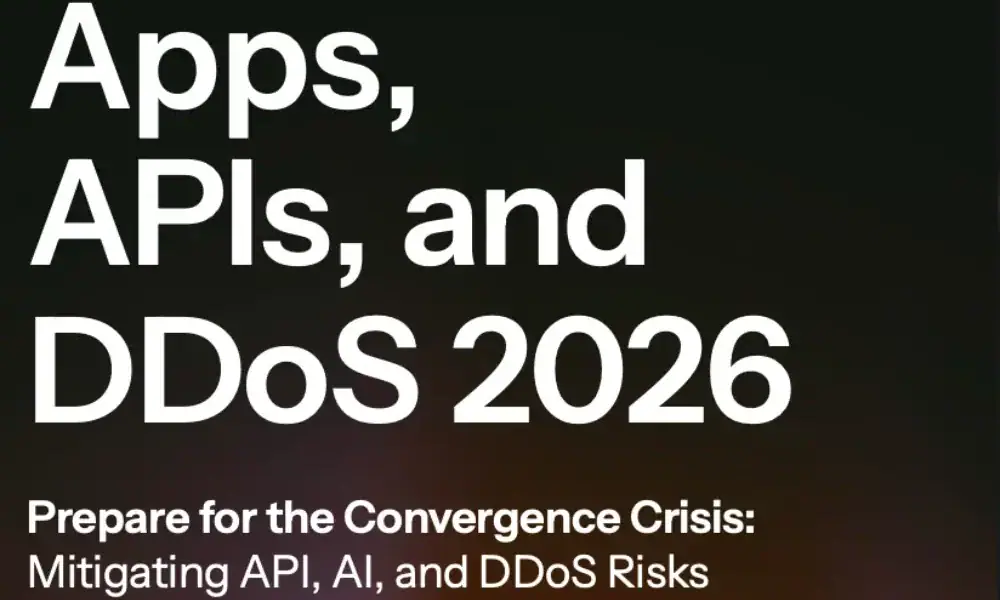
A recent report by cloud security giant Akamai has sounded the alarm on the rapidly evolving cyber threat landscape. The State of the Internet report highlights a disturbing trend: cybercrime is no longer about inventing new attack methods, but rather about the large-scale, rapid, and automated industrialization of threats. This shift has significant implications for businesses and organizations worldwide. According to Akamai, the majority of attacks now target APIs, which are essential to modern architectures and digital transformation.
The report notes that 87% of companies reported experiencing API-related security incidents in 2025, with the average number of daily attacks more than doubling in just one year. Furthermore, over 61% of API attacks now rely on behavioral abuse and exploitation of business logic, rather than traditional web injections. The most common vulnerabilities exploited by attackers include configuration errors (39.61%) and object property authorization flaws (35.11%). These findings underscore the need for organizations to reassess their security posture and prioritize API protection.
The increasing use of artificial intelligence (AI) is also accelerating the threat landscape. While AI is not creating new types of vulnerabilities, it is significantly reducing the response time available to security teams. The automated generation of code by AI, known as "Vibe Coding," is leading to faster but more fragile deployments, often introducing undetected configuration errors. Additionally, the emergence of autonomous AI agents capable of making decisions is expanding the attack surface. The OWASP framework has already identified ten emerging threats specific to intelligent agents.
Distributed Denial-of-Service (DDoS) attacks are also reaching unprecedented levels. Application-layer DDoS attacks have increased by 104% over the past two years, driven by the availability of super-botnets offered on a DDoS-as-a-Service model. Compromised machine networks like Aisuru and Kimwolf allow attackers to rent significant firepower at minimal cost, capable of overwhelming server and API resources. Volumetric attacks on layers 3 and 4 have reached critical scales in multi-terabits, primarily targeting the financial services, media, and SaaS software sectors.
In response to this industrialized threat landscape, Akamai emphasizes that isolated solutions targeting only AI are insufficient if the foundations are not solid. Organizations must focus on regaining visibility into their infrastructure, continuously protecting APIs, maintaining rigorous DNS hygiene, and deploying integrated multi-layered security. This approach can help mitigate the risks posed by automated threats and API attacks. Akamai's report serves as a wake-up call for businesses to reassess their security strategies and prioritize resilience.
The growing use of AI and automation in cyber attacks has significant implications for the future of cybersecurity. As attackers continue to leverage AI and machine learning to enhance their tactics, organizations must adapt and evolve their defenses. This includes investing in AI-powered security solutions and implementing robust incident response plans. By staying ahead of the threat landscape, businesses can reduce the risk of falling victim to industrialized cyber attacks.
The situation in Tunisia, where 13.5% of the 15-64 age group has used generative AI in 2026, highlights the growing relevance of AI in everyday life. As AI becomes more pervasive, the need for robust cybersecurity measures will only continue to grow. Akamai's report serves as a timely reminder of the importance of prioritizing cybersecurity and investing in the right solutions to protect against industrialized threats.
Key points
- Automated threats and API attacks are on the rise, with 87% of companies experiencing API-related security incidents in 2025.