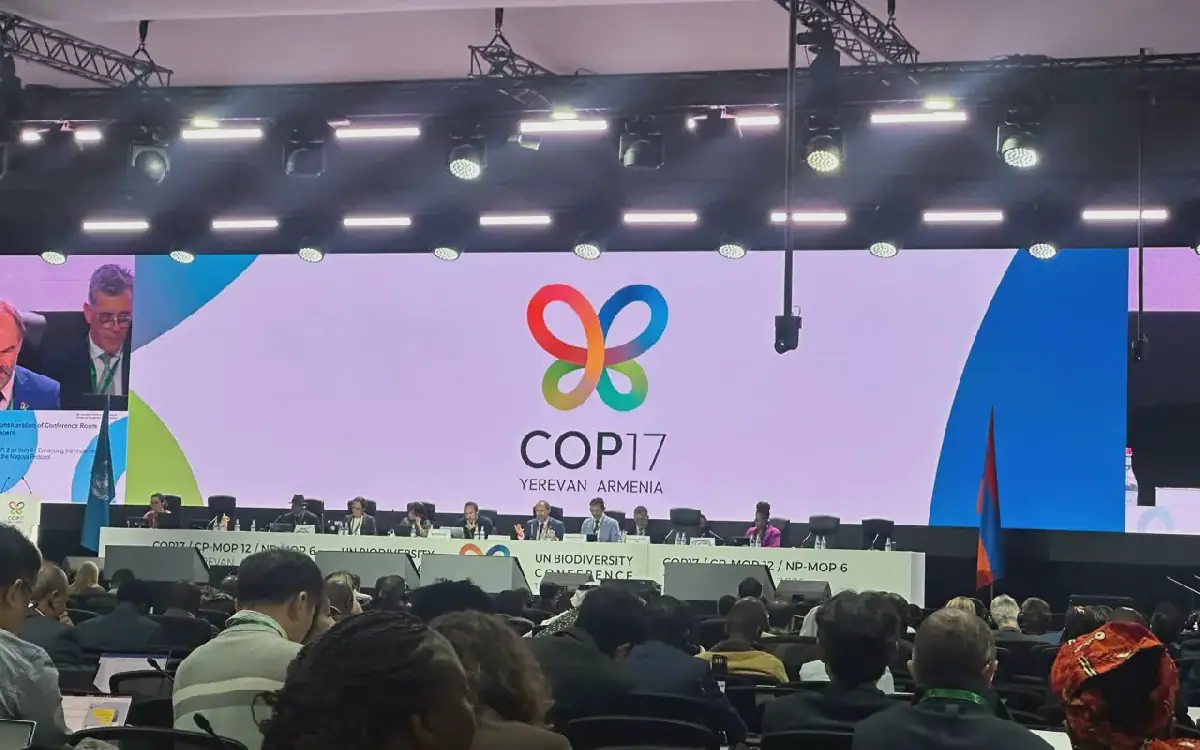
Indigenous Peoples and civil society groups have urged the United Nations to halt the monetization of sacred animals and nature as "natural capital" for carbon and biodiversity markets. This call was made on the sidelines of the 17th Conference of the Parties to the United Nations Convention on Biological Diversity (CBD COP17) in Yerevan, Armenia. The groups expressed concern that animals such as buffalo, jaguars, orangutans, and whales are being incorporated into offset schemes.
The concerns come amid contentious negotiations over Article 8(j) of the Convention, which calls on parties to respect, preserve, and maintain the traditional knowledge, innovations, and practices of Indigenous Peoples and local communities relevant to biodiversity conservation. The provision recognizes the importance of the knowledge and practices of Indigenous Peoples and local communities to the conservation and sustainable use of biodiversity.
Aimee Robeson, executive director of Cultural Survival, emphasized that biodiversity conservation should not depend on assigning monetary values to animals and ecosystem services. She described market-based schemes as false solutions that could worsen existing environmental crises, arguing that they could lead to biodiversity loss and the degradation of ecosystems.
Tom Goldtooth, executive director of the Indigenous Environmental Network, rejected the use of buffalo in carbon credit schemes, describing the animals as central to Indigenous identity and heritage. He recalled that commercial slaughter reduced the buffalo population from an estimated 60 million to 70 million in 1853 to only a few thousand by the 1880s.
Wilmer Lucitante of UDAPT, Friends of the Earth-Ecuador, and the Indigenous A’i Kofán Nation of the Ecuadorian Amazon criticized the use of jaguar habitats to generate carbon credits. He argued that monetizing the animals could provide cover for extractive industries while failing to address the threats posed by oil drilling and mining.
Andine Fahira Lubis of the North Sumatra regional office of WALHI, also known as Friends of the Earth-Indonesia, raised concerns over biodiversity offsets involving the critically endangered Tapanuli orangutan. With fewer than 800 individuals remaining, the species is considered one of the world’s rarest great apes.
The debate also extends to mining projects in Armenia, the host country of COP17. Nazeli Vardanyan, director of Armenian Forests, said the controversial Amulsar gold mine planned to use biodiversity offsets in areas associated with the Caucasian leopard and brown bear, species whose habitats could be threatened by the project.
Key points
- Indigenous Peoples and civil society groups demand that the United Nations immediately stop monetizing sacred animals and nature as "natural capital" for carbon and biodiversity markets.
- The groups warn that placing financial values on wildlife and their habitats could allow companies to claim conservation benefits while continuing activities that threaten biodiversity.
- The concerns come amid contentious negotiations over Article 8(j) of the Convention on Biological Diversity.