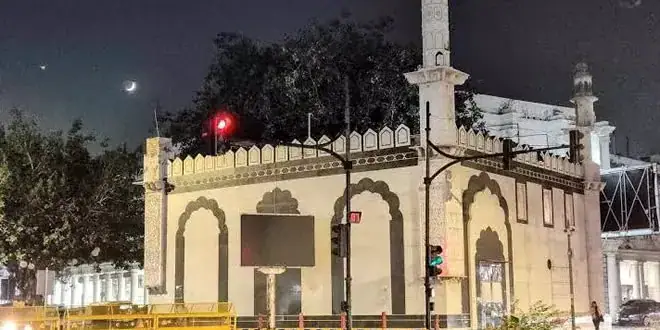
The Indian government has promised the High Court of Delhi that it will not take any coercive action against the historic Race Course Masjid in New Delhi for four weeks. This temporary reprieve comes as the Land and Development Office (L&DO) examines a plea from the Delhi Waqf Board. The mosque, located near the Prime Minister's residence, has been at the center of a land redevelopment project that has already seen the demolition of nearly 700 homes.
Despite the temporary reprieve, the court has refused to order the reopening of the mosque to worshippers, citing safety concerns related to ongoing demolitions in the area. The mosque's access has been restricted, and water and electricity supplies have been cut off since October 7. Worshippers have faced difficulties practicing their faith, with some being allowed to pray on October 24 but others being turned away.
The Race Course Masjid, a historic mosque that predates India's independence, is registered with the Delhi Waqf Board and has a heritage listing. Syed Ahmed Saud, a worshipper, has filed a plea with the court seeking protection for the mosque and unrestricted access for worshippers. The plea cites constitutional guarantees of equality and religious freedom.
A Hindu priest, Keshav Raj Shastri, has expressed solidarity with the mosque's imam, Mohammed Haroon, a longtime friend. The priest, who has served at a nearby temple for 15 years, said that mosques and temples should never be demolished. He claimed that his temple's electricity was also cut off, but authorities assured him that it would not be demolished.
The mosque's fate remains uncertain, with the court yet to make a final decision. The government has been asked to produce a report with photographs before the next hearing on December 16. In the meantime, worshippers continue to face difficulties accessing the mosque.
The case is part of a larger trend of mosques being demolished in India. According to a report by Islamophobia Monitor, seven mosques were partially or fully demolished in September 2026. The report highlights the challenges faced by mosques and Muslim communities in India.
The Delhi Waqf Board's plea and the government's temporary reprieve have provided some respite for the mosque, but its long-term future remains uncertain. The court's decision will have significant implications for the mosque and its worshippers.
Key points
- The Indian government has granted a four-week temporary reprieve to the historic Race Course Masjid in New Delhi.
- The court has refused to order the reopening of the mosque to worshippers due to safety concerns.
- The mosque's fate remains uncertain, with the court yet to make a final decision.