A court in India has ordered the release of three leaders of the 'Cockroach' movement, who were arrested on October 10, 2026, for protesting revisions to the electoral lists. Abhijeet Dipke, Saurav Das, and Ashutosh Ranka were detained at New Delhi airport upon their arrival from Mumbai. Their lawyer, Ratna Singh, stated that the court had set a condition for their release: they must not disturb public order for a year. The trio left the court in a vehicle and later expressed their views on social media.
The 'Cockroach' movement, also known as the Cockroach Janata Party, has been protesting the revision of electoral lists, which they claim has resulted in the removal of 130 million registered voters. The authorities assert that the goal is to eliminate duplicates, deceased individuals, and fraudulent entries. However, critics argue that the revisions disproportionately affect minority groups, particularly Muslims, and favor the ruling Bharatiya Janata Party led by Prime Minister Narendra Modi. The movement has garnered support from the opposition, who accuse the government of dictatorial actions.
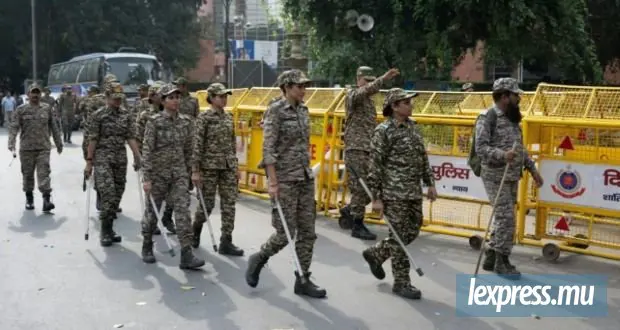
The protests have been met with a significant police response, with thousands of arrests reported on October 10, 2026, to prevent an unauthorized gathering. The police have not released an official count of those detained. On October 11, 2026, the center of New Delhi remained heavily guarded, especially around Jantar Mantar, a rallying point for protesters the previous day. The opposition and the 'Cockroach' movement have called for continued protests, with the opposition leader, Rahul Gandhi, vowing to take to the streets in large numbers.
The United Nations High Commissioner for Human Rights has called for the immediate and unconditional release of those "arbitrarily detained." The 'Cockroach' movement has been vocal in its criticism of Prime Minister Modi, with Abhijeet Dipke describing him as a "coward and a brute." The movement gained prominence in July 2026 when it successfully pressured the government to resign over allegations of cheating in university exams.
The current protests are part of a broader movement that emerged online in the spring of 2026. The 'Cockroach' movement has united with opposition parties to challenge the government's actions. The opposition leader, Rahul Gandhi, has promised that his party, the Congress, and the India coalition will join the protests in large numbers.
The Indian government has denied any irregularities in the electoral list revisions, but critics argue that the changes will disenfranchise minority groups. The 'Cockroach' movement and its allies have vowed to continue their protests until their demands are met. The situation remains tense, with a significant police presence in the capital.
The release of the 'Cockroach' leaders has been seen as a small victory for the movement, but the protests are expected to continue. The opposition has welcomed the court's decision, but the government has not commented on the issue. The 'Cockroach' movement has become a significant force in Indian politics, and its protests are likely to have a lasting impact on the country's democratic process.
Key points
- The Indian court releases three leaders of the 'Cockroach' movement, who were arrested for protesting revisions to the electoral lists.
- The 'Cockroach' movement claims that the revisions have resulted in the removal of 130 million registered voters, mostly from minority groups.
- The protests have been met with a significant police response, with thousands of arrests reported, and the opposition has vowed to continue the protests.