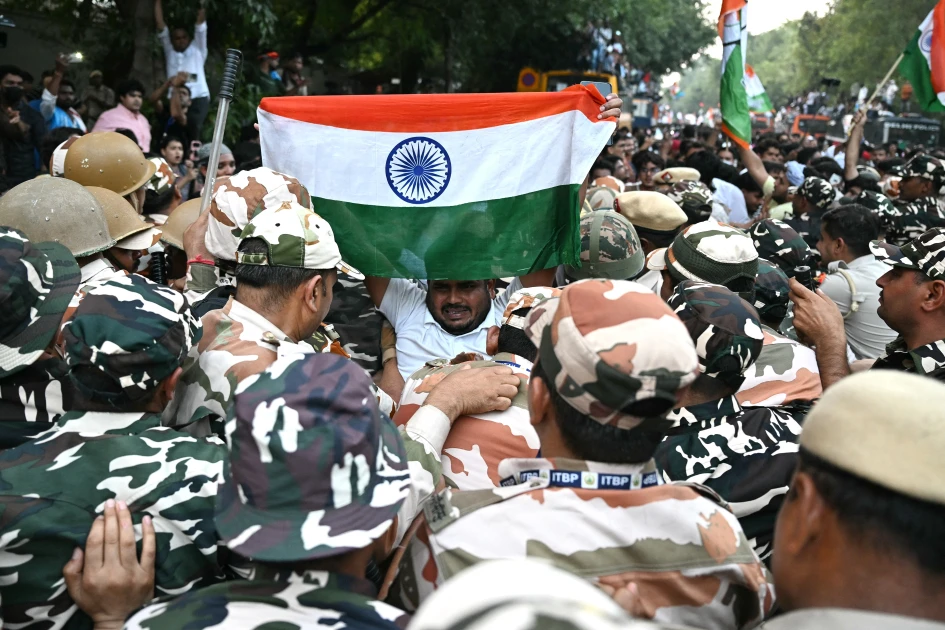
In response to a significant security crackdown by New Delhi's authorities, young Indian protesters have adopted innovative tactics to continue their demonstrations. With thousands of security personnel deployed in key areas of the capital, protesters have turned to holding flash demonstrations in unexpected locations, catching authorities off guard. This approach has allowed them to maintain momentum in their protests, which are primarily aimed at seeking the resignation of the head of India's election commission. Protesters accuse the commission of manipulating voter rolls to benefit Prime Minister Narendra Modi's ruling party, allegations that the commission has denied.
The protests, which began over alleged voter roll irregularities linked to the "special intensive revision" (SIR), have led to tens of thousands of reported detentions over the weekend. However, many of those detained have since been released. Undeterred by the police actions, protesters have been using social media and other digital tools to coordinate their efforts and evade surveillance. This includes using Batman masks to avoid identification and turning to offline maps to plan and execute their demonstrations.
One of the key organizers of the protests, Meghnad S., a 36-year-old content creator, has been instrumental in coordinating the response to police detentions. Armed with smartphones, Meghnad and his group of about 170 volunteers have been tracking police vehicles and using a digital dashboard to match detainees with volunteer drivers. This effort, which resembles a crowd-sourced rescue service, has been crucial in helping detainees get to safety.
The use of digital tools and social media has been a hallmark of the protests, with many young protesters being highly adept at using these platforms to their advantage. Popular student leader Neha Bora, who became a viral sensation after a case of mistaken identity led to police detaining her lookalike, managed to evade detention by slipping through the security cordon. Bora later posted a photograph with her doppelganger, joking that the resemblance was "pure coincidence, not strategy".
The protests have also seen the use of humor and creativity, with Bollywood actress Richa Chadha offering tips on social media on how to avoid detention while filming herself drawing on her face with make-up. Her advice included using make-up to dodge surveillance and facial recognition cameras. This lighthearted approach has been reflective of the protesters' determination to continue their demonstrations despite the challenges they face.
The situation on the ground remains tense, with police struggling to keep up with the sprightly young protesters. In several instances, protesters were seen holding on to one another as they were dragged to waiting buses, only to wriggle out from the driver's seat or the rear window. The protests have highlighted the challenges faced by authorities in managing large-scale demonstrations in the digital age.
As the protests continue, the key demands of the protesters remain clear: they want the resignation of the head of India's election commission and an investigation into the alleged voter roll irregularities. The use of innovative tactics and digital tools has allowed them to maintain momentum in their protests, despite the significant security crackdown. The situation is likely to remain fluid in the coming days, with both sides dug in on their respective positions.
Key points
- Young Indian protesters are using innovative tactics, including Batman masks and offline maps, to evade police surveillance and continue their demonstrations.
- The protests are primarily aimed at seeking the resignation of the head of India's election commission over alleged voter roll irregularities.
- The use of digital tools and social media has been crucial in coordinating the protests and evading police surveillance.