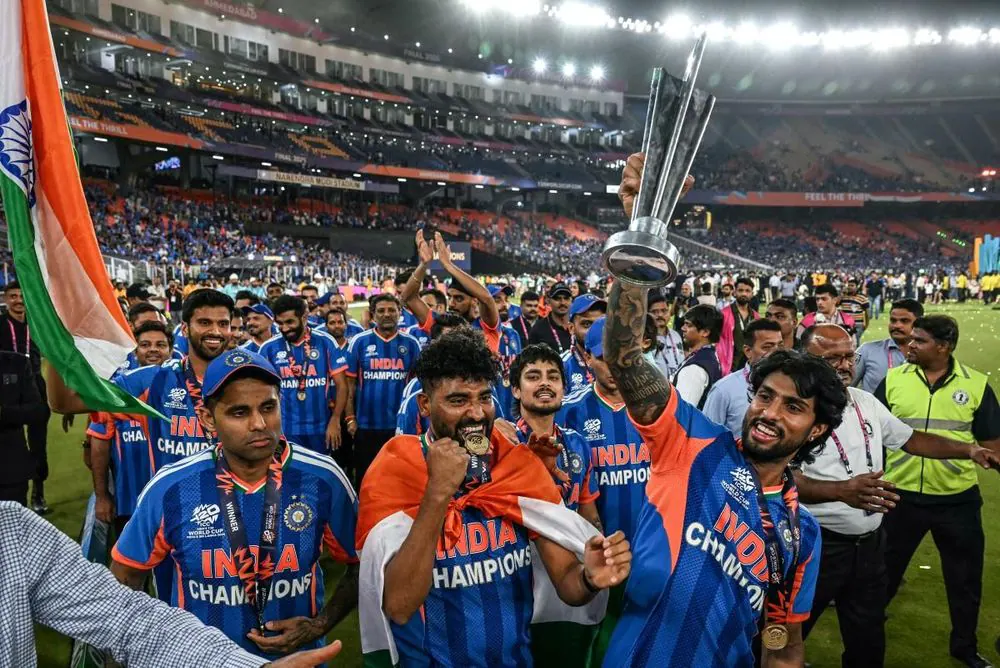
The full six-stanza version of 'Vande Mataram' was played before the national anthem at an international cricket match in New Delhi, marking a first for the country. The rendition lasted over three minutes, putting the 19th-century song at the center of a modern debate over nationalism and religion in constitutionally secular India. The song, meaning "Mother, I Bow to Thee," was written by Bengali author Bankim Chandra Chattopadhyay and first published in 1875.
The controversy surrounding 'Vande Mataram' stems from its later verses, which invoke Hindu deities, including Durga, Lakshmi, and Saraswati. In 1937, the Congress party endorsed only the first two stanzas for public use, seeking to accommodate India's religious diversity. Many Muslims object to the song's portrayal of the nation as a goddess, arguing that such veneration conflicts with Islamic teachings.
The issue has been revived by government measures elevating the song's official status. In February, the home ministry directed that 'Vande Mataram' be sung or played in its musical version at the start of government functions, before the national anthem. Parliament passed legislation in July imposing fines or jail terms of up to three years for those who intentionally disrupt or obstruct its rendition.
The ruling Hindu nationalist Bharatiya Janata Party (BJP) has accused the opposition Congress of weakening a symbol of the freedom struggle. Congress maintains that only the first two stanzas should be sung, in keeping with a long-standing political compromise. The argument has spilled into television studios, parliament, and public events.
Prime Minister Narendra Modi, leader of the BJP, has expressed his support for the song, stating that it gives a concrete expression to feelings of patriotism and love for Mother India. The controversy has become part of a broader debate over nationalism and religious identity in India.
Critics argue that a song containing explicit Hindu religious imagery should not be used to define patriotism in a nation of many faiths. Delhi University professor Apoorvanand said the current push marks a departure from the pre-independence consensus that limited public renditions to the first two stanzas.
The debate over 'Vande Mataram' highlights the complexities of India's secular identity and the challenges of balancing national pride with religious diversity. As the country continues to grapple with these issues, the song remains a powerful symbol of the anti-colonial struggle and national pride.
Key points
- The full version of 'Vande Mataram' was played before the national anthem at a T20 cricket match in New Delhi.
- The song's later verses invoke Hindu deities, leading to objections from some Muslims.
- The controversy has become part of a broader debate over nationalism and religious identity in India.