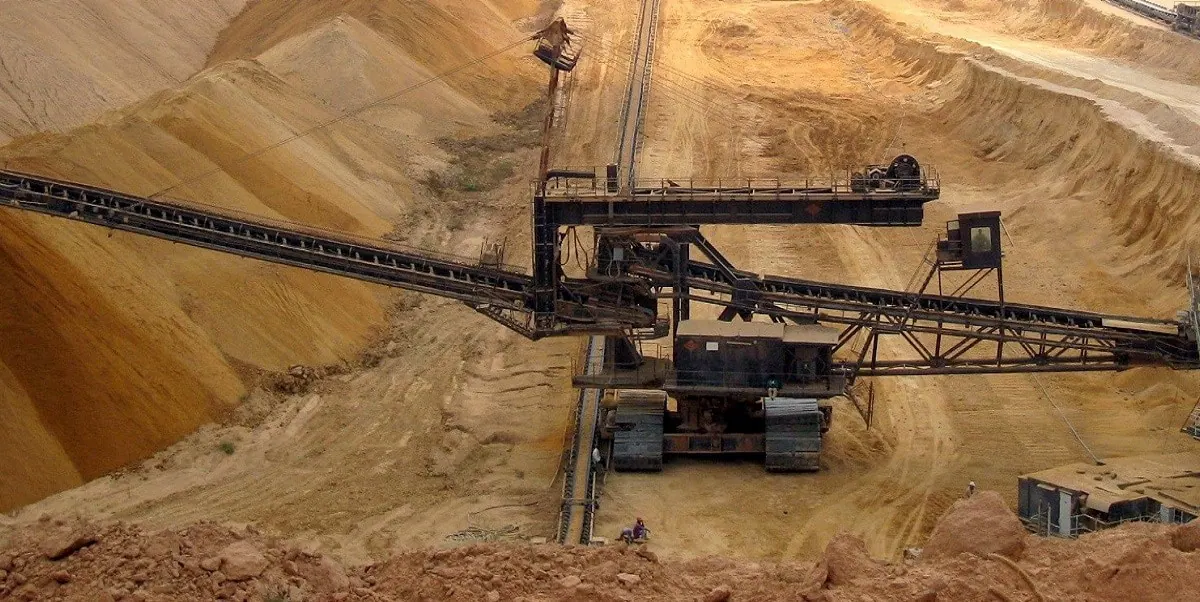
Indian Ambassador to Tunisia Devyani Uttam Khobragade recently met with Omar Bouzouada, president of TIFERT, the Compagnie des phosphates de Gafsa (CPG), and the Groupe chimique tunisien (GCT), to discuss enhancing Tunisian-Indian cooperation in phosphates and fertilizers. The meeting, confirmed by the Indian Embassy in Tunis, highlights India's growing interest in Tunisia's phosphate sector. This development comes as TIFERT, a joint venture between Tunisian and Indian companies, faces challenges.
TIFERT, established in 2006, is a partnership between CPG, GCT, Gujarat State Fertilizers & Chemicals (GSFC), and Coromandel International. The company produces phosphoric acid, primarily for the Indian market. Indian partners GSFC and Coromandel International each hold 15% of TIFERT, while Tunisian partners CPG and GCT each hold 35%. The company's production is crucial for India's fertilizer industry, with GSFC having an agreement to receive 180,000 tonnes of phosphoric acid annually until 2036.
In early August, a GSFC delegation, led by its Chief Financial Officer, visited Tunisia to assess TIFERT's plant and meet with Tunisian officials. The Indian representatives aimed to prepare a schedule for resuming operations. According to GSFC, Indian partners have agreed to support TIFERT's capital restructuring, improve liquidity, ensure sulfur supply, and play a more active role in the company's governance and management. These measures signal concrete progress in discussions between Tunis and New Delhi.
Despite these efforts, TIFERT's situation remains fragile due to technical difficulties that have impacted operations. Coromandel International views TIFERT as a strategic investment, crucial for securing phosphoric acid supplies for its Indian operations. The company's performance is vital for India's fertilizer sector. Indian partners are committed to reviving TIFERT, recognizing its importance in their supply chain.
India's engagement with Tunisia extends beyond TIFERT. The two countries aim to diversify trade and reach $1 billion in commercial exchanges. Sectors identified for growth include fertilizers, agriculture, water management, renewable energy, and digital infrastructure. Phosphate remains a central component of this bilateral relationship, with Tunisia serving as a critical supplier for India's fertilizer industry.
The Indian government's documents highlight the strategic importance of TIFERT for GSFC's operations. The agreement between GSFC and TIFERT ensures a stable supply of phosphoric acid, essential for producing fertilizers in India. This partnership underscores the interdependence between India's fertilizer sector and Tunisia's phosphate production.
As India and Tunisia strengthen their cooperation, several key points emerge. Firstly, India is committed to reviving TIFERT, a vital supplier of phosphoric acid. Secondly, bilateral trade is expected to expand into new sectors. Thirdly, phosphate remains a cornerstone of the Tunisian-Indian partnership.
Key points
- Indian partners commit to supporting TIFERT's revival through capital restructuring and improved governance.
- Bilateral trade between India and Tunisia is expected to reach $1 billion.
- Phosphate supplies from Tunisia are crucial for India's fertilizer industry.